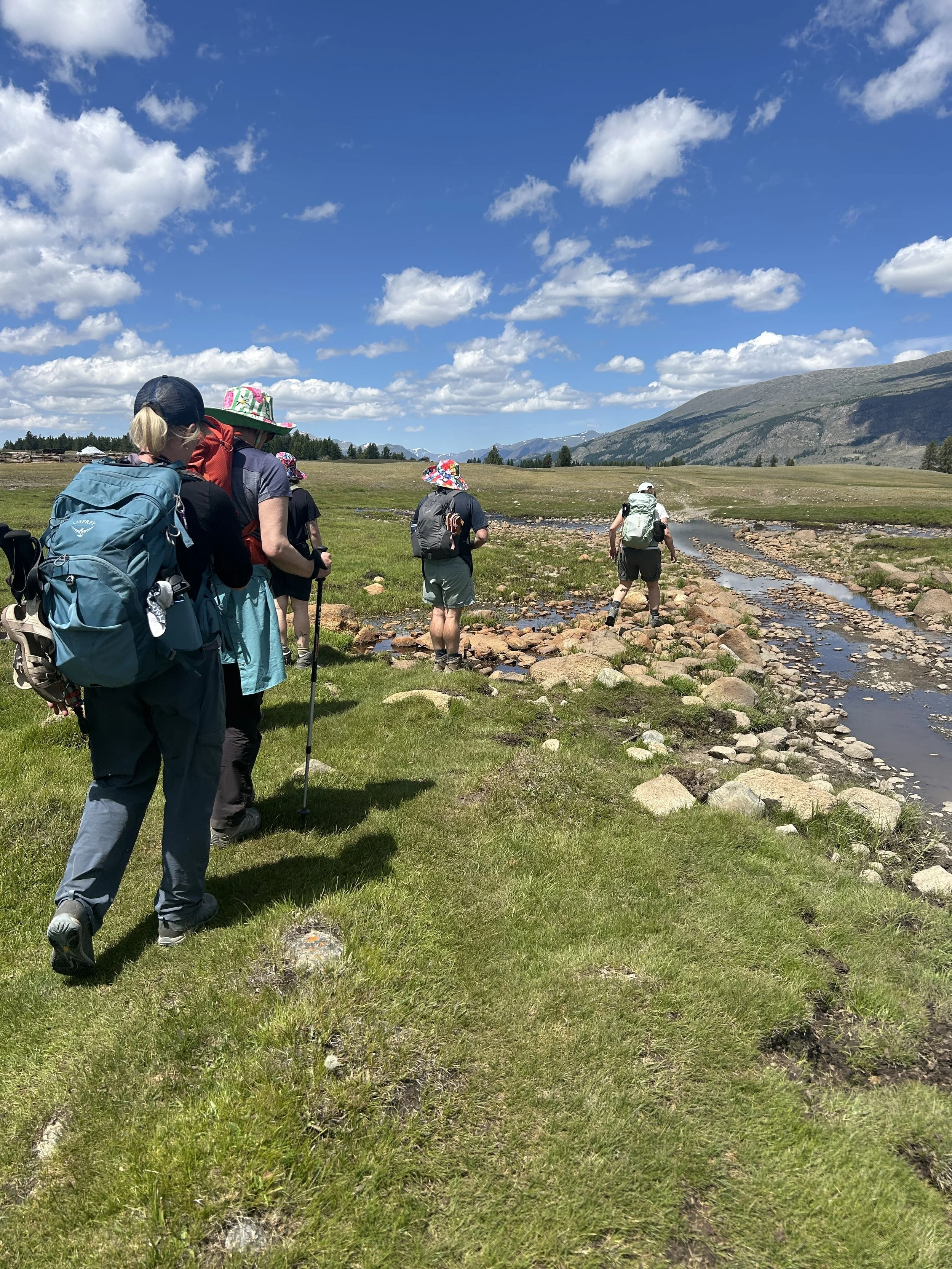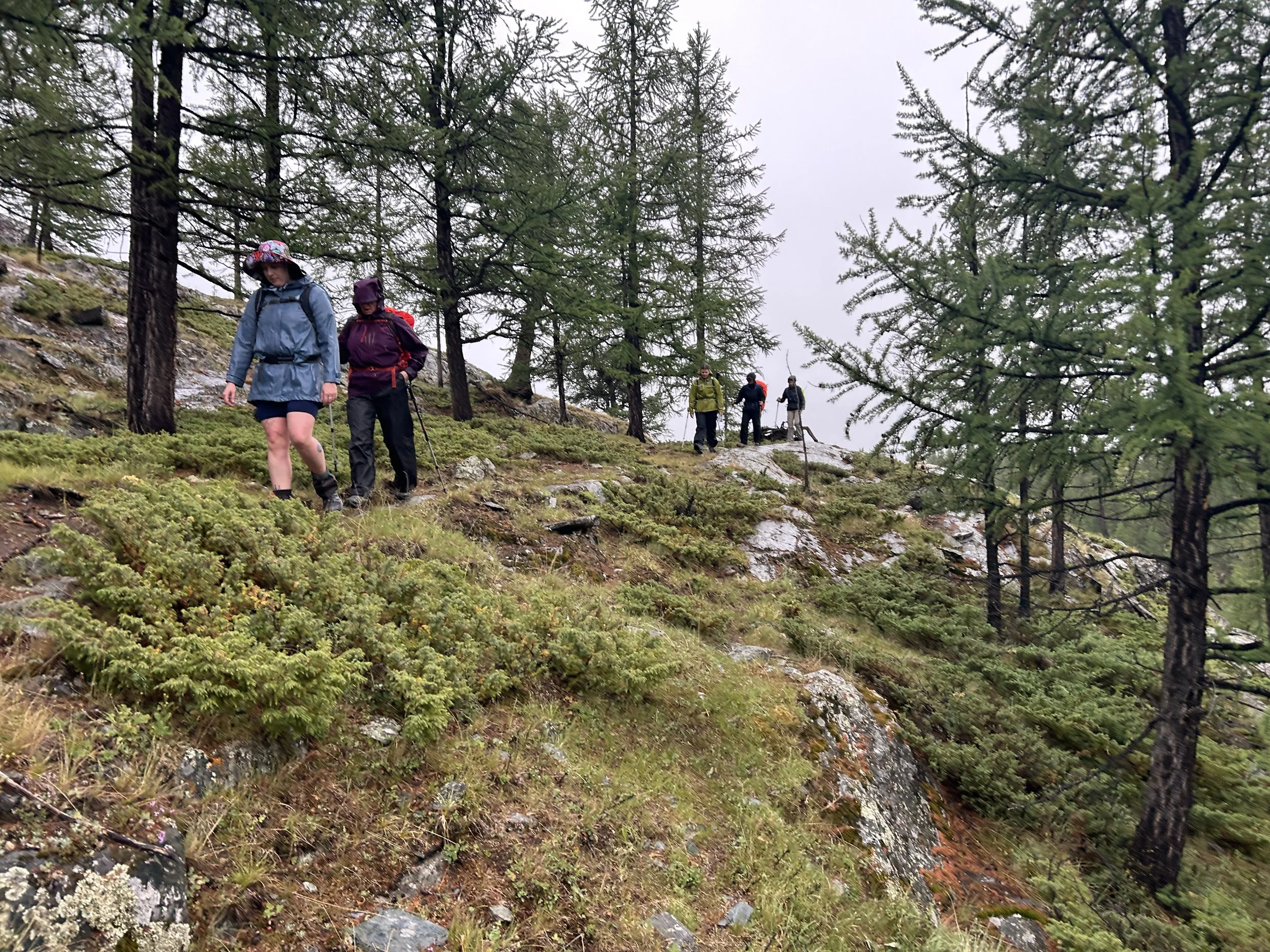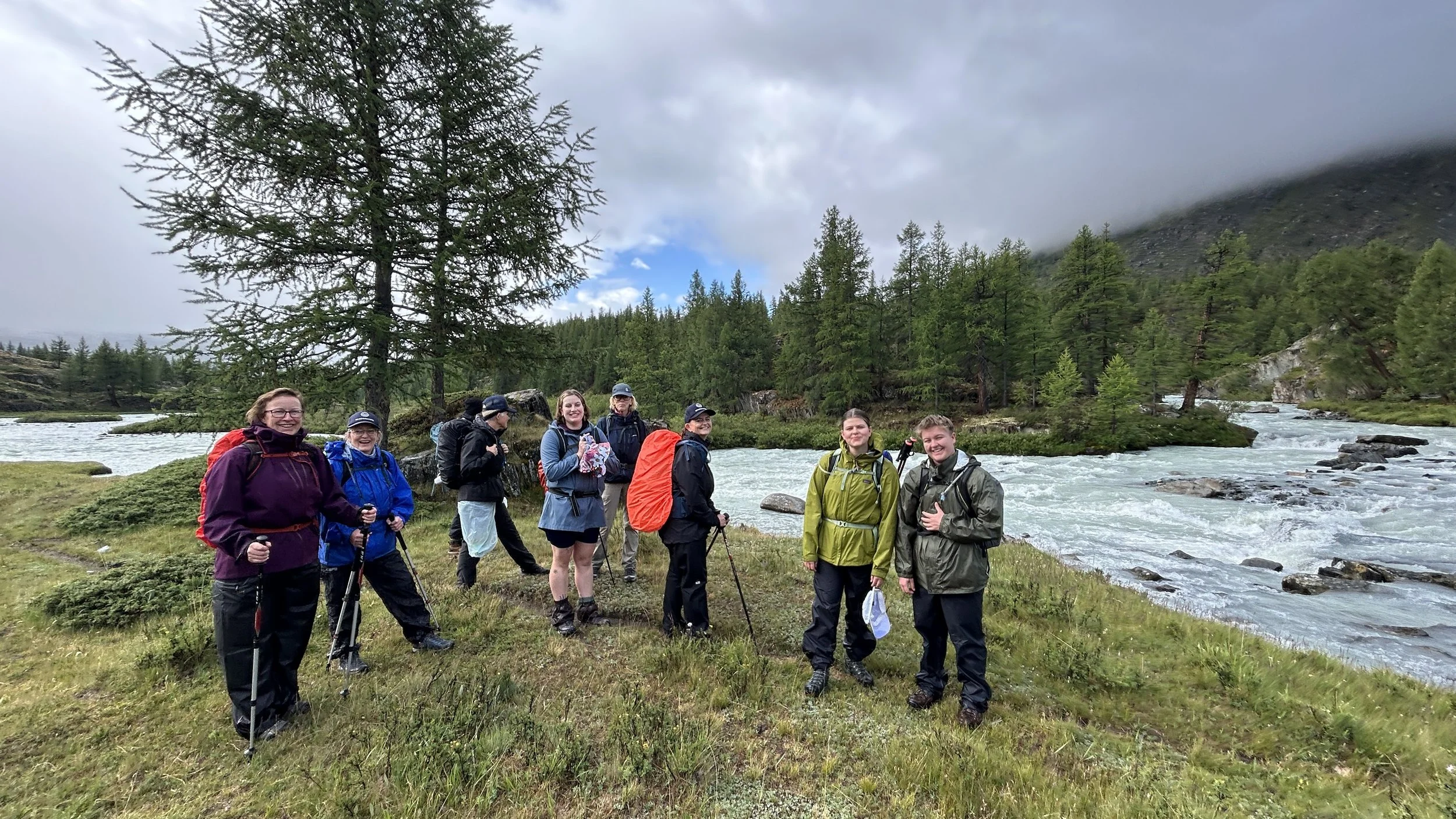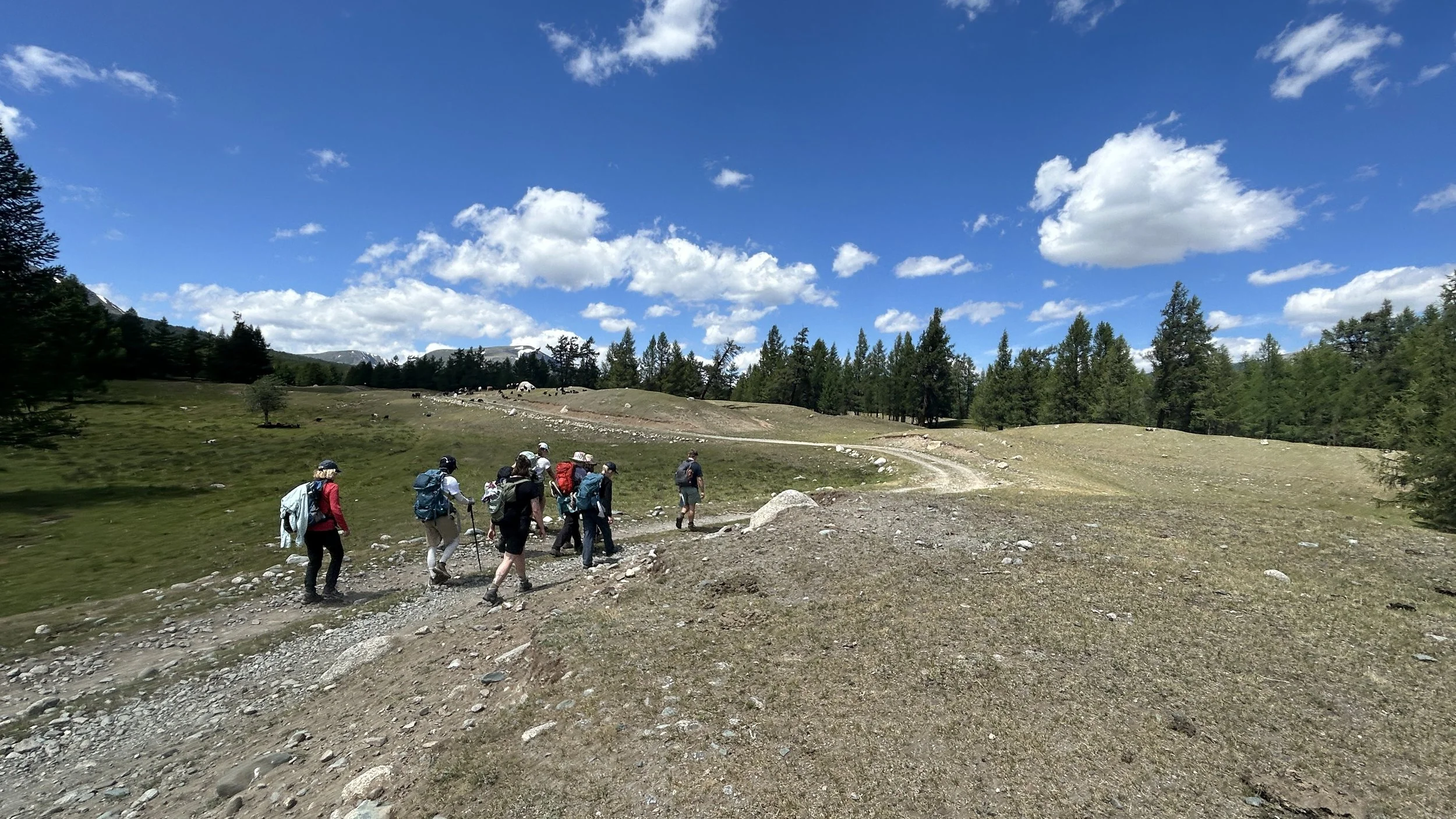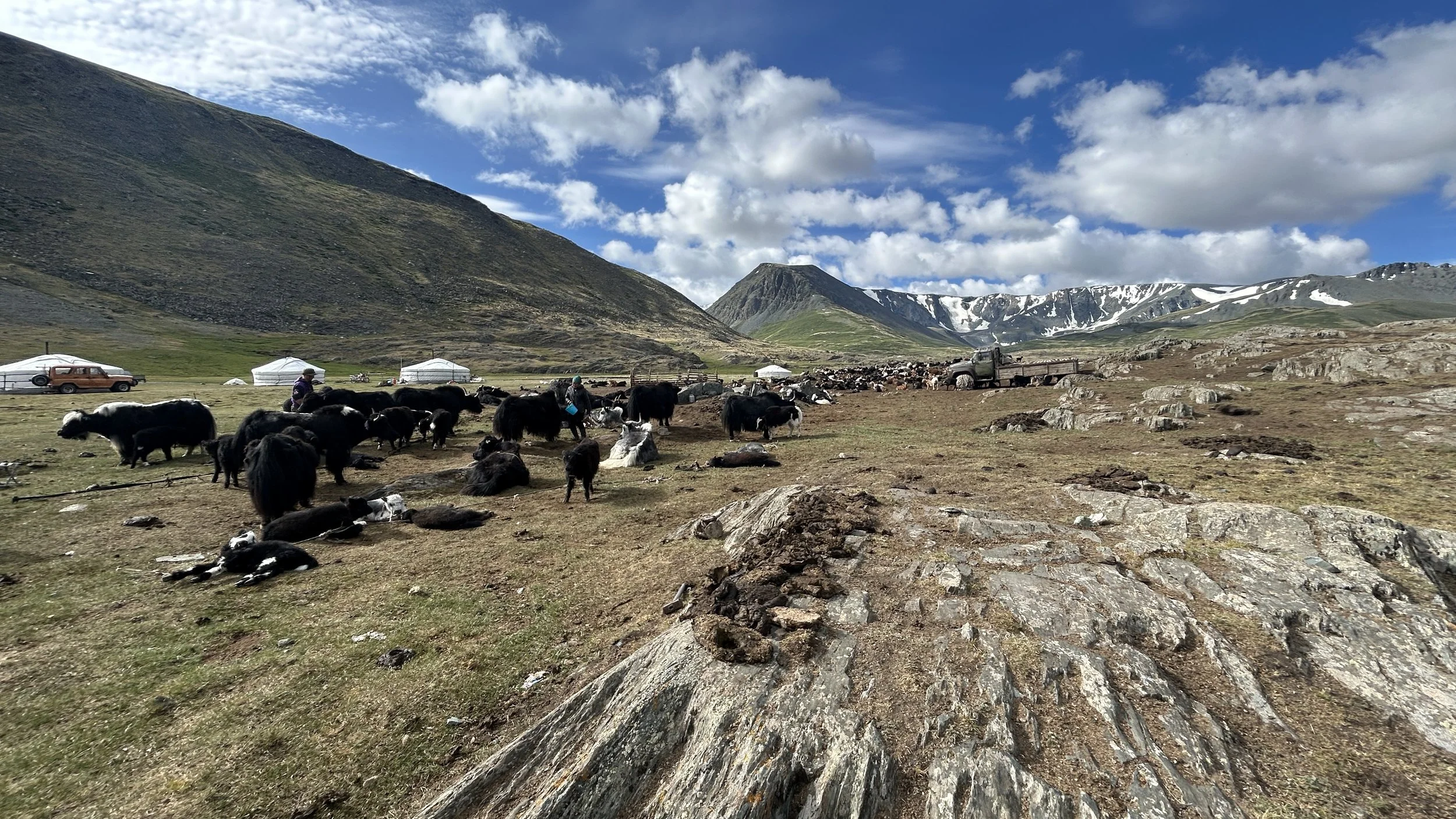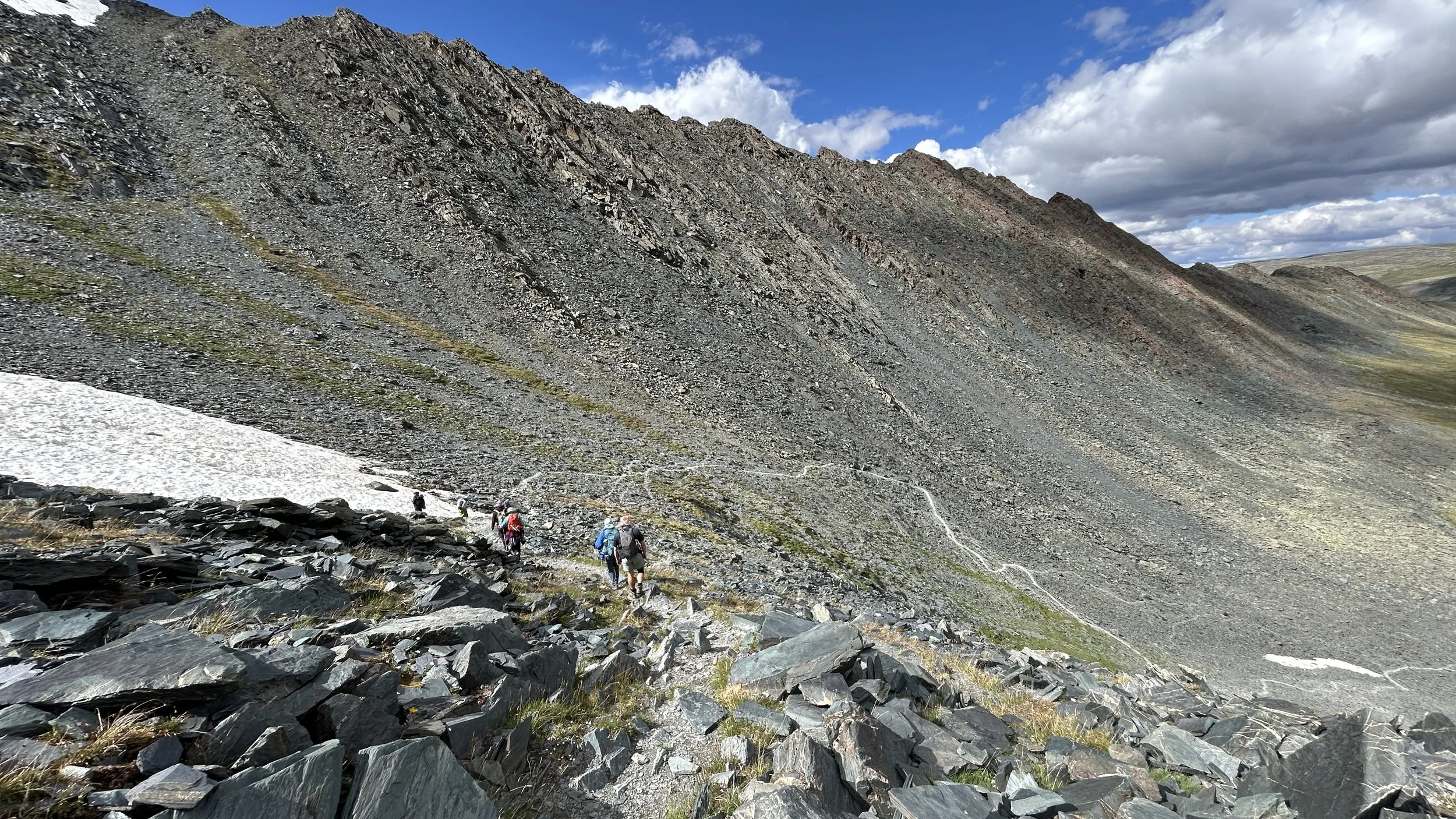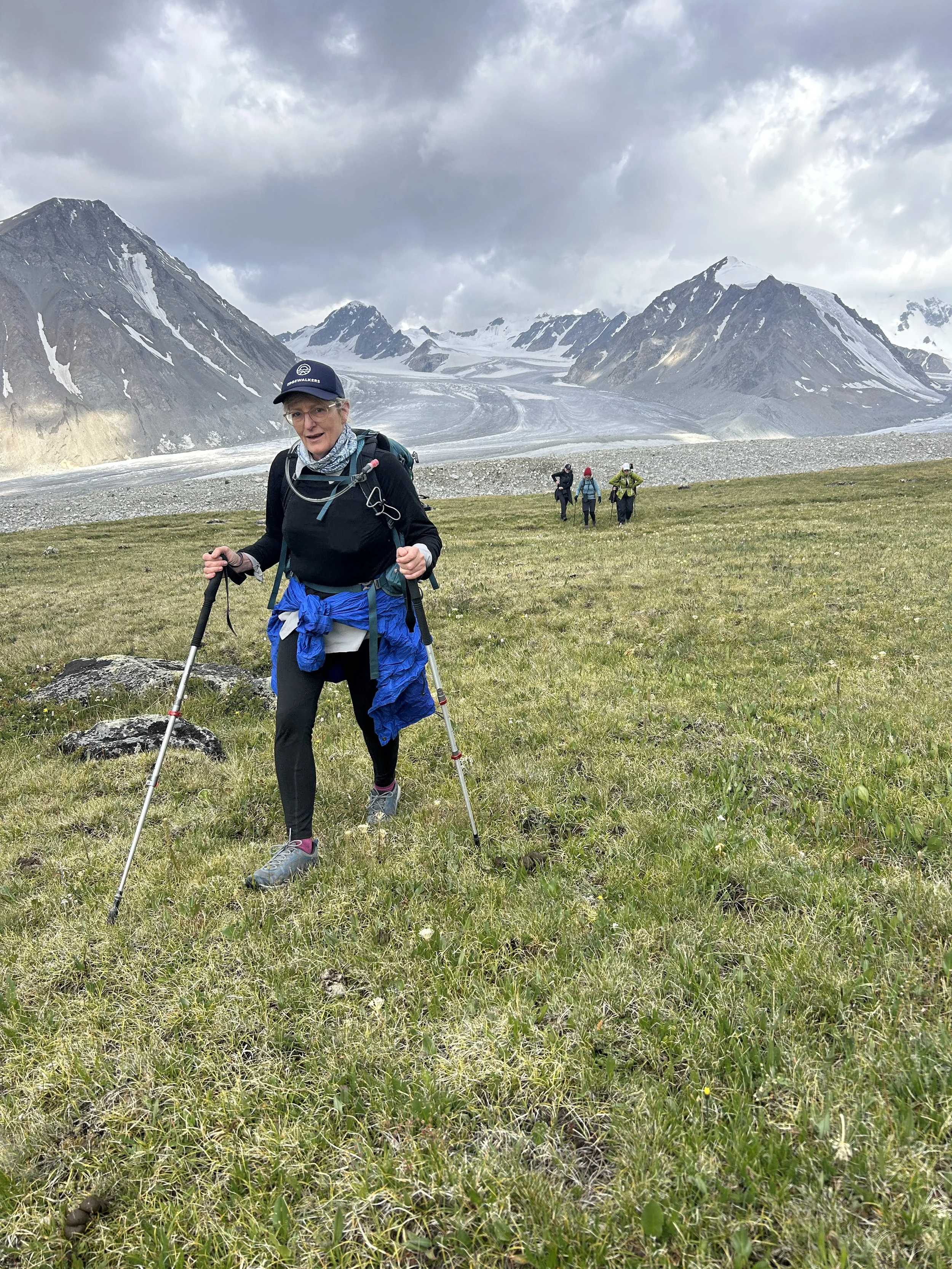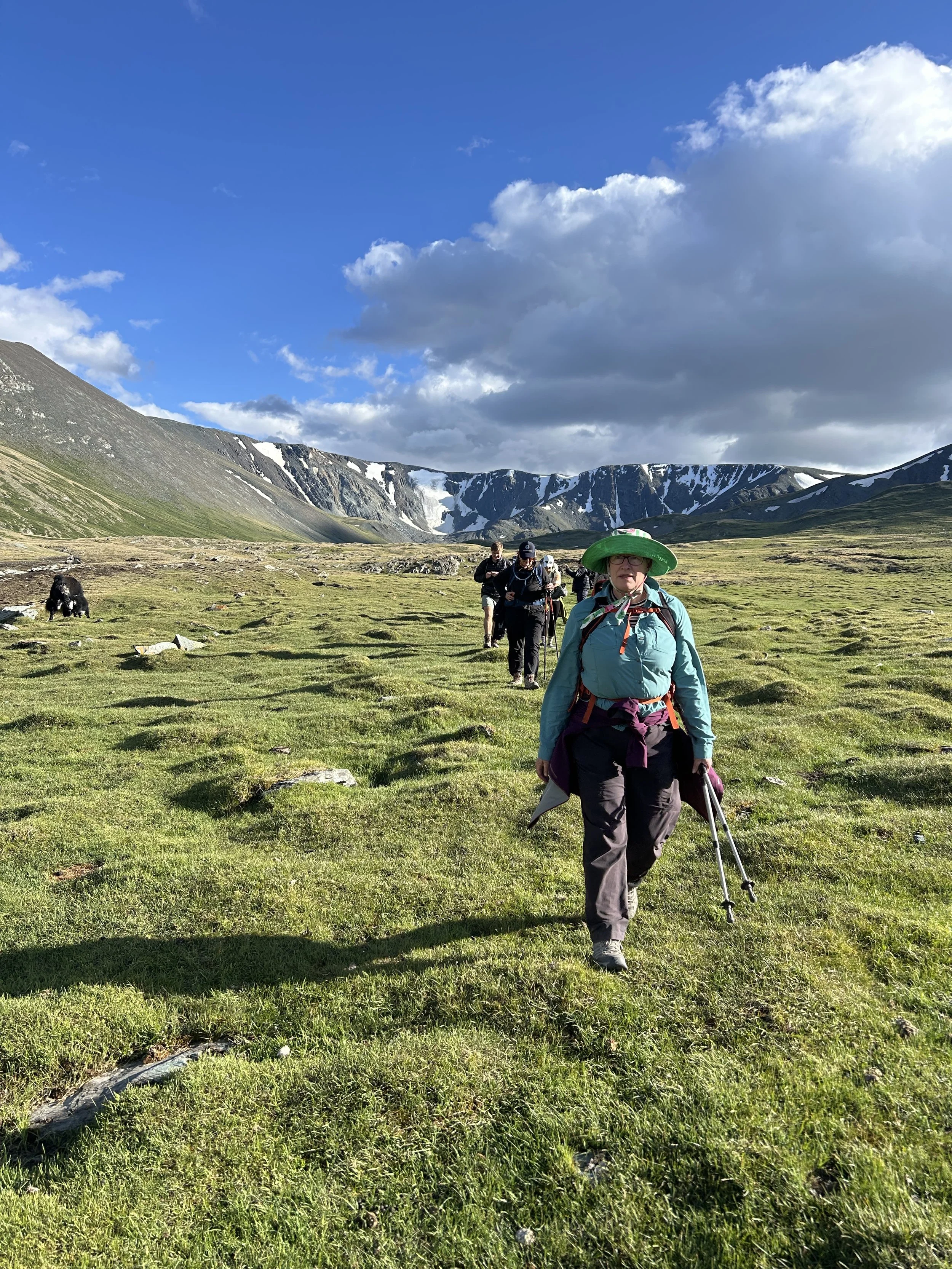
• Mongolia Walking Adventure Tavan Bogd National Park
    • Mongolia Walking Adventure Khuvsgul Lake
    • Peaks of the Balkans Hiking Adventure
    • Walking with Wildflowers - Fitzgerald Biosphere
    • Walking with Wildflowers Citizen Science Walking Adventure
    • Walking with Wildflowers - Fitzgerald Biosphere and Stirling Ranges
    • Cape to Cape 2 Day 'Quickie'
    • Bespoke
    • Mongolia Walking with Wildflowers Adventure Turgen Kharkhiraa National Park
    • Murchison Gorge Hiking Adventure - Kalbarri National Park
    • Cape to Cape End to End Walking Adventure
    • The Creativity Retreat with Dr Erika Jacobson
    • The Creativity Retreat - Korcula Island with Dr Erika Jacobson
    • Cape to Cape Walking and Yoga Mini-Retreat
    • The Creativity Retreat - Botany - Creativity - Art
  • Blog
    • About Edgewalkers
    • Testimonials
    • Contact
    • Resources
    • Wildflowers Mindful Colouring
Menu

Edgewalkers | Walking Tours & Creativity Retreats

Walking you back to nature, creativity and adventure
  • Walking Adventures
    • Mongolia Walking Adventure Tavan Bogd National Park
    • Mongolia Walking Adventure Khuvsgul Lake
    • Peaks of the Balkans Hiking Adventure
    • Walking with Wildflowers - Fitzgerald Biosphere
    • Walking with Wildflowers Citizen Science Walking Adventure
    • Walking with Wildflowers - Fitzgerald Biosphere and Stirling Ranges
    • Cape to Cape 2 Day 'Quickie'
    • Bespoke
    • Mongolia Walking with Wildflowers Adventure Turgen Kharkhiraa National Park
    • Murchison Gorge Hiking Adventure - Kalbarri National Park
    • Cape to Cape End to End Walking Adventure
  • Creativity Retreats
    • The Creativity Retreat with Dr Erika Jacobson
    • The Creativity Retreat - Korcula Island with Dr Erika Jacobson
    • Cape to Cape Walking and Yoga Mini-Retreat
    • The Creativity Retreat - Botany - Creativity - Art
  • Blog
  • About
    • About Edgewalkers
    • Testimonials
    • Contact
  • The Biodiversity Project
    • Resources
    • Wildflowers Mindful Colouring
Blog Archive
  • 2016 13
  • 2017 8
  • 2018 16
  • 2019 12
  • 2020 11
  • 2021 6
  • 2022 6
  • 2023 7
  • 2024 3
  • 2025 4
  • 2026 7

Walking the edge

Short written and image essays on walking, nature and creativity.

With a special focus on women, wildflowers and biodiversity, the writing informs and reminds the reader of the many ways nature shapes cultures, sustains wellness and inspires creativity.

Featuring Western Australia's southwest, Mongolia and other Edgewalkers destinations.

Dr Erika Jacobson -


Instagram @edgewalkers_

View fullsize I don’t know when the spell struck.

- Maybe it was when I climbed East Mt Barren and got a panoramic view of the Southern Ocean framed by sculpted quartzite and the radiant red of Barren Regelias. 

- Maybe it was on the very first visit when
View fullsize
View fullsize
View fullsize Purple is the colour of the day!
Go Freo!
#fremantledockers #freo #wharfietime #edgewalkers #freodockers
View fullsize
View fullsize This year we did two back to back walking adventures in the Tavan Bogd National Park with the most delightful guests.
Some of their reviews are starting to come in and we wanted to share these two.

BTW this is Mary’s second trip to Mongolia wi
View fullsize There are a couple of species from each of the 7 days of our recent walking with wildflowers adventure in the Stirling Ranges and the Fitzgerald Biosphere.
There were so many wildflowers in full bloom and despite the terrible fire in the Fitzgerald R
View fullsize
View fullsize

Newsletter Block
This newsletter signup form needs a storage option. Edit the block and enter a storage location via the Storage tab.

Subscribe

Sign up with your email address to receive news and updates.

We respect your privacy.

Thank you!

Article Categories

  • Biodiversity
  • Creativity
  • Margaret River
  • Mongolia
  • Retreats
  • Walking
  • Wildflowers

Article Tags

  • wildflowers
  • walking
  • mountains
  • biodiversity
  • creativity
  • rivers
  • habits
  • UNESCO
  • motivation
  • Cape to Cape
  • Retreats
  • Fitzgerald River National Park
  • National Parks
  • Margaret River

My first time on East Mt Barren - Fitzgerald River National Park - 2017

The Fitzgerald River National Park - a love affair turned mission

September 30, 2026

I don’t know when the spell struck.

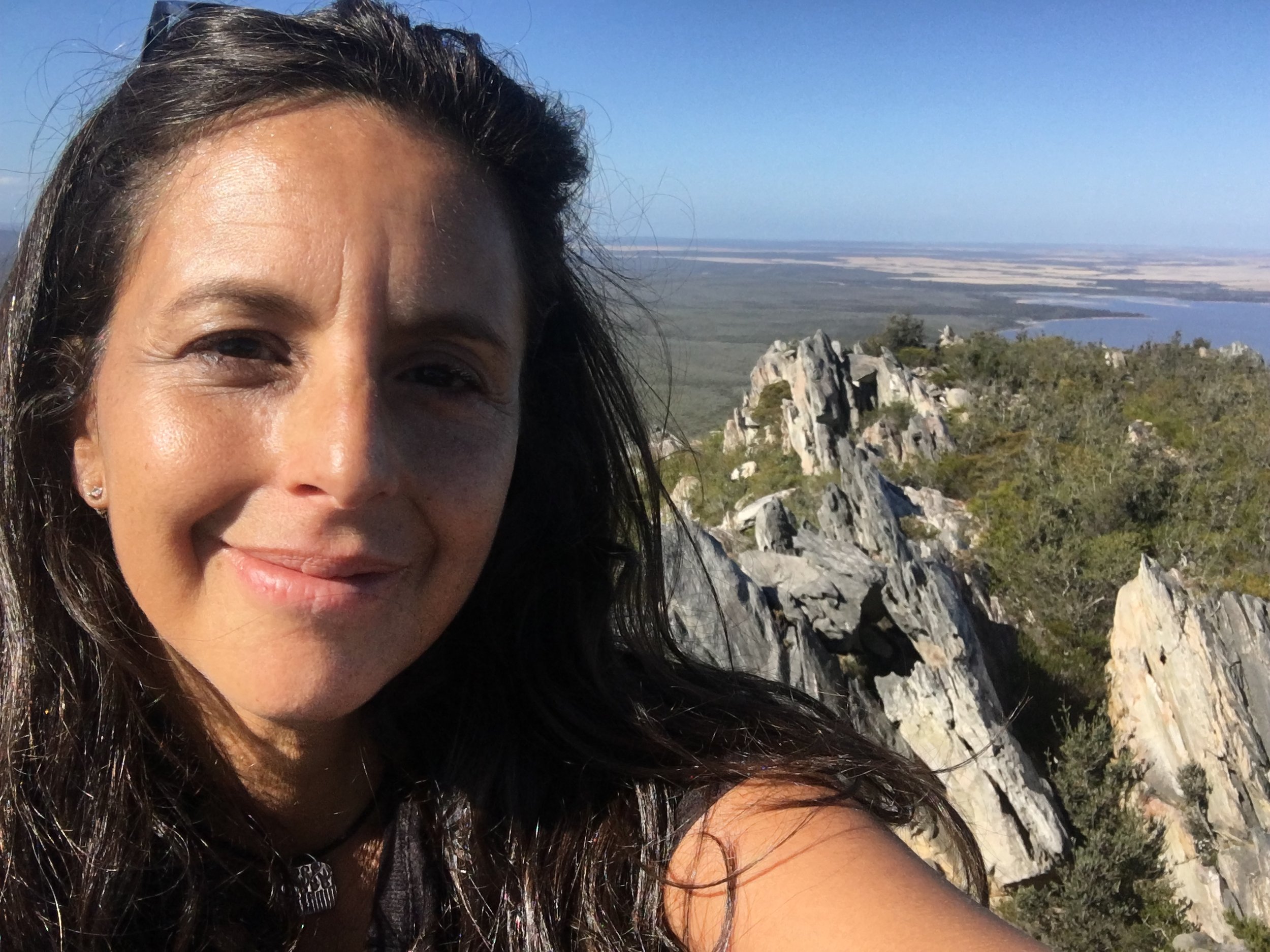
Maybe it was when I climbed East Mt Barren and got a panoramic view of the Southern Ocean framed by sculpted quartzite and the radiant red of Barren Regelias.
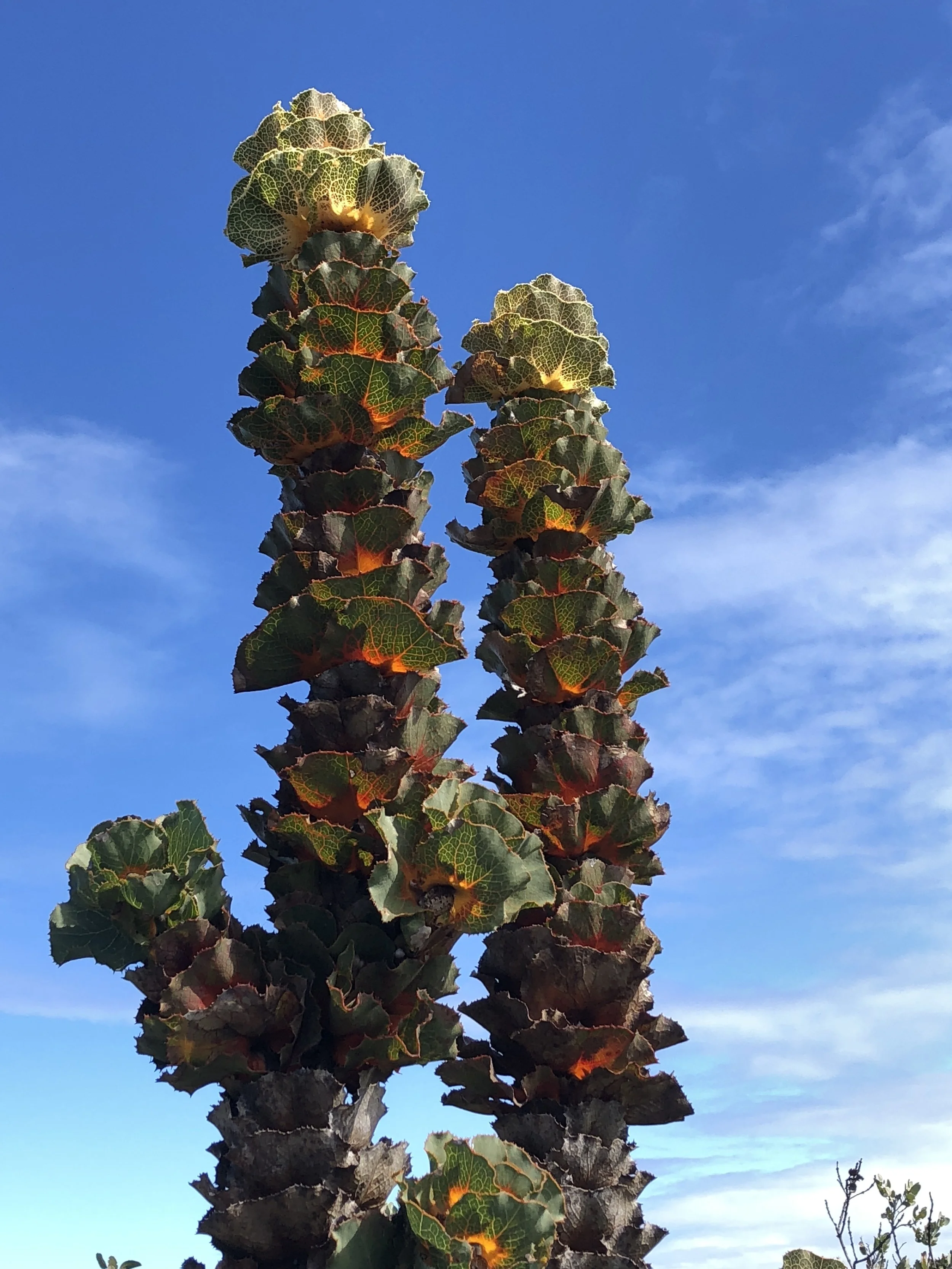
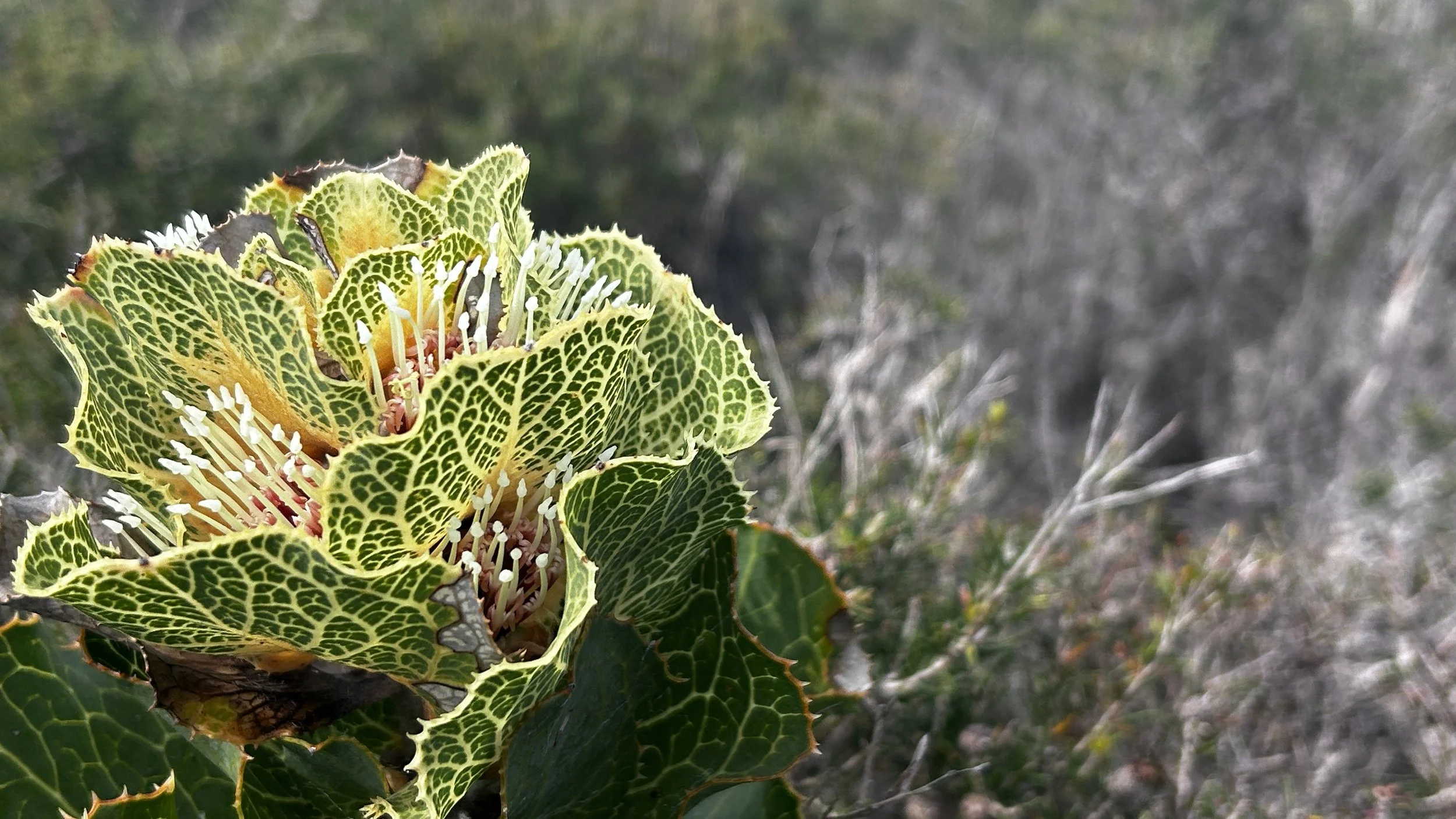
Hakea Victoria - Royal Hakea
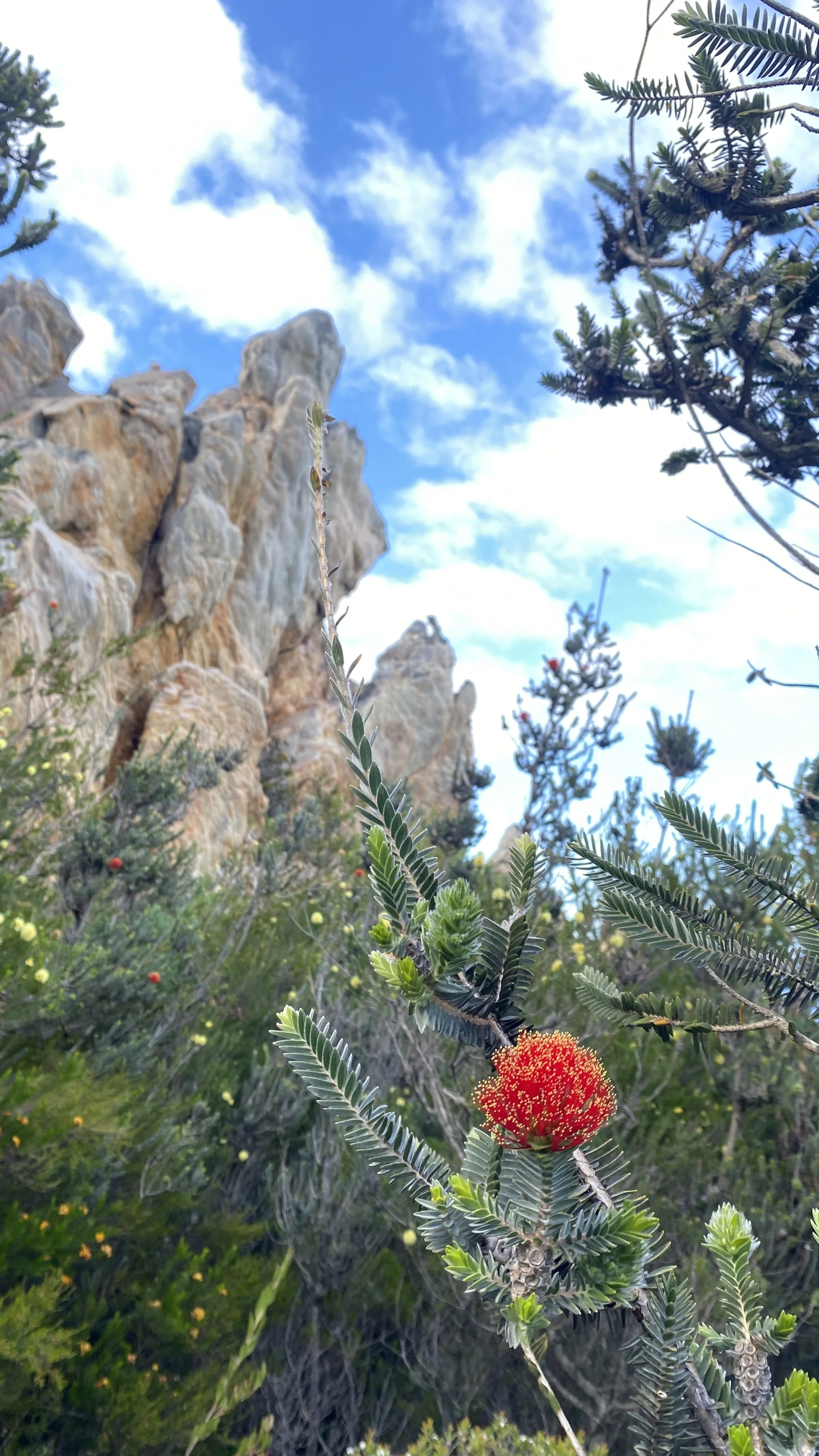
Regelia velutina - Barren’s Regelia

Maybe it was on the very first visit when I drove onto Quiss Road and got a glimpse of a Royal Hakea next to a Banksia caleyi and a Banksia coccinea.
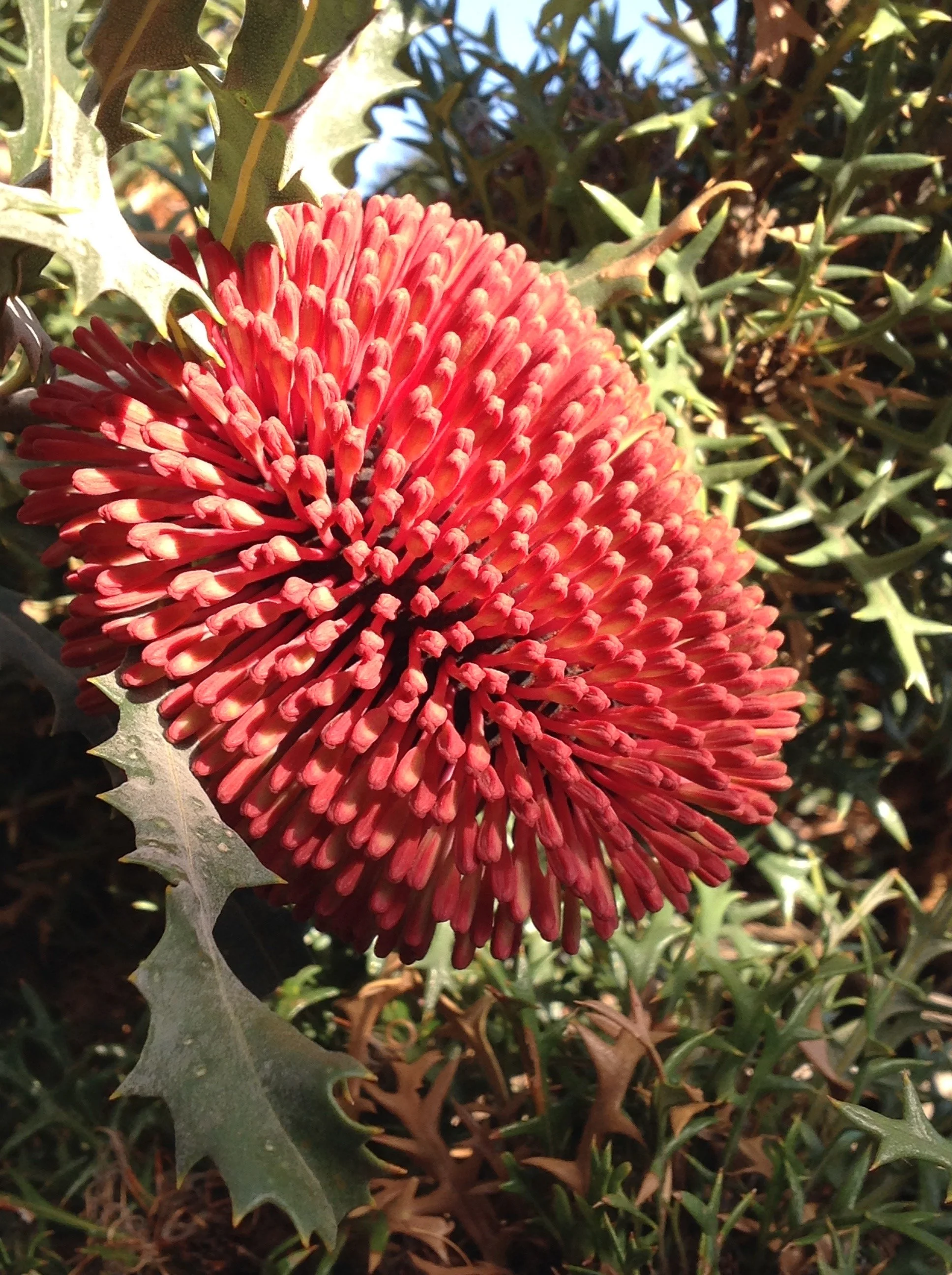
Banksia caleyi - Fitzgerald River NP
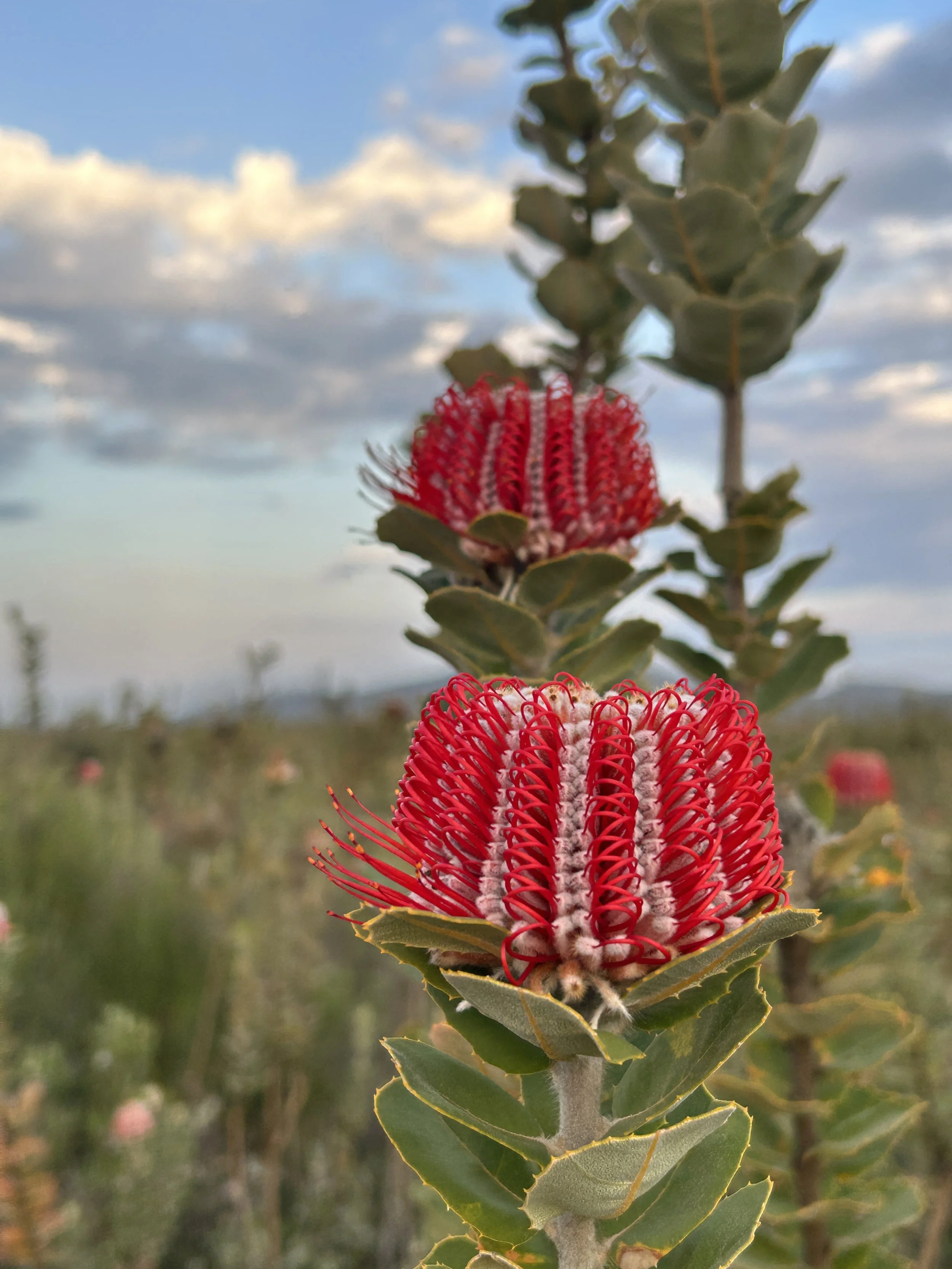
Banksia coccinea - Fitzgerald River National Park
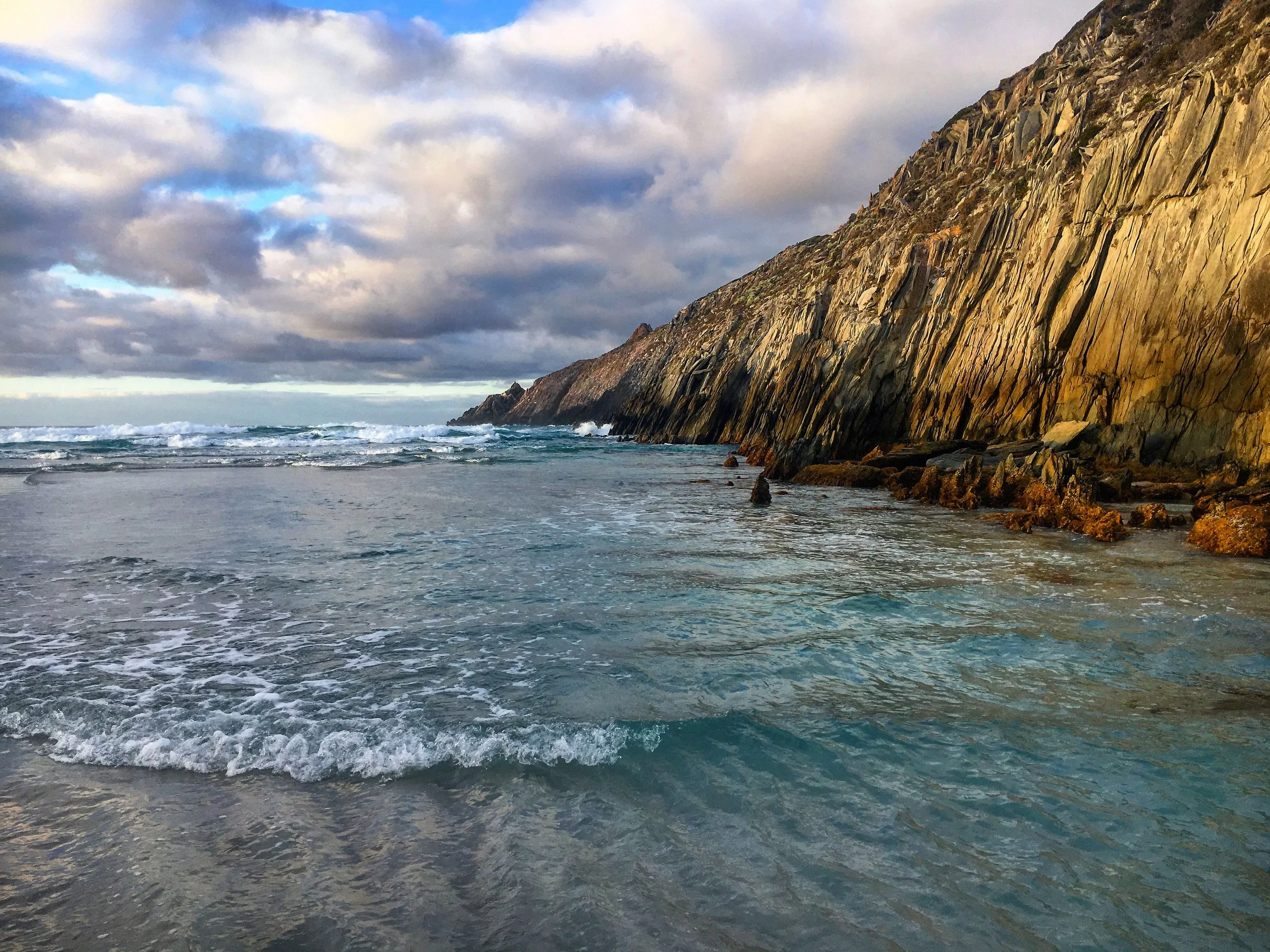
Whalebone Beach - January 1 2018

Maybe it was waking up on the first day of the year 2018 at Whalebone Beach with the Southern Ocean stroking the shores of powdery white sand.

Or after walking the Hakea Trail all the way to Quoin Head on the east side of the park.

Or the Mamang Trail all the way to the Dempster Inlet, past Point Charles, on the west side of the park.
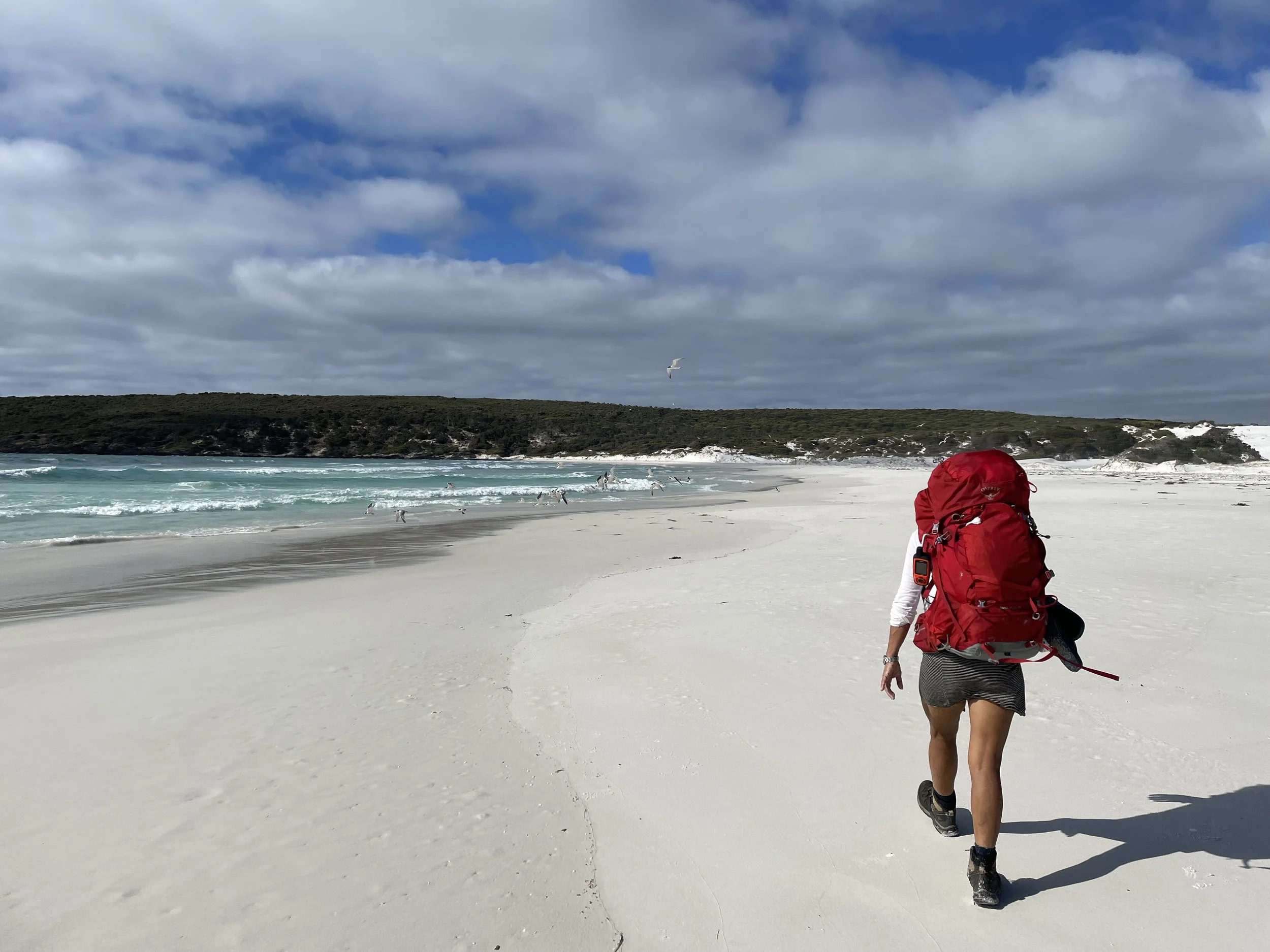
The Mamang Trail - near Point Charles
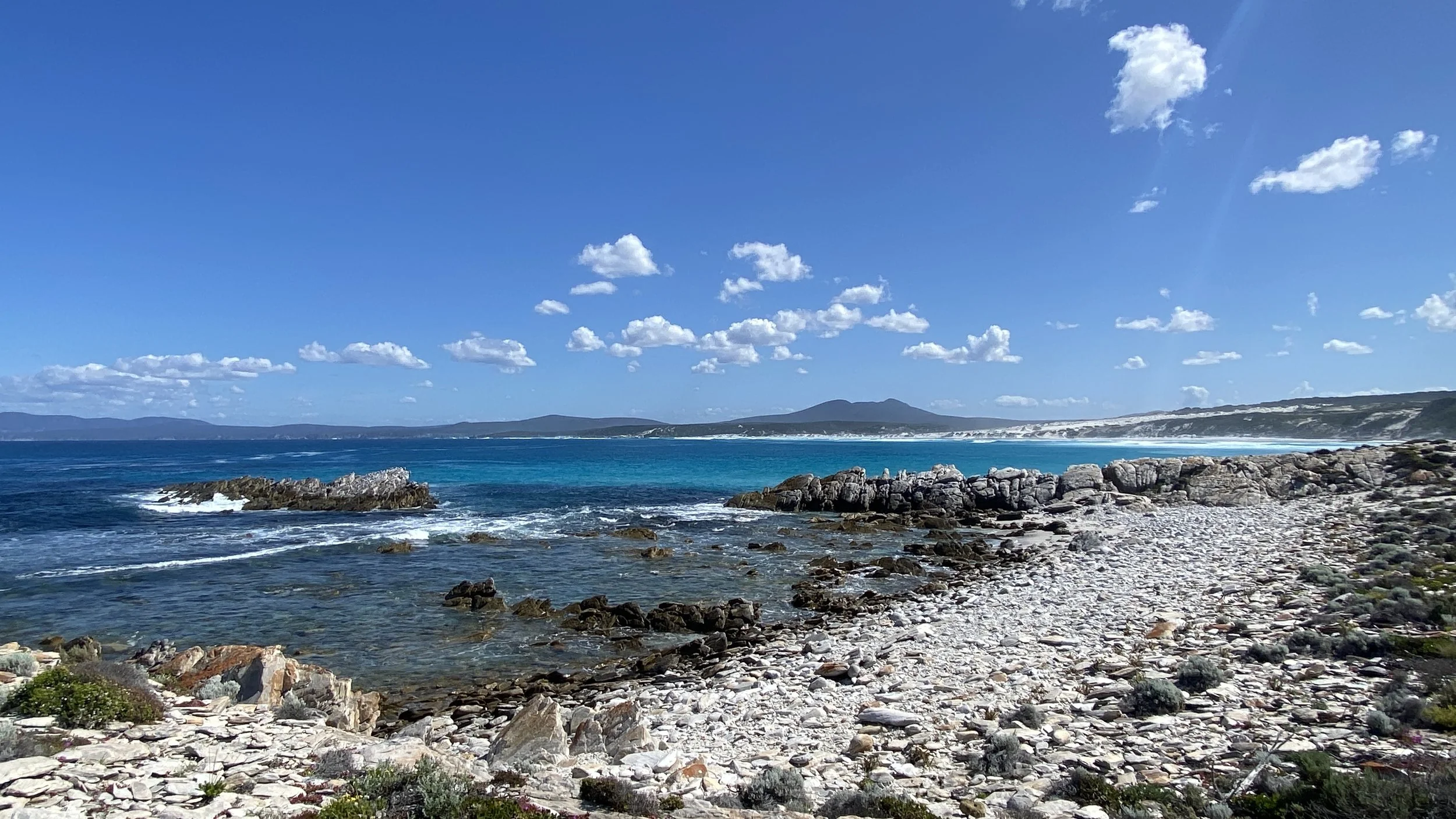
Looking west towards on the Hakea Trail.
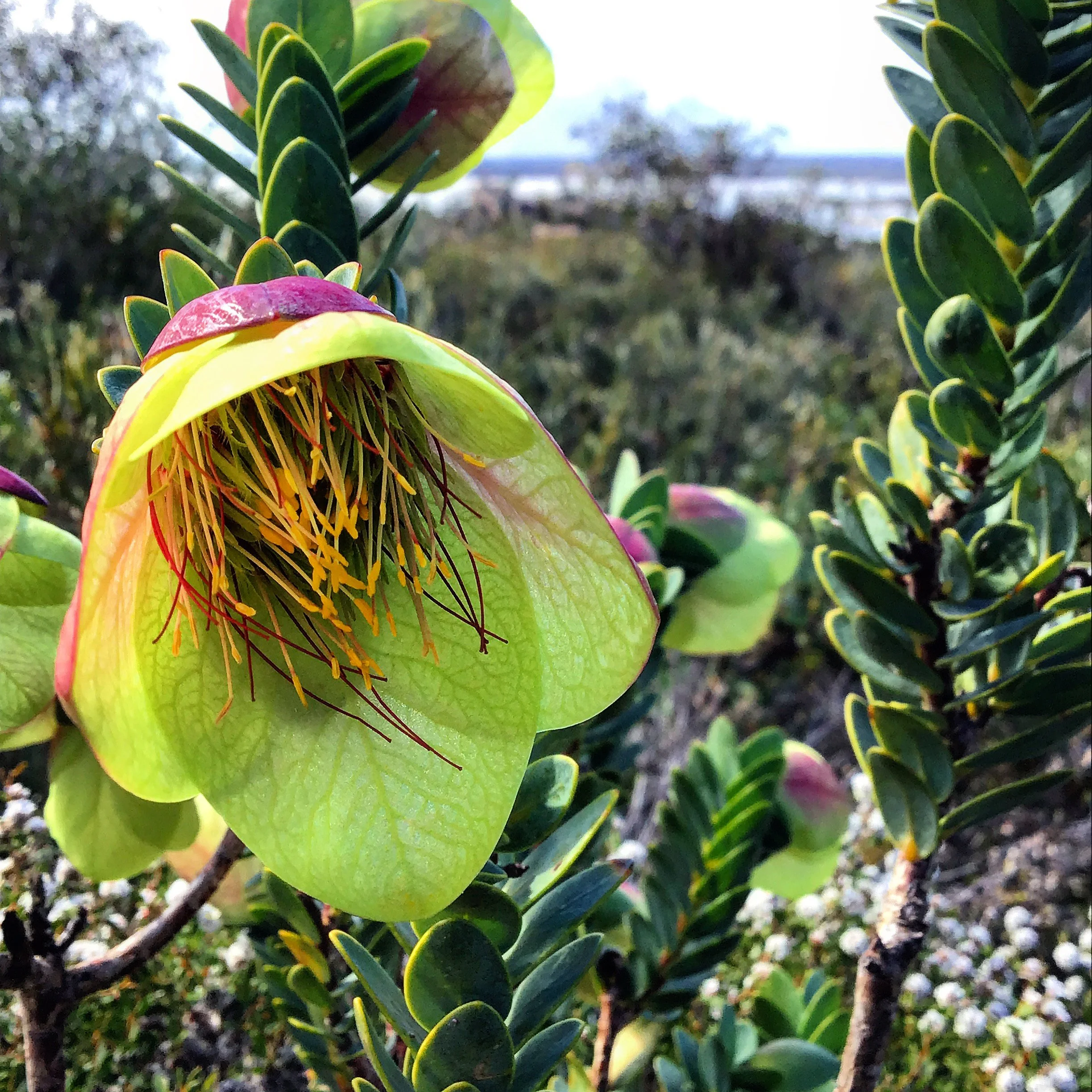
Qualup Bell - Pimelia physodes

Or when I first set eyes on a Qualup Bell.

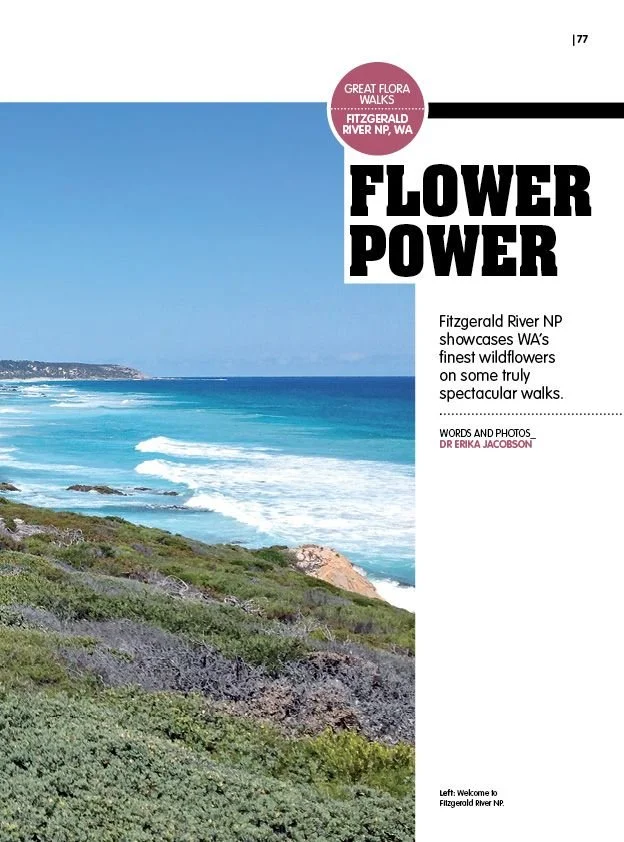
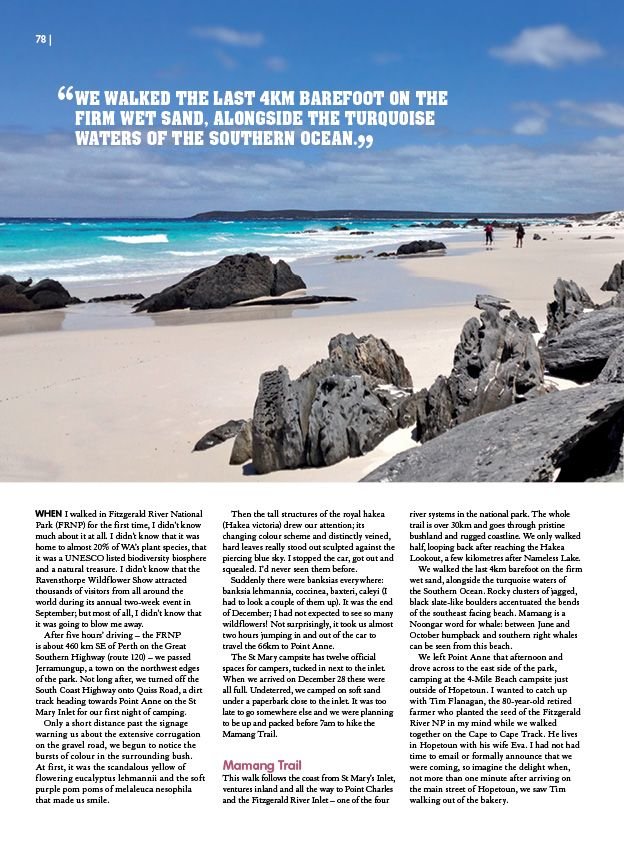
Back then I knew nothing about it, which I wrote in this blog in June 2018 a version of which was published in Great Walks Magazine.

But I knew I'd never been anywhere with such diversity of flora, and I couldn't wait to see it in full wildflower season.
Walking with Wildflowers - Mamang Trail

Walking with Wildflowers

That longing became our Walking with Wildflowers adventure.

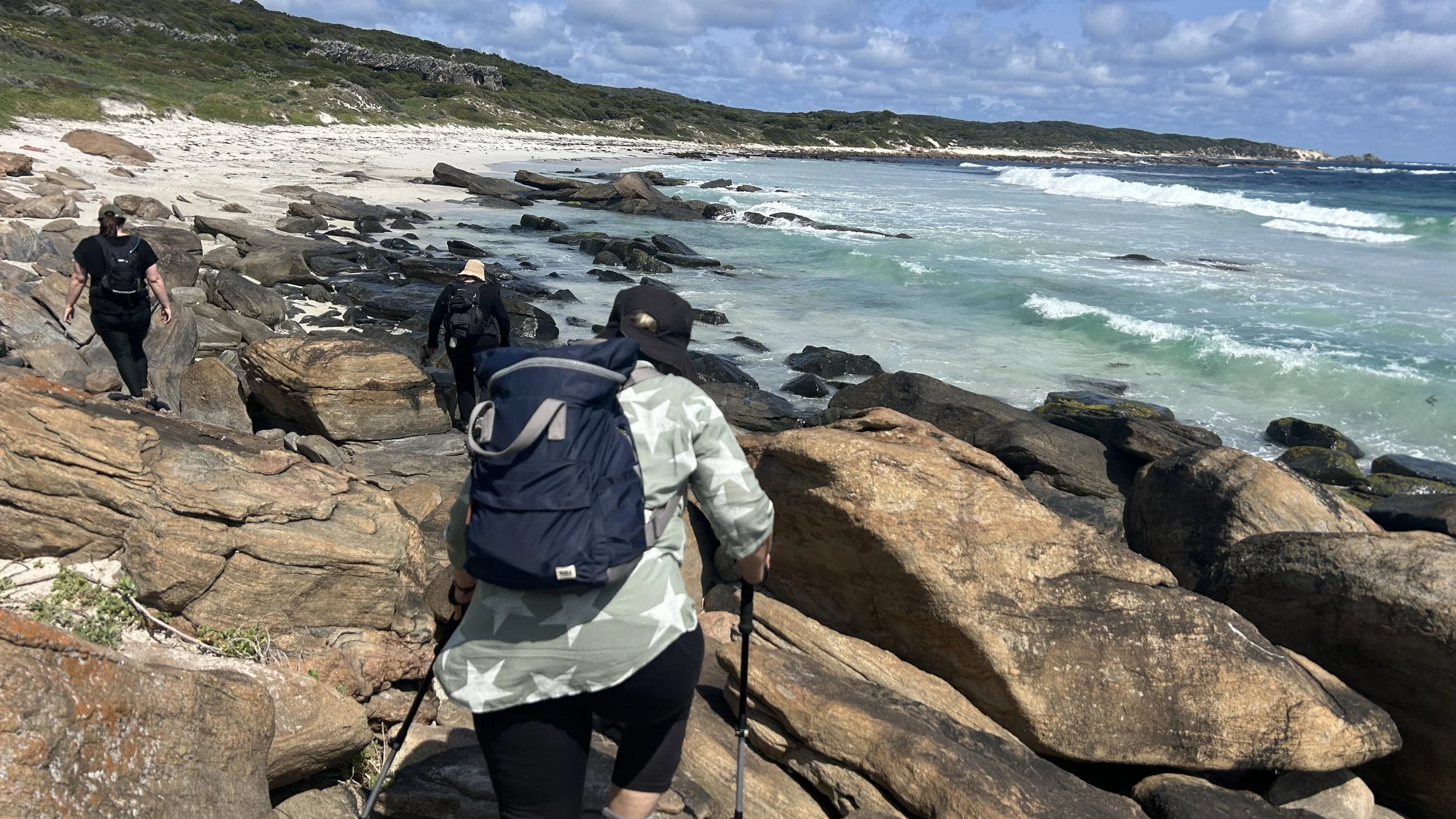
Every WA Djilba season (first spring in the Aboriginal seasons) I and other members of the team lead small groups through the Fitzgerald Biosphere, walking the same trails that first captured me: the Mamang and Hakea trails, over East Mt Barren, and through other stunning ares of the Fitzgerald Biosphere, and I never tire of watching guests fall under the same spell.

It has become our best selling walking adventure in Western Australia.
It's easy to see why.
There is no more intimate way to know a wildflower than to walk beside it in its own habitat.
To brush against them. To see them at eye level, to bend over them and admire their intricate details.

To feel the ground on which they grow, walk over the rock, the sand, the compact dirt.

But the longer you walk a place, the more you understand how fragile it is.

Love, eventually, asks something of you.
For me, that meant adding educational walking adventures to our offerings. Out Citizen Science Walking with Wildflowers adventure is the first event that will be intentionally educational and involve walking and learning practical skills.

My love for this place has turned into a mission.

And joining the Friends of the Fitzgerald River National Park.

The Friends of the Fitzgerald River National Park

‘The Friends’ have been caring for this park for more than half a century.

Their story begins in 1971, when the Ongerup Conservation Organisation formed to fight a mining threat to what was then an unmanaged nature reserve; the park was gazetted in January 1973.

In 1980 the group re-formed at the urging of the late botanist Ken Newbey, whose work in the area remains an enduring legacy. Their early goals were to lobby the state government to fund a biological survey of the park, support the rangers through working bees, and restore Twertup, the only historic building within the park's boundaries.

That survey was their first major research win, and it still provides the park's basic biological reference today.

This year tested all of us.

On 16 January, lightning sparked at least two fires in the park's Wilderness Zone. Over 17 days they burned around 173,000 hectares of the park and surrounds, including about 44% of the park itself.
Some areas have now burned two or three times in 36 years, and the park's kwongan heath and mallet and moort communities are especially sensitive to short intervals between fires.

Kwongan - a Noongar word referring to the ancient heathlands of low scrub vegetation on sand plains in the southwest of Australia like most of the Fitzgerald River National Park. They usually dominated by flowering plants from the Proteaceae family like Hakeas, Banksias and Grevilleas. It can also refer to vegetation found on other soils with other species like Myrtaceae, Fabaceae and low shrubland.
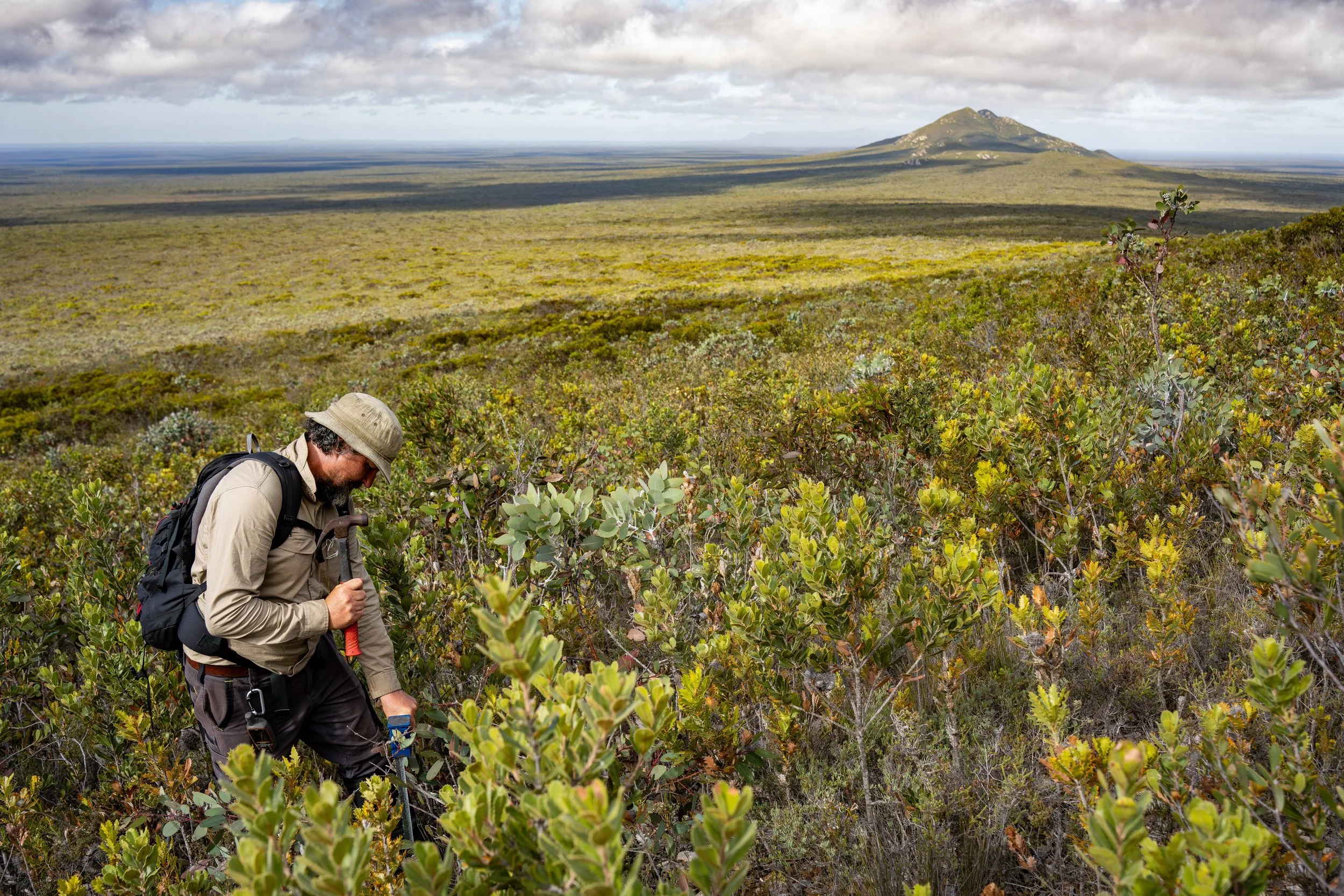
From advocacy to evidence

What I admire most about the Friends is that they don't just raise the alarm; they build the evidence for change.
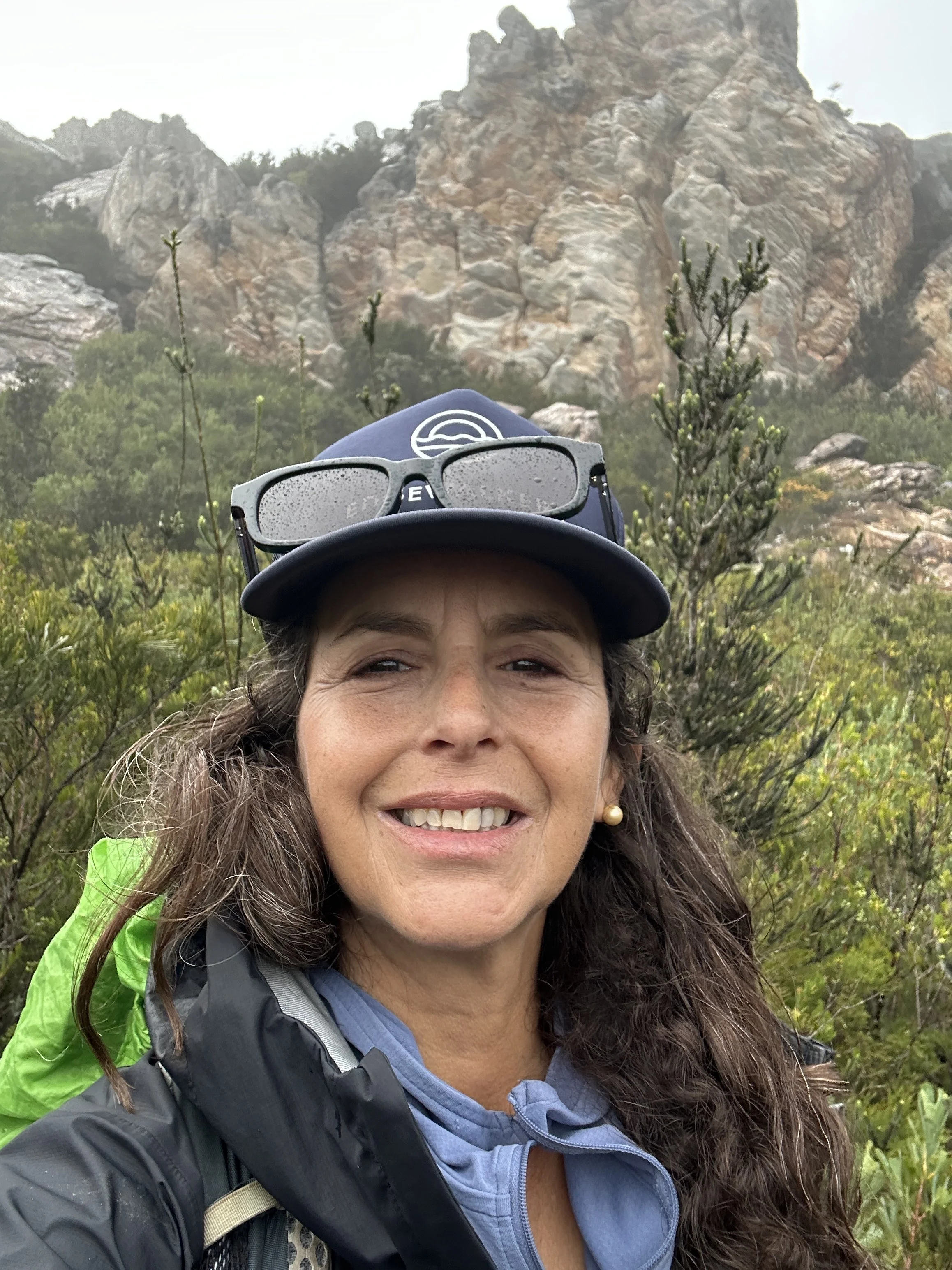
On East Mount Barren - September 2026 - one week before writing this blog. Still fining joy in every walk through the Fitzgerald River National Park.

The love affair has turned into a mission to protect, educate and restore this wonderful place.
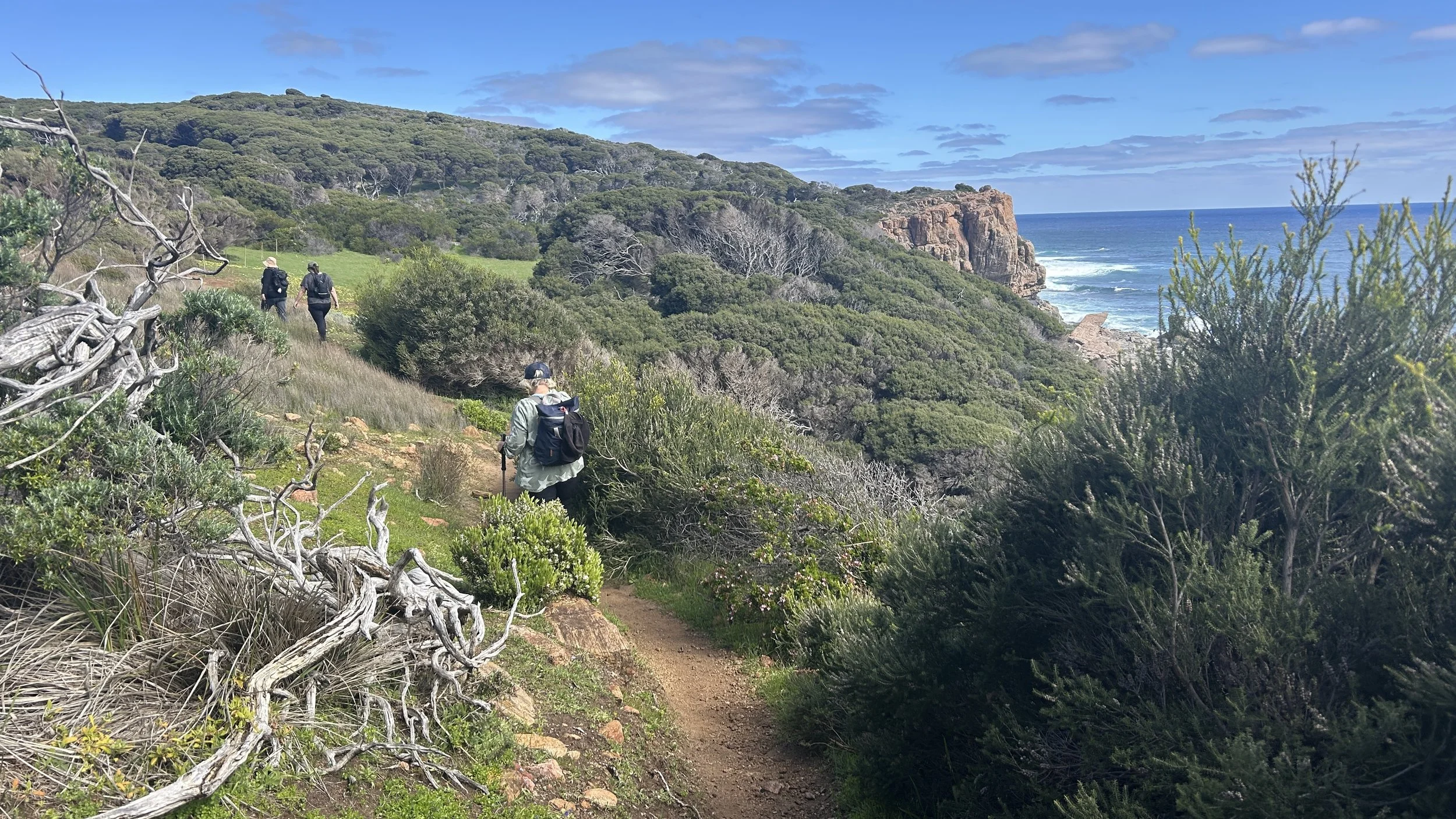
Their own photo records show what's at stake.

Royal Hakeas along the No Tree Hill (on the East side of the NP) trail declined considerably between the 1980s and 2019, a loss linked to a 2003 prescribed burn that caught the plants at just 14 years old, before their seed bank could recover.

So the Friends brought people to the table.

After a workshop they initiated, DBCA funded $35,876 for its scientists to develop a model defining ecologically acceptable fire-return intervals for 18 susceptible plant species across the South Coast.

In 2024 the Friends funded a study of the Royal Hakea population ecology in the park and the effect of fire, and after this year's fire they wrote to the Environment Minister calling for a genuinely independent review.
This year they received more funding for further research.

It's citizen science at its best: local knowledge, long memory and scientific rigour working hand in hand. And it moves me deeply that the Royal Hakea, the plant that made me squeal on that first gravel road, is now at the centre of their work.

Wilyabrup Cliffs on the Cape to Cape Track - Western Australia

Have you seen the Cape to Cape in Spring? Four reasons that keep us coming back

August 28, 2026

Every year, when I find myself once again on Cape to Cape I like to stand above the Wilyabrup Cliffs and watch the Indian Ocean throw itself at the coast with a force that makes me feel small and full of awe.
The Cape to Cape has come to mean a lot to me and to all of the people who have walked along its rugged and wild stretches. Everyone has different reasons for returning to wild places.

Here are four more reasons why you might also want to keep coming back to the spectacular Cape to Cape track

1. The Cape to Cape is wild

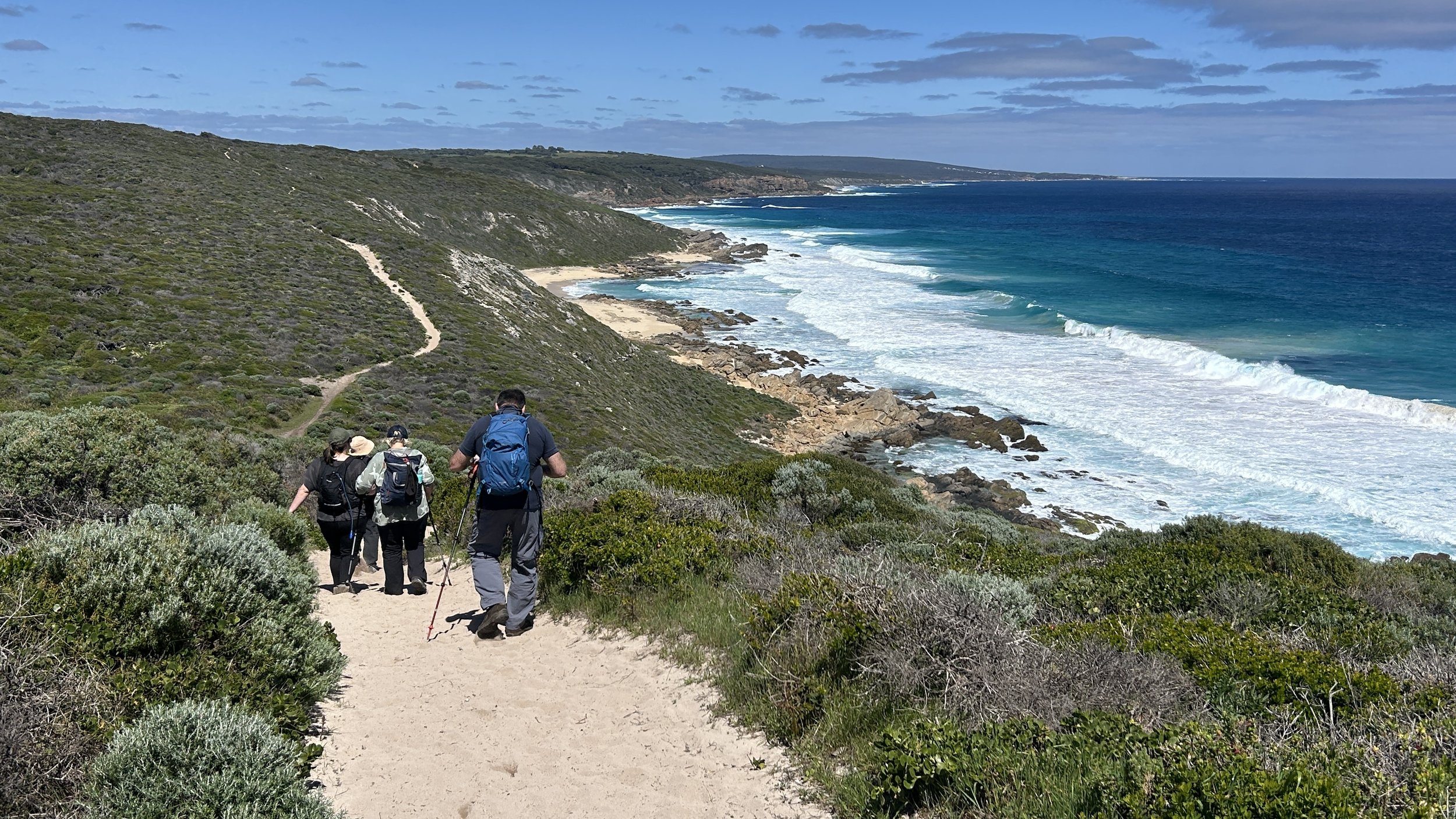
The Cape to Cape Track runs for 125 kilometres between Cape Naturaliste and Cape Leeuwin, and for most of that distance the Indian Ocean is right there beside you. Crashing against granite headlands, carving out blowholes in the limestone.

And yet for all this wilderness and ruggedness, you're never more than a short drive from Margaret River; from an espresso, a gourmet, cellar door lunch, a hot shower in world-class accommodation.

One moment you're walking through 40 - 60 foot Karri trees in the Boranup Forest with the tall canopies swaying above to the squeals of black cockatoos; the next you're on an exposed headland with nothing between you and the horizon.

It’s rugged; it’s wild and the fact that it sits so close to one of Australia’s most popular tourist destinations makes it feel more remarkable.

Walking towards the Boranup Forest from Contos Campground

2. The wildflowers are abundant

There are sections of the Cape to Cape in the middle of Djilba (August and September) where the wildflowers are so dense all you can see is colour, exuberant and loud, calling out for your attention. There are long corridors lined with bright yellow Acacias, pink Pimelias and blue Scaevola. Further along the native Rose bushes and coastal Boronia line the paths.
Kangaroo paws stands up red and green against the grey-green scrub. Banksia flower spikes glow gold in the late afternoon light, hovea adds patches of deep purple through the forest, and if you slow down and look properly, cowslip and spider orchids are tucked low under lower bushes and leaf litter.

And as the season moves into Kambarang (October and November) the trigger plants start blooming and the grass trees spikes and poppies turn white.
It’s magic. Pure floral magic.

Spider Orchids near Moses Rock

Pimilea sp.

3. The Artist Open Studios inspire us

There's a reason this part of the world turns creative in spring, and it isn't just the wildflowers, though I don't think it's a coincidence either.

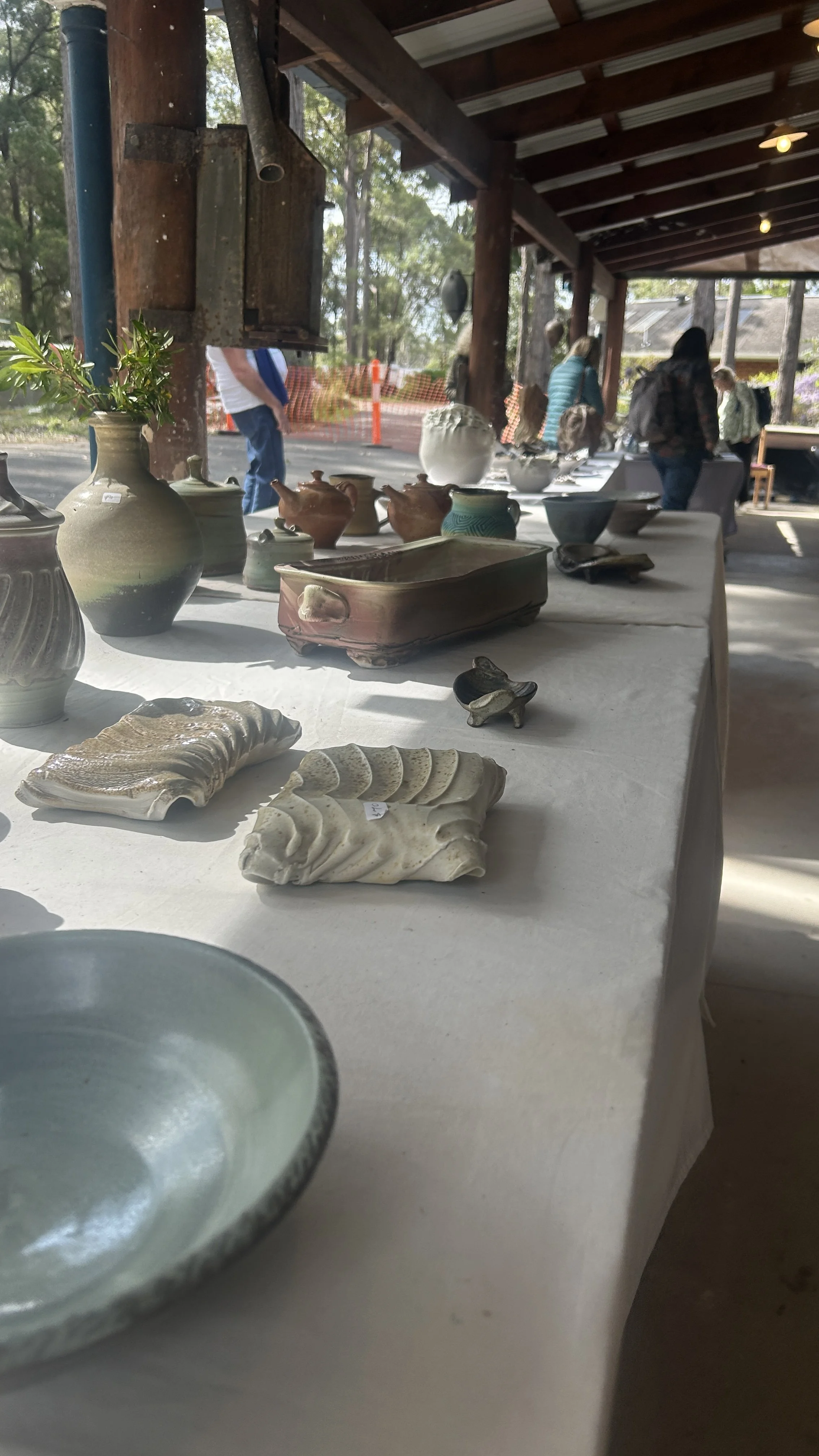
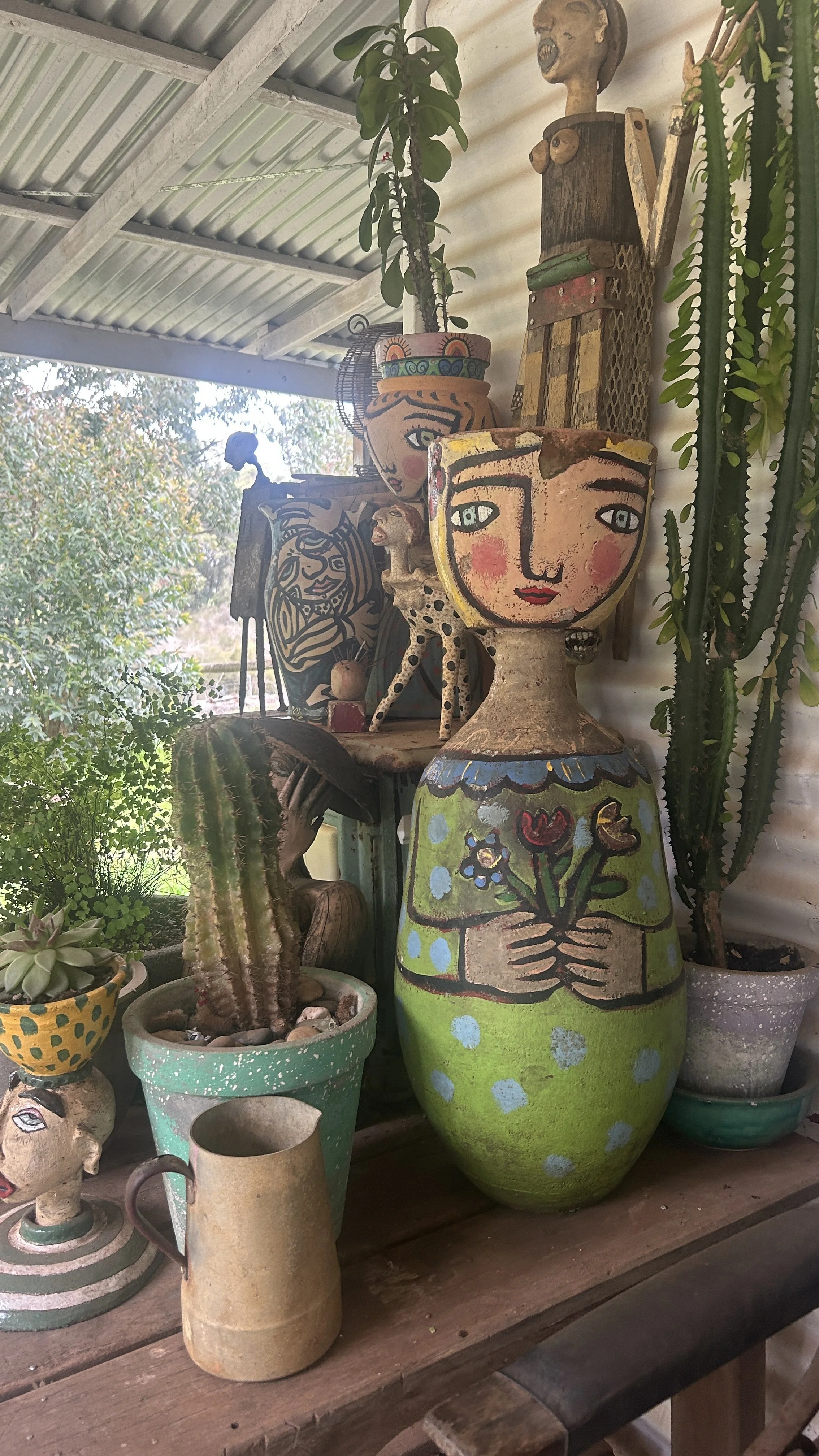
Every September, Margaret River Region Open Studios opens the doors of around 150 local artists' studios across the region, painters, potters, sculptors, jewellers, furniture makers, and lets you step directly into their creative spaces.
What a privilege to be able to step into the intimate space where artists create and bring new things into the world.

Ian Dowling’s studio is a regular on our visits.

Rebecca Cool - always a inpiring

4. Walking out doors makes us well … and feel good

Walking towards Gracetown from Moses Rock

Within minutes of being outdoors, walking, breathing ocean air, exhausting your legs, moving through the wildflowers, you can literally feel your nervous system settle.

You start to feel connected, supported, and more alive.
It feels good to spend time in nature and it makes us well.

There are many other reasons, the views are magnificent, the birds are plentiful, the beaches are pristine, the more time you spend there, the more reasons you’ll find.

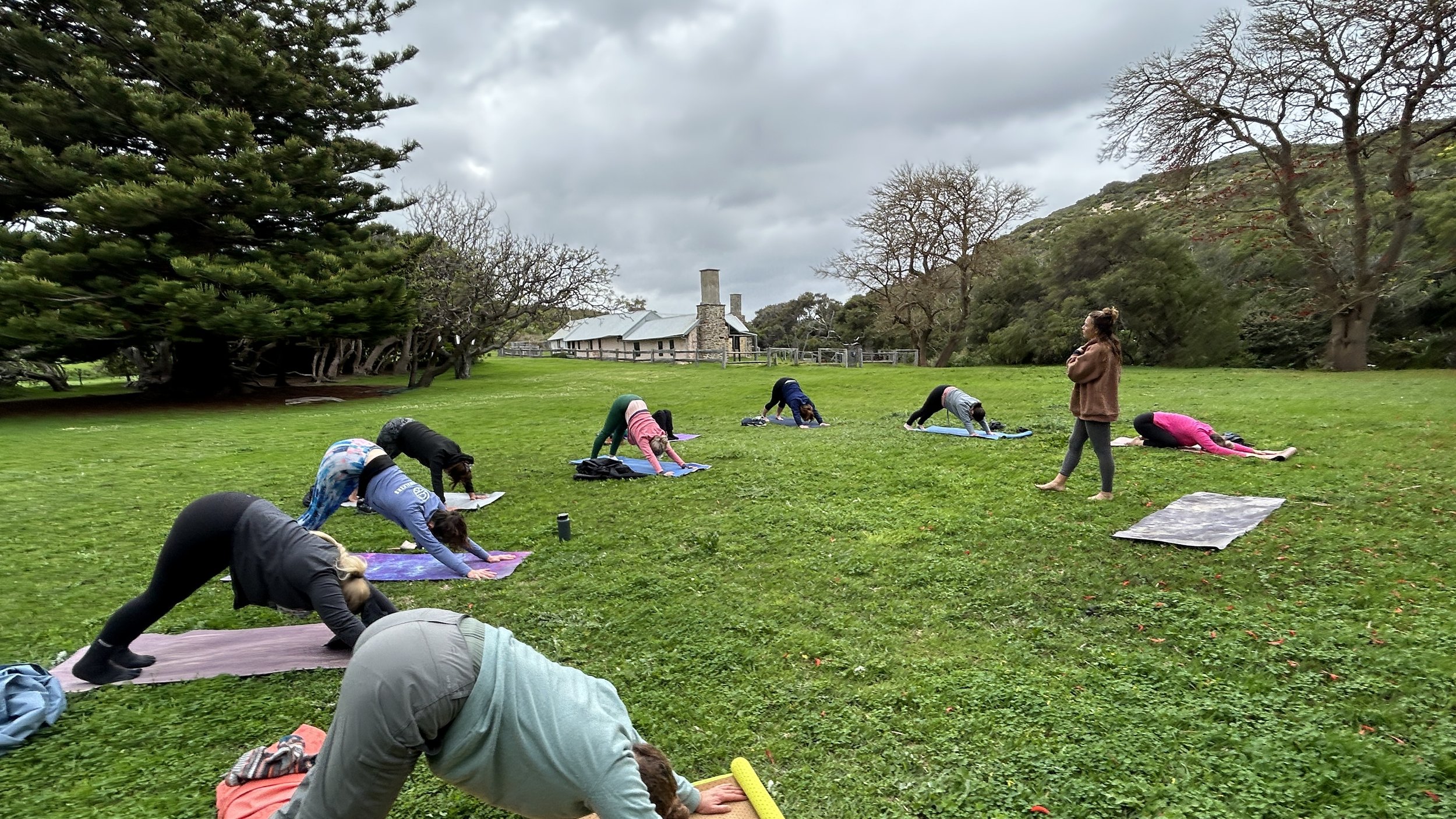
Yoga at Ellenbrook Homestead

Cape to Cape - Kilcarnup Beach towards Rivermouth

Life on a Little-Known Planet... or life on a little seen and barely understood planet

August 25, 2026

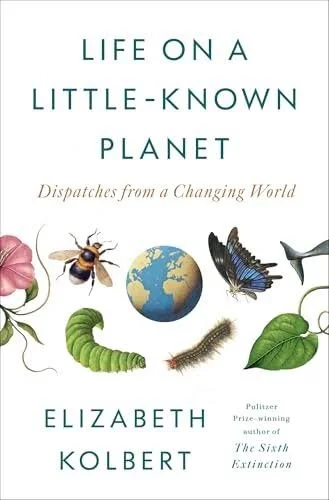
I've just finished Elizabeth Kolbert's essay collection, Life on a Little-Known Planet: Dispatches from a Changing World, and I haven't been able to stop thinking about it as I get ready to scope another wilderness adventure in the Khuvsgul Lake Biosphere in remote Mongolia.

Kolbert — the Pulitzer Prize-winning author of The Sixth Extinction — has spent two decades writing about the natural world for The New Yorker.

In this book her writing between 2005 and 2023 is gathered in a collection of essays organised into four loose groups: creatures, places, the ideas people have floated for fixing what's broken, and the people already quietly doing the fixing. Each piece has also been updated on where things stand now in each of the topics.

The planet, it turns out, is "little-known" not because we lack satellite data, but because most of us have stopped looking closely at what's in front of us.

That's the line that landed hard for me as someone whose livelihood comes from leading people into wild places.

Kolbert's real subject is attention.
To have the discipline of noticing a landscape well enough to see it changing.

It's what happens on a walk through nature… if you pay attention.

life on a little known planet cover

You can't tell that a wildflower is blooming three weeks early, or that a creek line has shifted, unless you've walked that same country enough times to hold it in memory.

I feel this everywhere we walk.

From the Fitzgerald Biosphere and the Stirling Ranges in Australia’s southwest where thousands of flowering species bloom each year and where you have to look closely to find the tiniest of orchids, to the Altai Mountains in Mongolia, where herders read the changing landscapes and move their herds accordingly.

These landscapes are living records of change, you just have to be present enough, and return often enough, to read them.

The other thing I appreciated is that Kolbert refuses to dwell in despair.

Her final section is about people already at work, restoring habitat, redesigning cities, rethinking agriculture.

Showing engagement is still possible, still worthwhile, still underway.
That's the spirit I try to bring to every retreat and walking adventure: walking isn't an escape from the changing world, it's a way of meeting it honestly, together, on foot, with our senses open.

If you're someone who feels most alive immersed in a forest, following a dirt path or walking towards an expansive horizon, this book will feel like proof that careful attention to a beetle, a treelike, a melting glacier, is a form of care.

I'd recommend it especially if you're new to thinking about climate and biodiversity; and even if you're not, Kolbert's observations are clear and rewards the return visit, much like nature trails do.

I also loved listening to Kolbert in this Daily Show interview.

7 Wildflowers of Tavan Bogd and their Traditional Uses

July 29, 2026

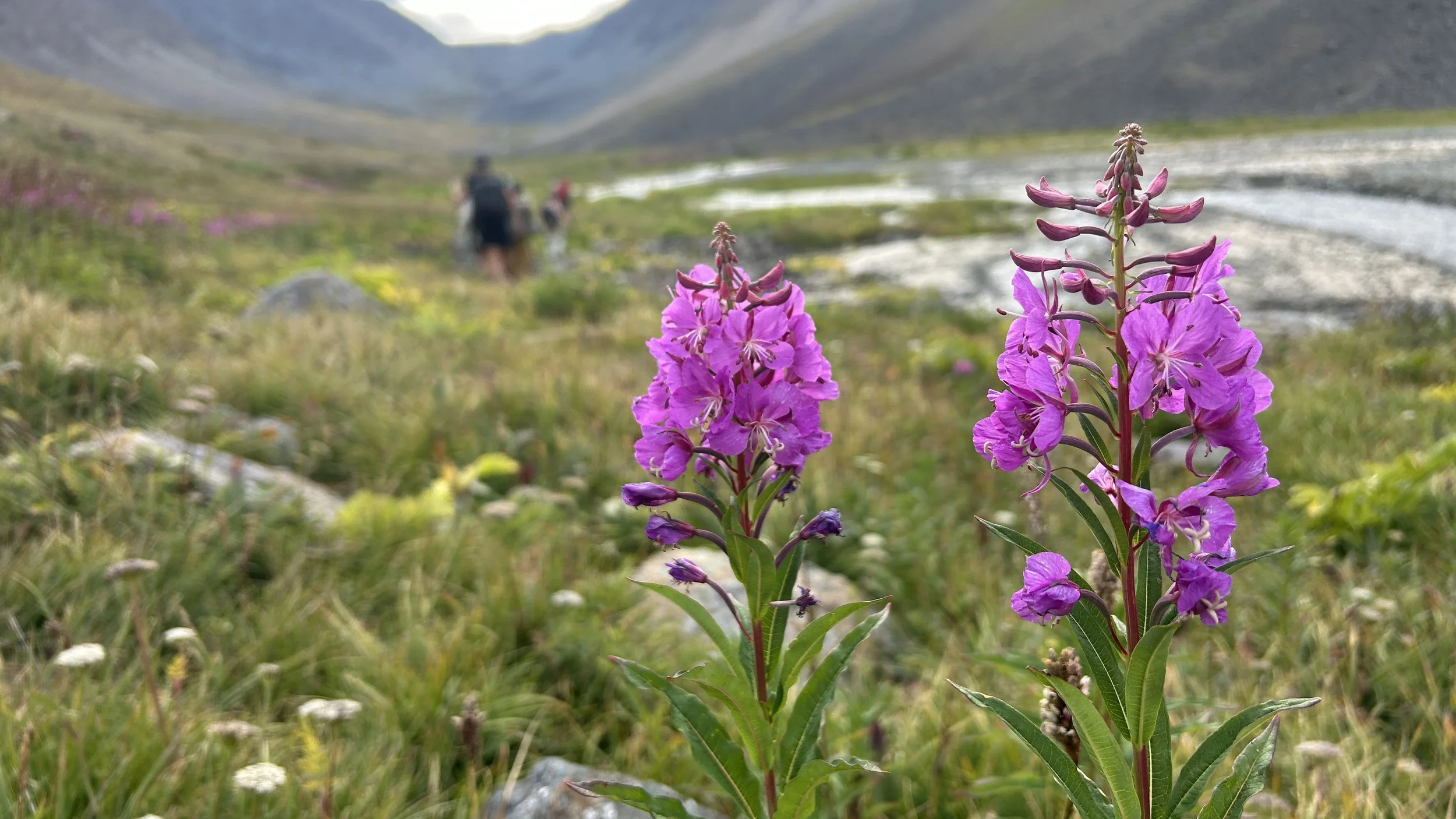
In the far northwest corner of Mongolia, where the Altai Mountains meet Russia, China, and Kazakhstan, Tavan Bogd National Park guards five glaciated peaks and a landscape of scree, tundra, larch forest, and boggy alpine meadow. Every spring and summer, as the snowmelt floods the valleys, the ground fills with flowers that herding families here have gathered for medicine and meaning for generations.

Below are some of the same species photographed on past walks through the park.

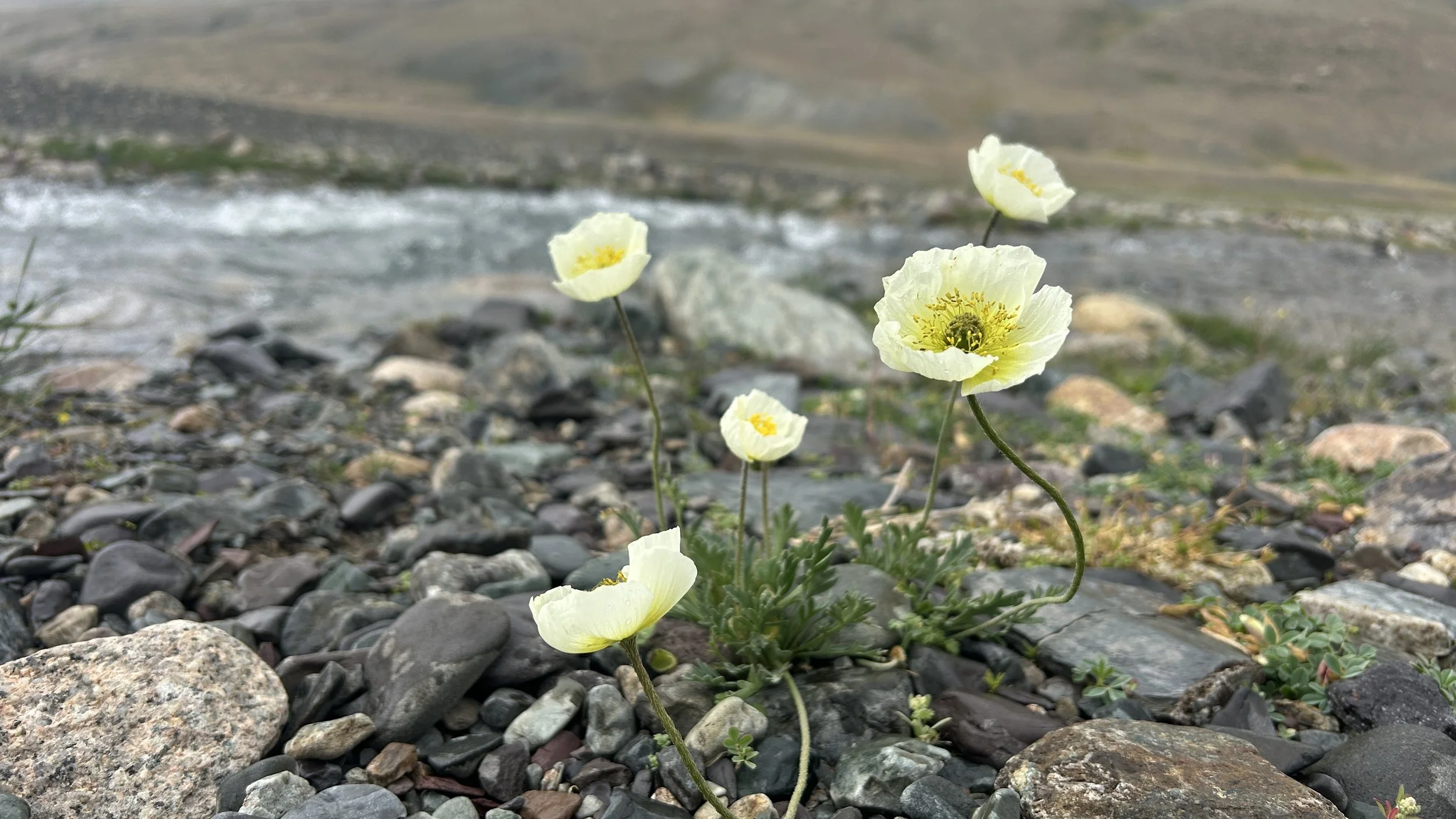
Iceland Poppy — Papaver nudicaule

Iceland Poppy — Papaver nudicaule

The park's signature bloom, its papery yellow, white, or orange petals nodding on bare stems above the scree near Potanin Glacier. In traditional Mongolian medicine it is known as a “wound healer”: combined with other herbs into the classic formula Govo jad-5, it is used on fresh wounds, torn blood vessels, and old injuries, while a mix of four poppy species is boiled and drunk for dysentery and intestinal inflammation.

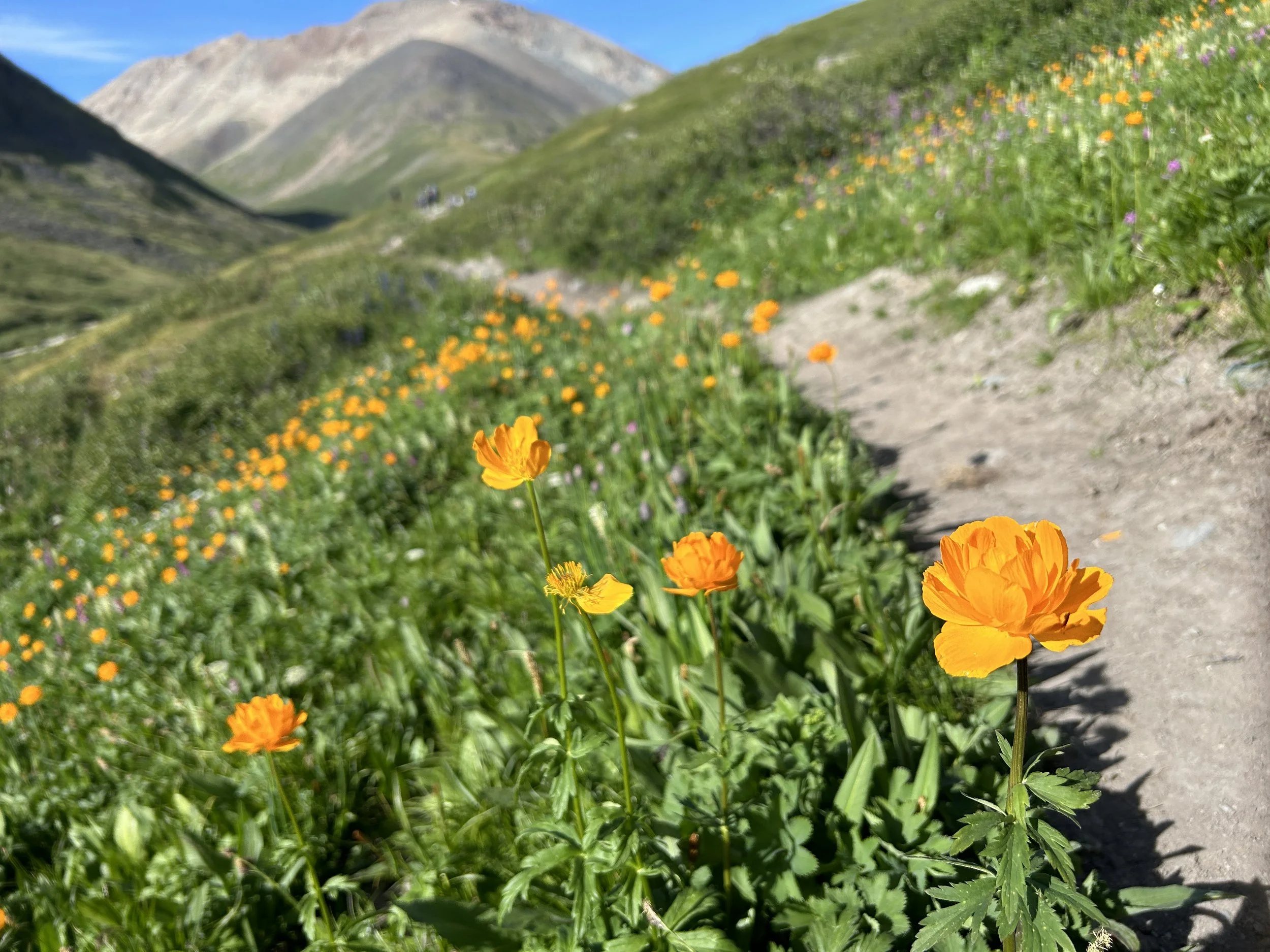
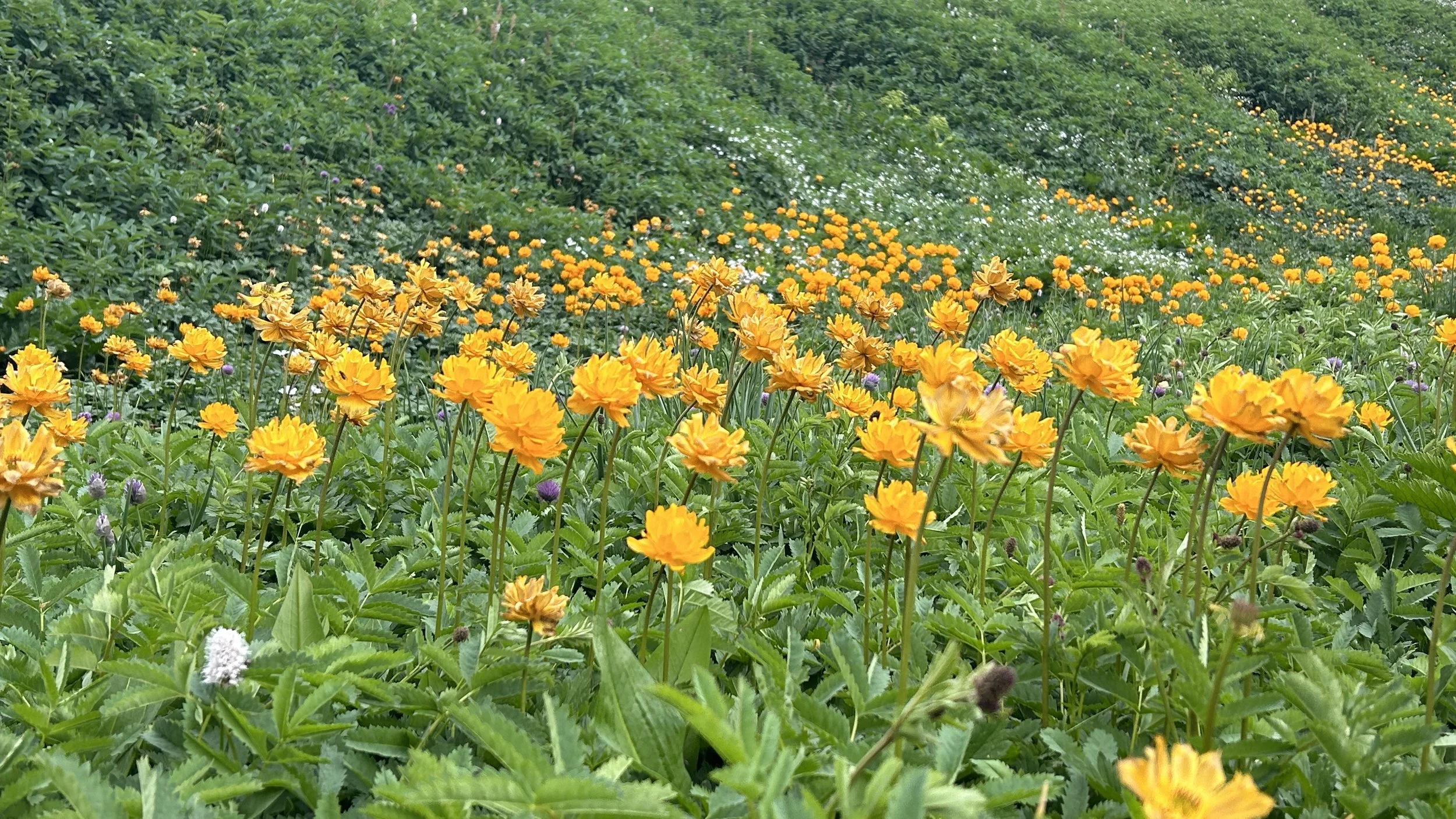
Siberian Globeflower — Trollius altaicus

Siberian Globeflower - Altai Tavan Bogd National Park

Lights up wet meadows and streambanks with globes of golden-orange, closed petals that never fully open. Its Chinese relative, Trollius chinensis, has a long medicinal history for fever, sore throat, and infection, and Altai herders have traditionally regarded the globeflower in similar terms, as a plant of the wet ground linked to clearing heat from the body.

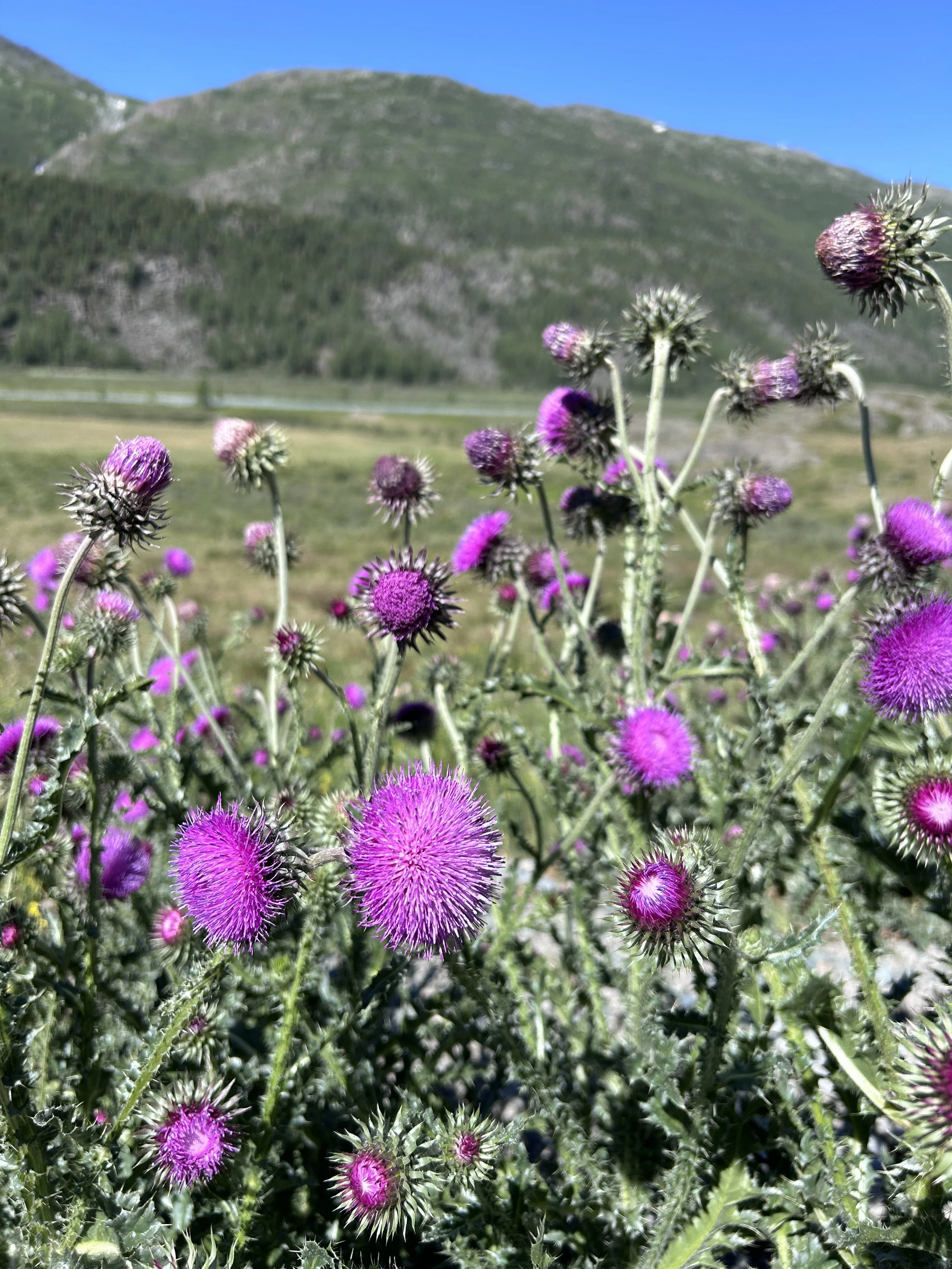
Pink Thistle — Rhaponticum uniflorum

Pink Thistle — Rhaponticum uniflorum

Its rose-purple, thistle-like flowerhead stands out against dry, stony slopes. Across Mongolia, Siberia, and China it is brewed as a water decoction and used as an anti-inflammatory tonic believed to restore vitality and strength to the body, particularly after illness or exhaustion.

Locoweed — Oxytropis sp.

Locoweed near basecamp - Tavan Bogd National Park

Carpets whole slopes in purple-blue in a good year, and is treated with real caution by herders: eaten by livestock it causes “locoism,” a debilitating neurological illness. Yet in traditional Mongolian and Tibetan medicine the same plants are prepared for pain relief, inflammation, and bleeding — a flower that is simultaneously feared and used, watched closely wherever animals graze.

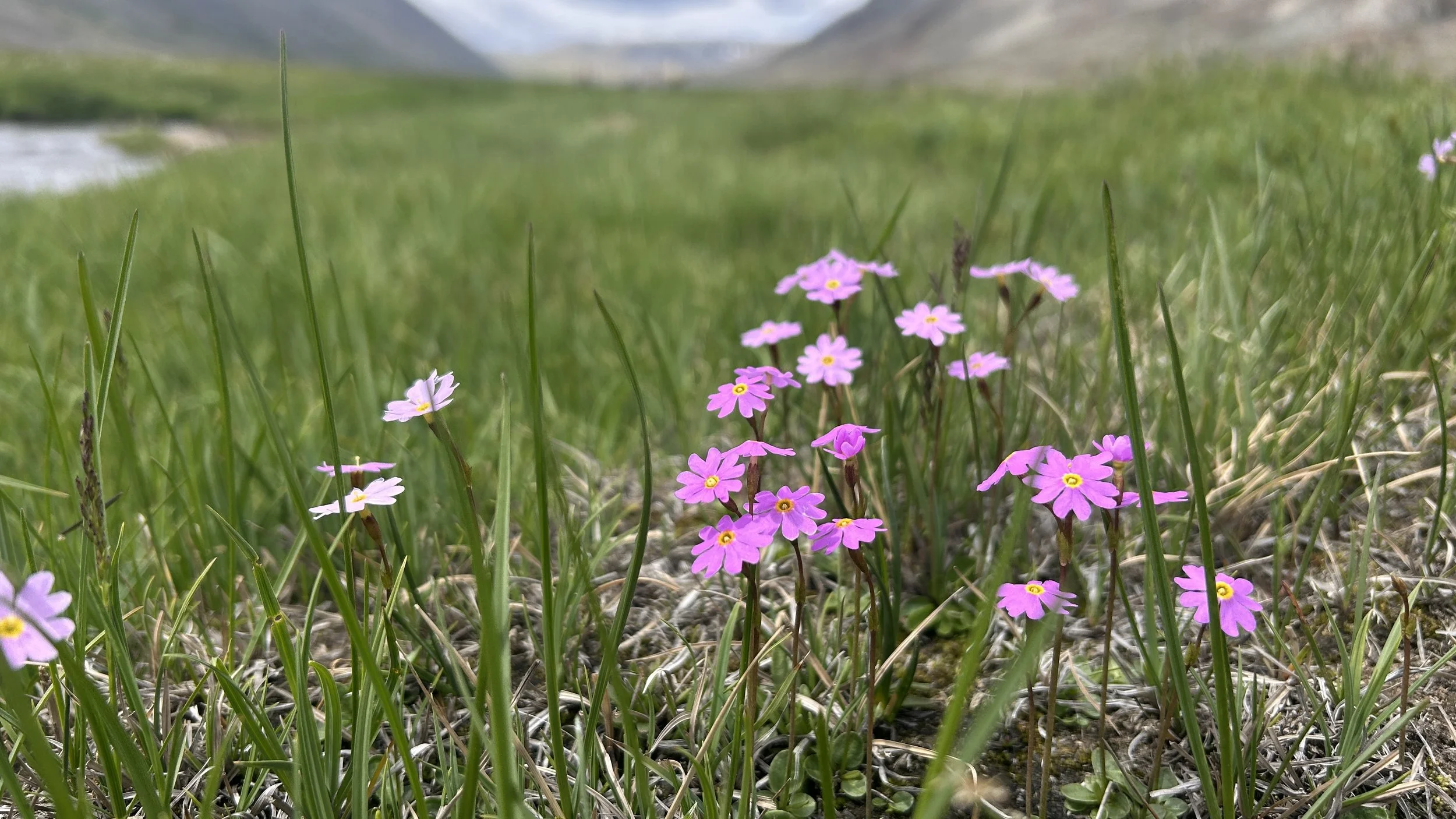
Bird's-Eye Primrose — Primula nutans / Primula algida

Bird’s Eye Primrose - Primula nutans / Primula algida

Clusters of small, notched pink-magenta flowers with a bright yellow eye, held on bare stalks above wet, grassy turf near streams and bogs. Across the Primula genus, the roots and flowers are traditionally valued as a source of expectorant and diuretic remedies, thanks to their high content of phenolic glycosides and saponins — one of the reasons primroses feature widely in folk medicine across Europe and Asia. Precise Altai-specific lore for this species is thin in the record, so treat the traditional-use note as genus-level rather than confirmed local practice.
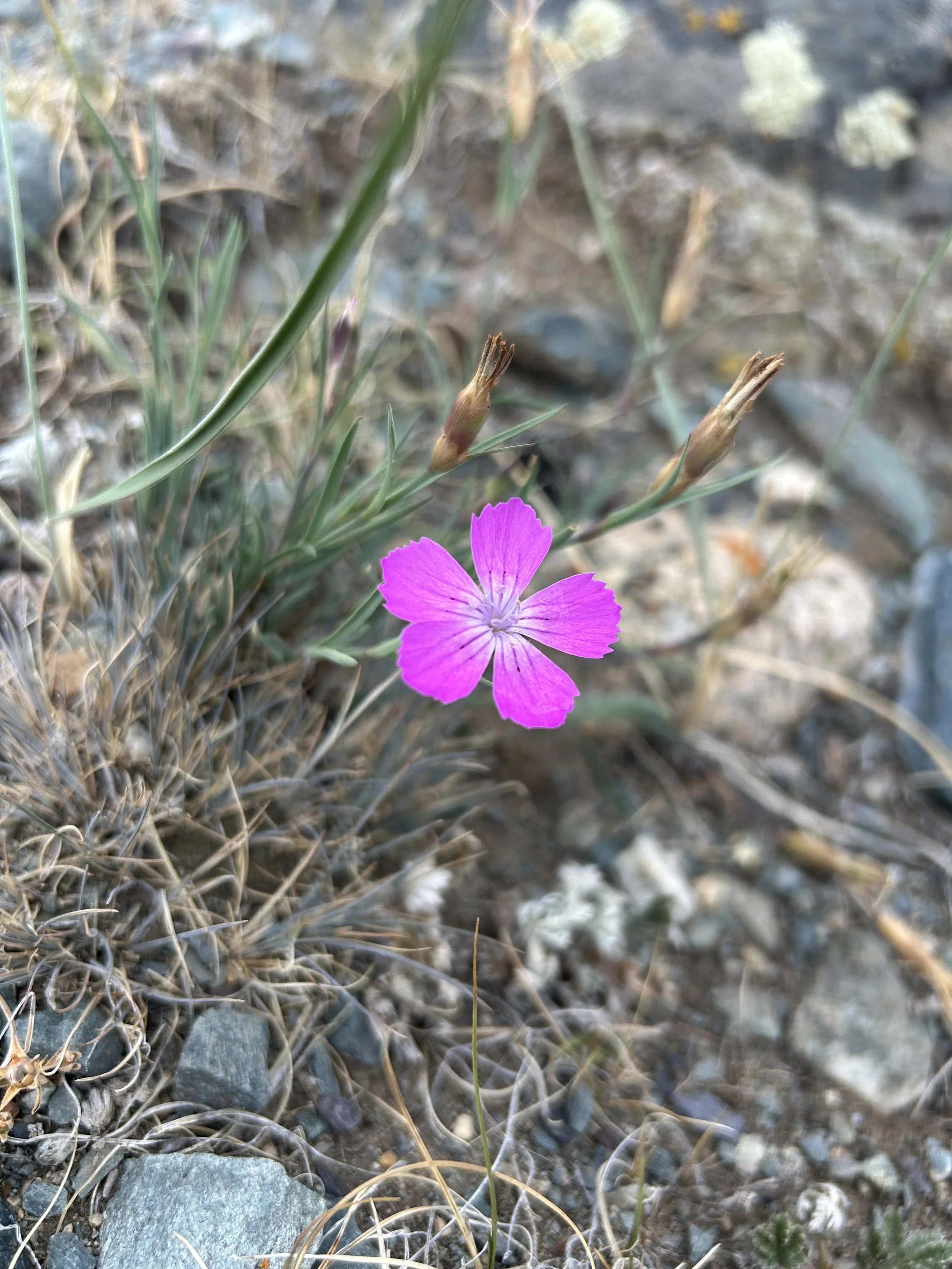
China Pink — Dianthus chinensis

China Pink — Dianthus chinensis

Scatters small, fringed pink-and-white blooms through the drier turf. Traditionally it is taken for urinary complaints and applied to skin inflammation, while its flowers are valued as an astringent and wound remedy.


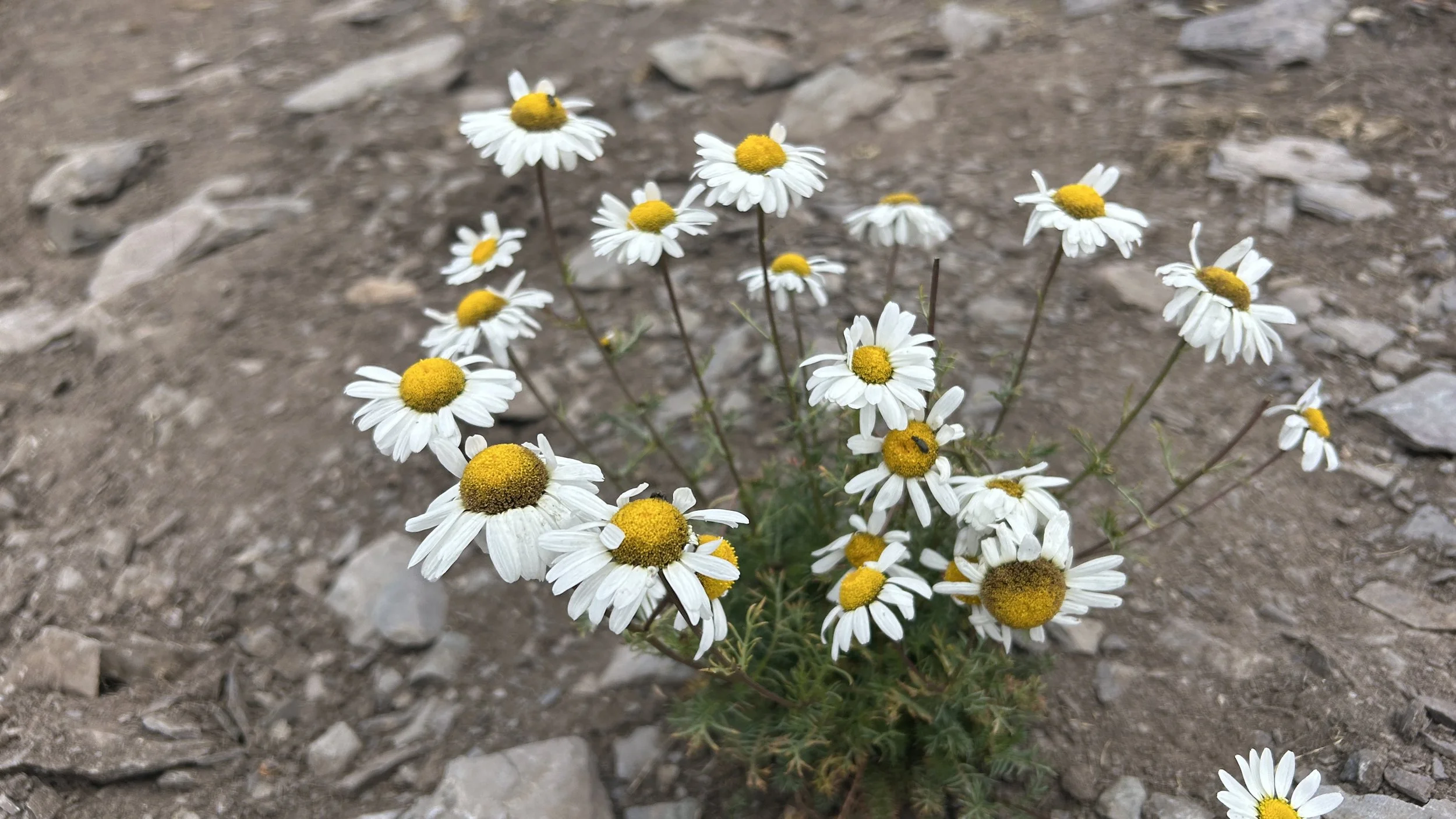
False Chamomile - Tripleurospermum ambiguum

Tripleurospermum ambiguum

A wiry, white-and-gold daisy with finely dissected, fern-like leaves, rooted straight into loose scree and gravel where almost nothing else takes hold. It belongs to the same Asteraceae tribe as true chamomile, and across the wider Tripleurospermum genus, related species have long been used in traditional herbal medicine for digestive complaints, inflammation, sore throats, fever, skin conditions, and as a calming, stress-relieving tonic — the same broad territory chamomile itself is known for. Species-specific ethnobotanical records for T. ambiguum in the Altai are sparse, so this should be read as genus-level tradition rather than confirmed local practice.
Together, these flowers sketch a landscape where botany and belief sit side by side, and where very little is decorative for its own sake.
The Iceland poppy and China pink are picked for open wounds; the pink thistle is brewed as a tonic for fevers and exhaustion; the globeflower is read as a sign of clearing heat from the body. Locoweed sits at the uneasy centre of it all, at once a folk remedy for pain and bleeding and a plant every herder watches for, because the same purple-blue carpet that treats a wound can just as easily take down a horse.

Even the flowers with no settled medicine attached to them, the forget-me-nots, the primrose, the false chamomile, the alpine aster and silver speedwell, are still markers of a kind: of wet ground versus dry, of shelter versus exposure, of how far the snow has pulled back this year. None of it lasts long. The Altai's summer is short and fierce, and within a few weeks the same slopes that are ankle-deep in colour now will be bare again, grazed over or buried under the first snow.

What stays, season after season, is the knowledge: which flower to reach for, which to be wary of, and which simply tells a walker that they are, for a little while, standing in the richest part of the year


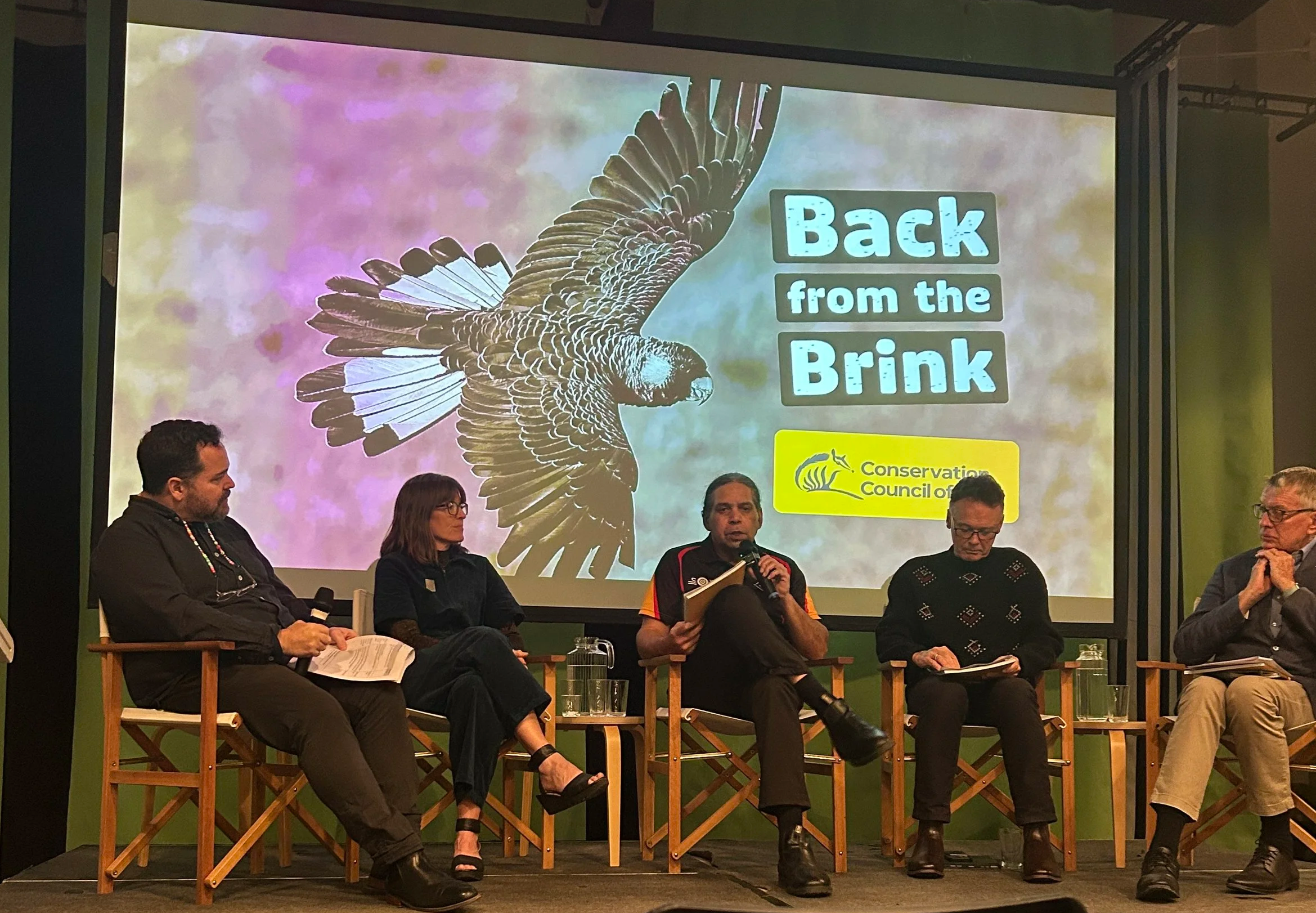
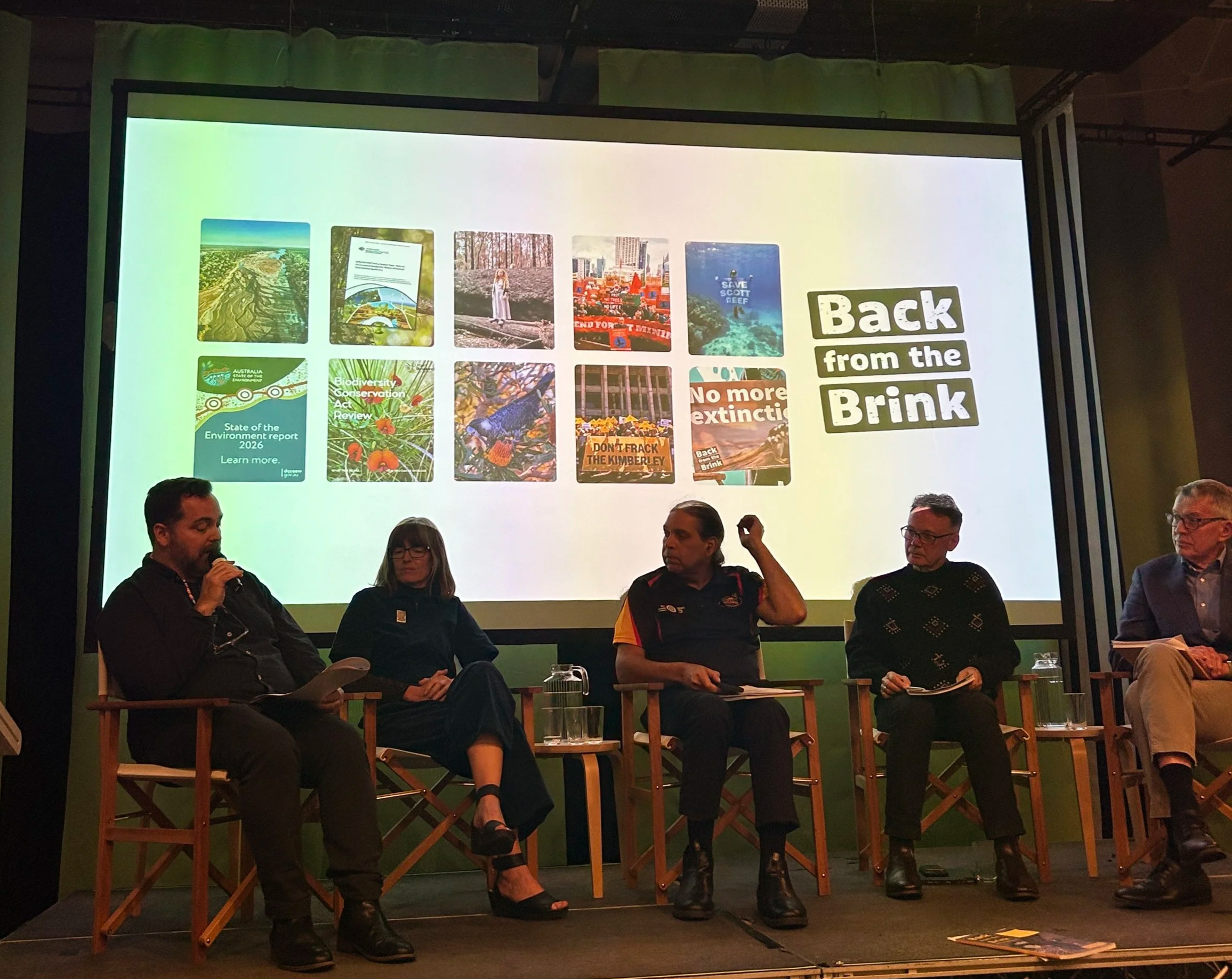
From left to right: Matt Roberts - CCWA executive director / Professor Rachel Standish - Murdoch University - ecological restoration expert / Daniel Garlett - community & cultural leader / Chris Tallentire - environmental consultant and former Labour MP / Professor Kingsley Dixon OAM - UWA - botanist & conservation expert.

Back From the Brink: A Protection Agenda for Nature - Summary

June 28, 2026

The Conservation Council of WA (CCWA), recently launched a report: Back from the Brink. Developed collaboratively it outlines a reform agenda for environmental regulation in Western Australia.

Drawing on contributions from conservation scientists, environmental lawyers, Aboriginal leaders, and community organisations, it sets out practical changes to policy and law across four areas:
🌱 strategic decision making
🌱 environmental law and processes
🌱 monitoring, compliance, and transparency
🌱 the independence of decision-making institutions.
It presents 15 case studies illustrating where current systems have failed and what’s being done to address the damage.
DOWNLOAD A COPY HERE

Matt Roberts at the launch of the report - behind him the scope of the ecological devastation.

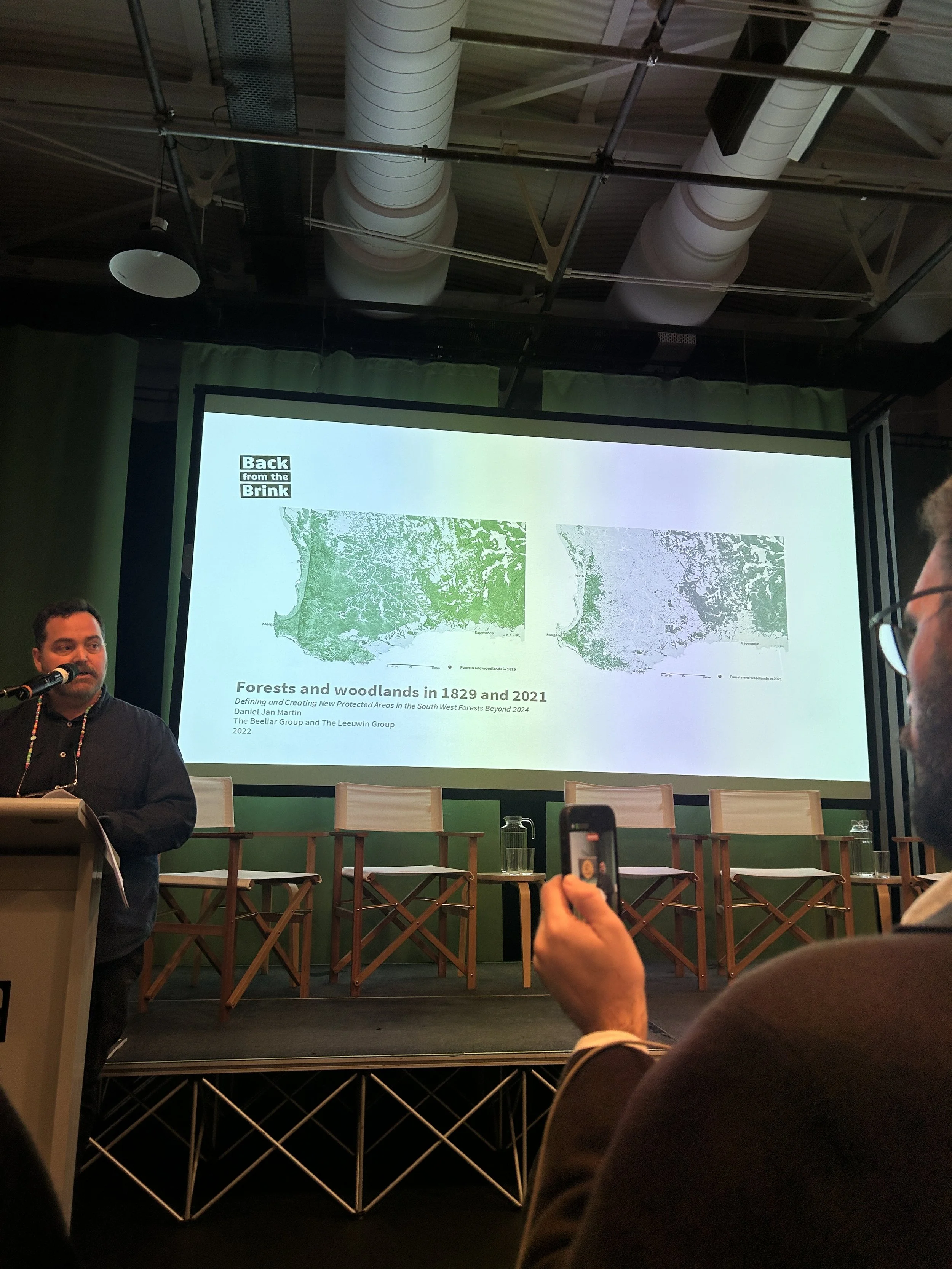
The report documents the depth of ecological decline in WA since colonisation.

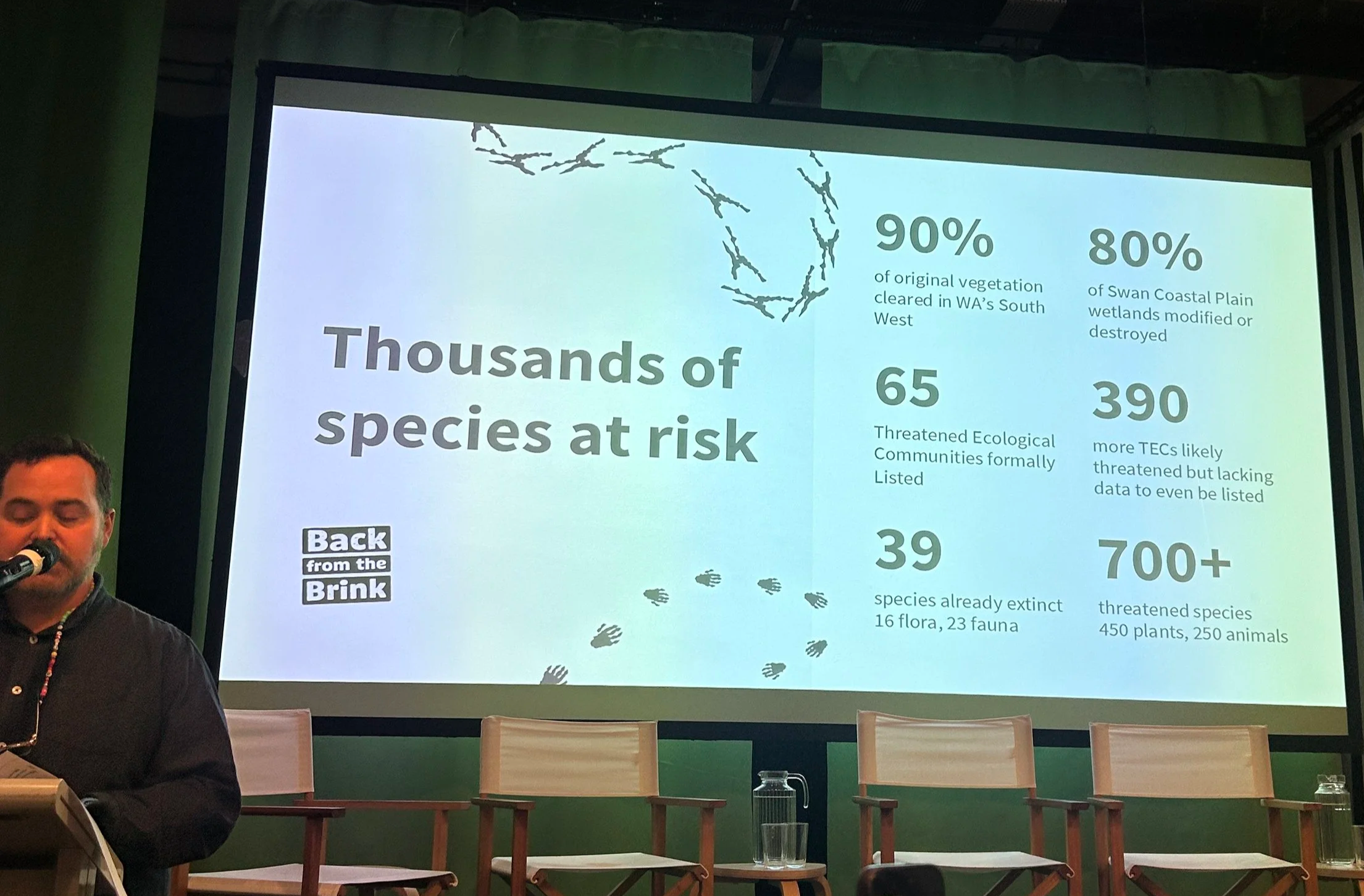
When the state's Southwest was declared a global biodiversity hotspot in 2000, 90% of its original vegetation cover had already been removed — rising to over 93% in the Avon Botanical District alone.

Today, 16 plant species and 23 animal species are formally recorded as extinct, with a further 700 species classified as threatened, and the report cautions that thousands more are likely at risk but remain unlisted.

The Northern Jarrah Forest — among the state's most species-rich ecosystems — has undergone two mass die-off events since 2011 and is now considered at risk of full collapse by the IPCC, yet industrial mining continues within its boundaries. On the Swan Coastal Plain, four-fifths of wetlands have been degraded or lost entirely.

WA also holds the worst record in Australia for federally-approved clearing of critical habitat, with over 34,700 hectares approved for clearance in the Pilbara alone in 2025.

“So many people across our state don’t have a clue about the state of our nature” Chris Tallentire - environmental consultant and former MP.

As a signatory to the Kunming-Montreal Global Biodiversity Framework (KMGBF), Australia is committed alongside nearly 200 nations to halt and reverse nature loss by 2030.
As one of only 17 megadiverse countries on Earth, and with WA holding eight of Australia's 15 biodiversity hotspots, the state is responsible.

The Intergovernmental Science-Policy Platform on Biodiversity and Ecosystem Services (IPBES) has warned of "a closing window of opportunity to halt and reverse biodiversity loss and to prevent triggering the potentially irreversible decline and the projected collapse of key ecosystem functions."

The report argues that meeting these obligations demands a reorientation of WA Government priorities, which currently favour short-term economic returns over long-term ecological wellbeing.

Thousands of species are at risk.

Part 1 Strategic Decision Making

“You almost don’t need any more science” Professor Rachel Standish

The report calls for WA to move decisively away from fragmented, project-by-project environmental decision making.
Key recommendations include:

- the development of a state biodiversity strategy with enforceable targets aligned to the KMGBF's 30% protection goal

- a comprehensive bioregional planning framework that identifies no-go zones based on ecological and cultural values

- and a major increase in conservation funding.

Currently, the WA Government allocates just over $100 million — or 0.2% of the state budget — to environmental protection, a level the report describes as chronically insufficient given statutory obligations.

The report also calls for the meaningful integration of Aboriginal ecological knowledge across all planning and assessment processes, the permanent funding of Aboriginal Ranger Programs across crown land, and legislative reform to allow sole vesting of conservation estate to Aboriginal Corporations.

“You are country” Daniel Garlett - Cultural and Community Leader

Part 2 — Environmental Law and Processes

WA's existing environmental laws are judged to be structurally inadequate.

The Biodiversity Conservation Act 2016 has never undergone its mandated five-year review, grants excessive ministerial discretion, and lacks mandatory bioregional planning or enforceable recovery targets.

The report calls for its overhaul along with reform to the Environmental Protection Act 1986, new water legislation, and the introduction of legally defined no-go zones for critical habitat.

Recovery Plans for threatened species are also criticised as too few, too infrequent in their review cycles, and insufficiently tied to measurable outcomes.

The report calls for full-funded, enforceable plans for every threatened species, updated at least every five years, with the explicit objective of zero new extinctions.

Environmental offsets, which currently allow destruction of habitat to be offset by compensation elsewhere, are identified as a mechanism that has repeatedly enabled ongoing harm rather than preventing it.

Part 3 — Monitoring, Compliance, and Transparency

The report identifies a deep accountability gap.

The upsurge of community support is unprecedented and CCWA reports an increase in people wanting to be involved.

“There has been no State of the Environment Report for almost 18 years” Matt Roberts - CCWA Executive Director

Likewise, no publicly available Biodiversity Audit has been released in a decade.

The Auditor General's 2024–25 review confirmed that under-resourcing is preventing agencies from meeting basic statutory requirements.

The report calls for proper investment in environmental monitoring, an end to reliance on industry self-reporting, and a legally guaranteed right for communities to receive reasons for decisions that materially affect the environment.

As the Executive Summary states: "laws are only equal to our ability to enforce them."

Part 4 — Independence and Public Participation

The right institutional conditions are needed for robust decision making.

The report recommends establishing an independent Environment Court to enable merits-based judicial review of environmental decisions, ensuring the operational independence of the EPA, strengthening the powers and funding of regulatory bodies, and creating genuine, rather than tokenistic, pathways for public participation.

“We have a war on nature and we need to rally” Professor Kingsley Dixon OAM - UWA - botanist and conservations expert.

Ministerial accountability must also be reinforced through legislation that prevents the approval of projects known to cause significant environmental harm.

The report concludes that the reforms it proposes, while ambitious, are both necessary and achievable. It frames them not as optional improvements but as essential to preventing further irreversible loss. It calls on the WA Government to match the strategic energy it applies to industry and jobs with an equally serious commitment to environmental protection — recognising that, in the long run, the two are inseparable.

Source: Conservation Council of WA — ccwa.org.au

Wildflowers of Western Australia - Beacons of Resilience

February 24, 2026

The wildflowers of Western Australia epitomise resilience.

Over their 115-million-year existence in Western Australia’s southwest they have adapted, diversified, and made the most of the harshest and inhospitable conditions.

Drought, fire, intense heat, soils that lack nutrients, few pollinators - not the most ideal situation.
And yet they endure. Continue to thrive.
Here is a profile of five stunning WA plants endemic to the Fitzgerald River National Park and the features that make them beacons of resilience.

Read More

Our Walk through the Altai Mountains - Tavan Bogd National Park 2025 - photo essay

January 30, 2026

There are many elements that make walking through the Altai Mountains in northwest Mongolia a unique adventure.

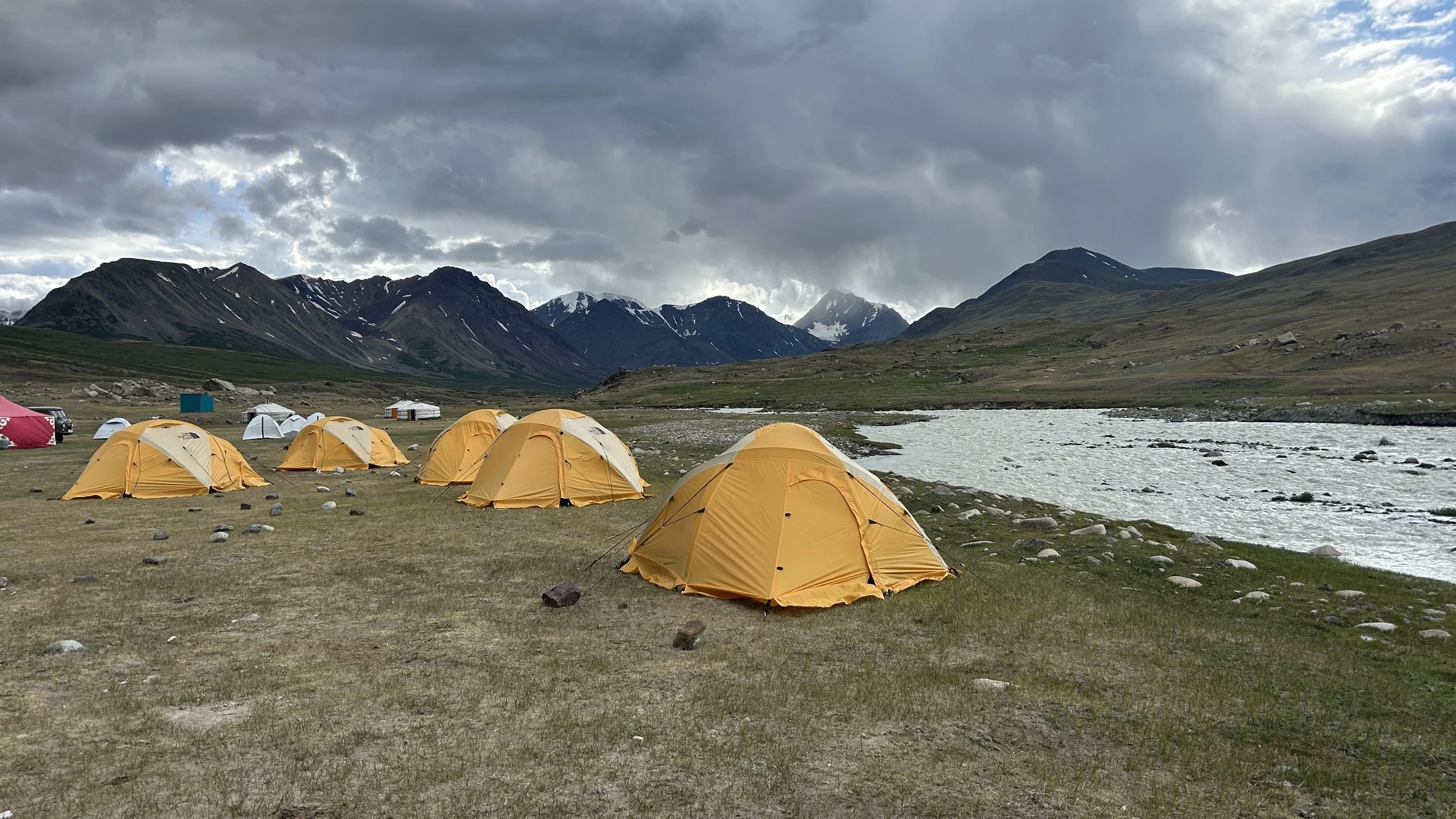
The remote and untamed wilderness of the Tavan Bogd National Park, the immersion over nine days in this pristine natural environment of wildflowers, wildlife and waterfalls.

Exposure to the nomadic lifestyles of modern day Kazakh and Tuvan herders - witnessing traditional cultures present in the region since the Palaeolithic age (that’s over 15,000 years).

The mountains, white-capped peaks, giants by our sides, always impressive, and then that first glimpse of the Five Sacred Peak -Tavan Bogd - one of which is Mongolia’s highest mountain, Khuten Peak at 4,200 mts.

This photo essay describes three important components that make this adventure magic: the location, the people and the challenge.

These three elements come together every year during Edgewalkers Mongolian Walking Adventure in the Tavan Bogd National Park (TBNP) in the heart of the Altai Mountain Range.

THE ALTAI MOUNTAINS

The Altai Mountains in Central Asia expand over 1600 kms across Kazakhstan, China, Russia and Mongolia. On the Mongolian side they extend 900 km from the northwest corner (where we walk) in Bayan-Ulgii Province to the southwest, in Khovd Province.

Arriving at the Altai Mountains

In the background the Altai Mountains welcome us into the Tavan Bogd National Park.

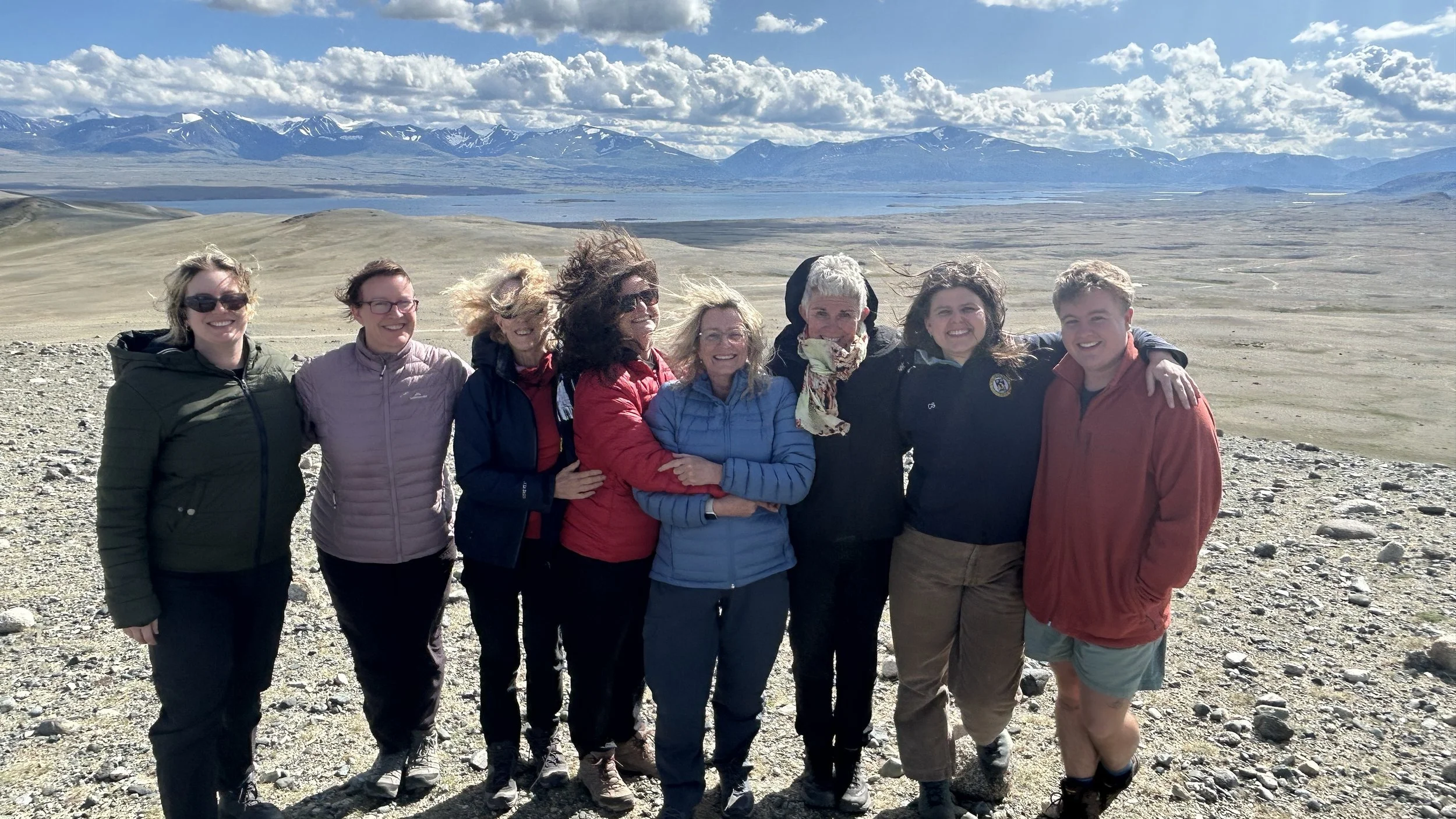
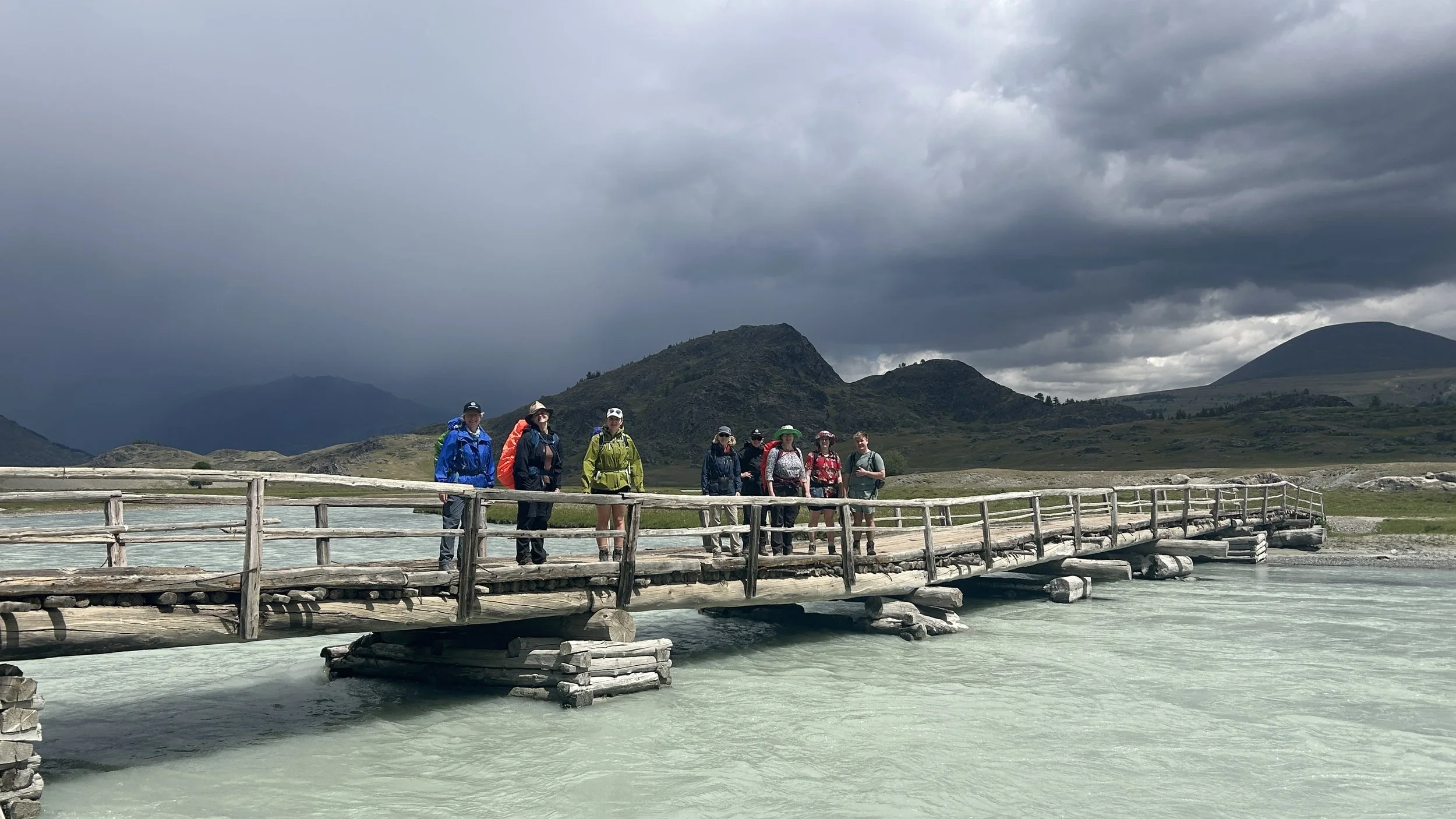
You wouldn’t know it but most of these eight gorgeous individuals had only just met a few days before this picture was taken.
They all like they’ve known each other forever.

They also look super excited.

Can you blame them?

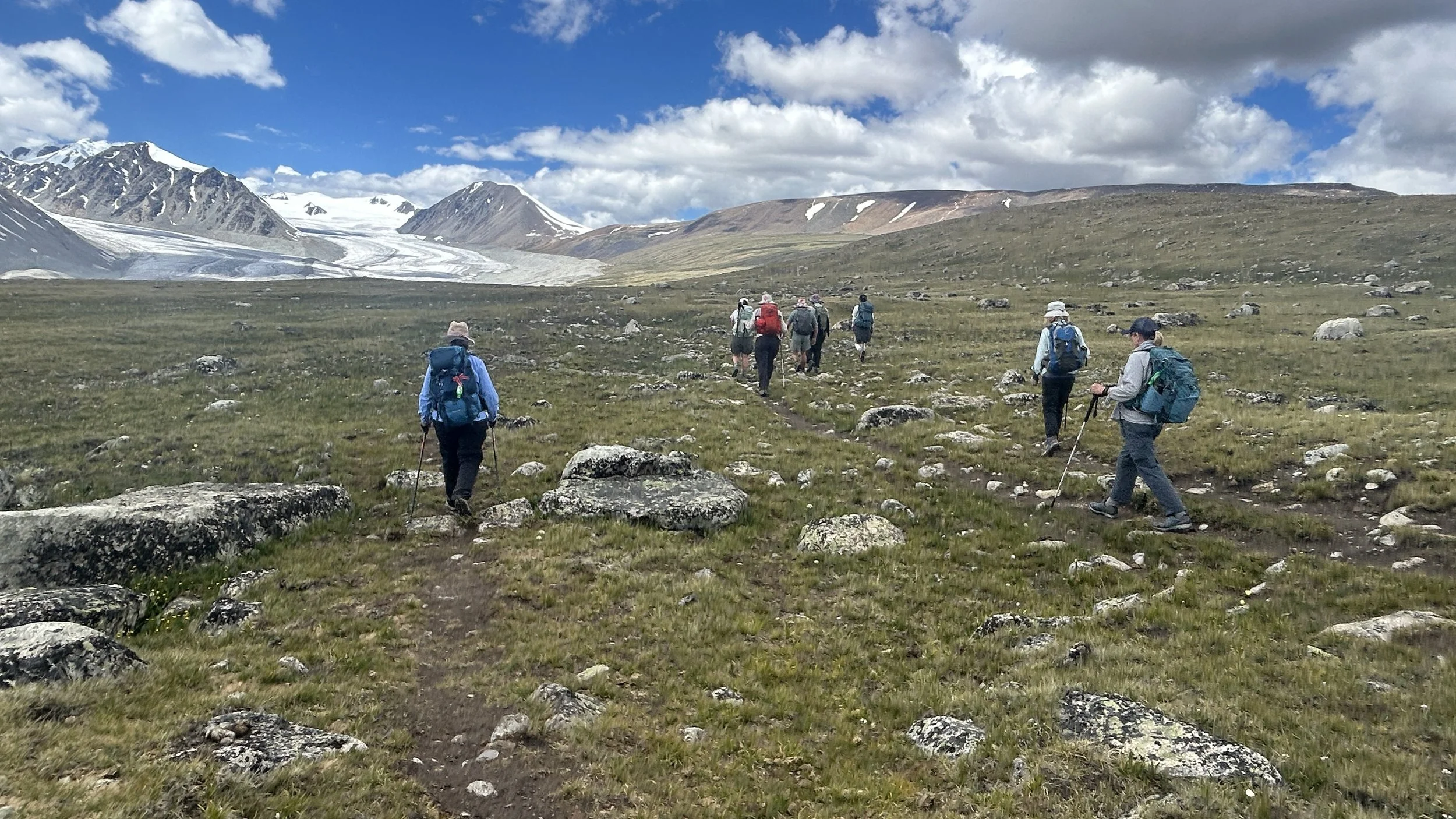
They’ve just got their first view of the snowcapped peaks of the Altai Mountains - our home for the next 9 days.

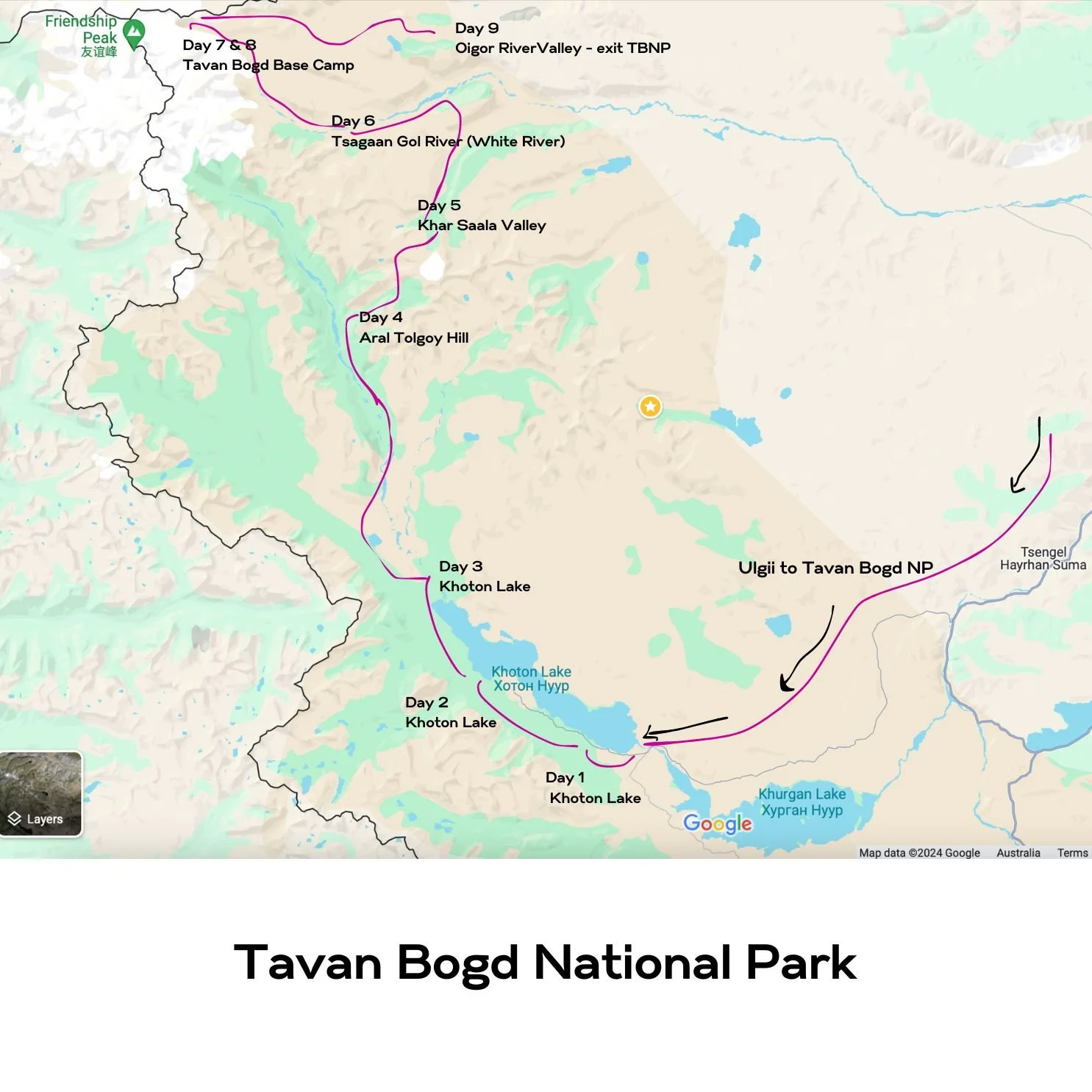
The Tavan Bogd National Park makes up over 600,000 hectares spread over the northern-western tip of Mongolia - on the borders with China on the west and Russia on the north. We access it from Ulgii, an ethnically Kazakh town with a growing economy from tourism and trade with Kazakhstan and China.

Stepping up to the challenge is part and parcel of an expedition like this… EVERYONE excelled!

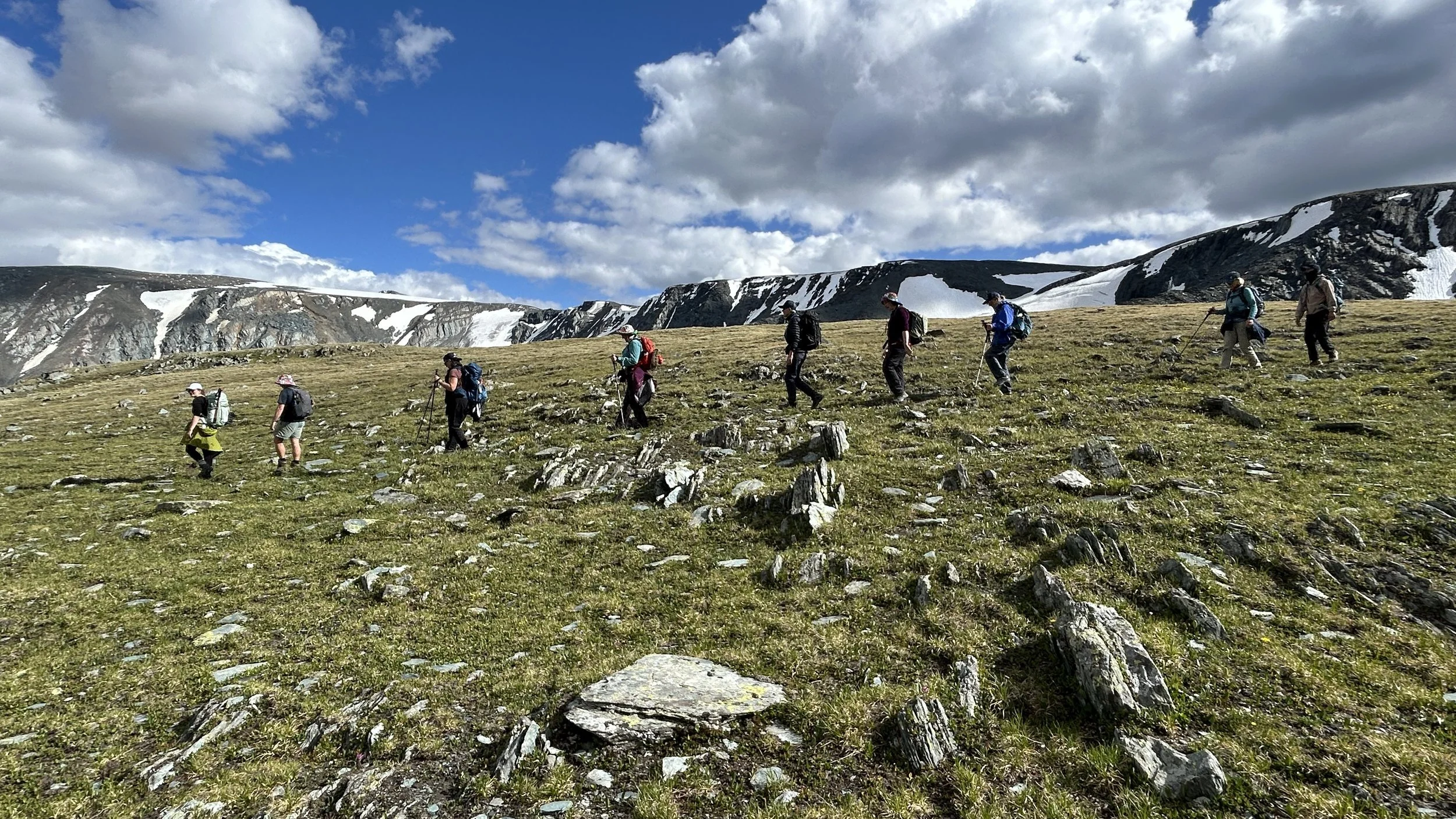
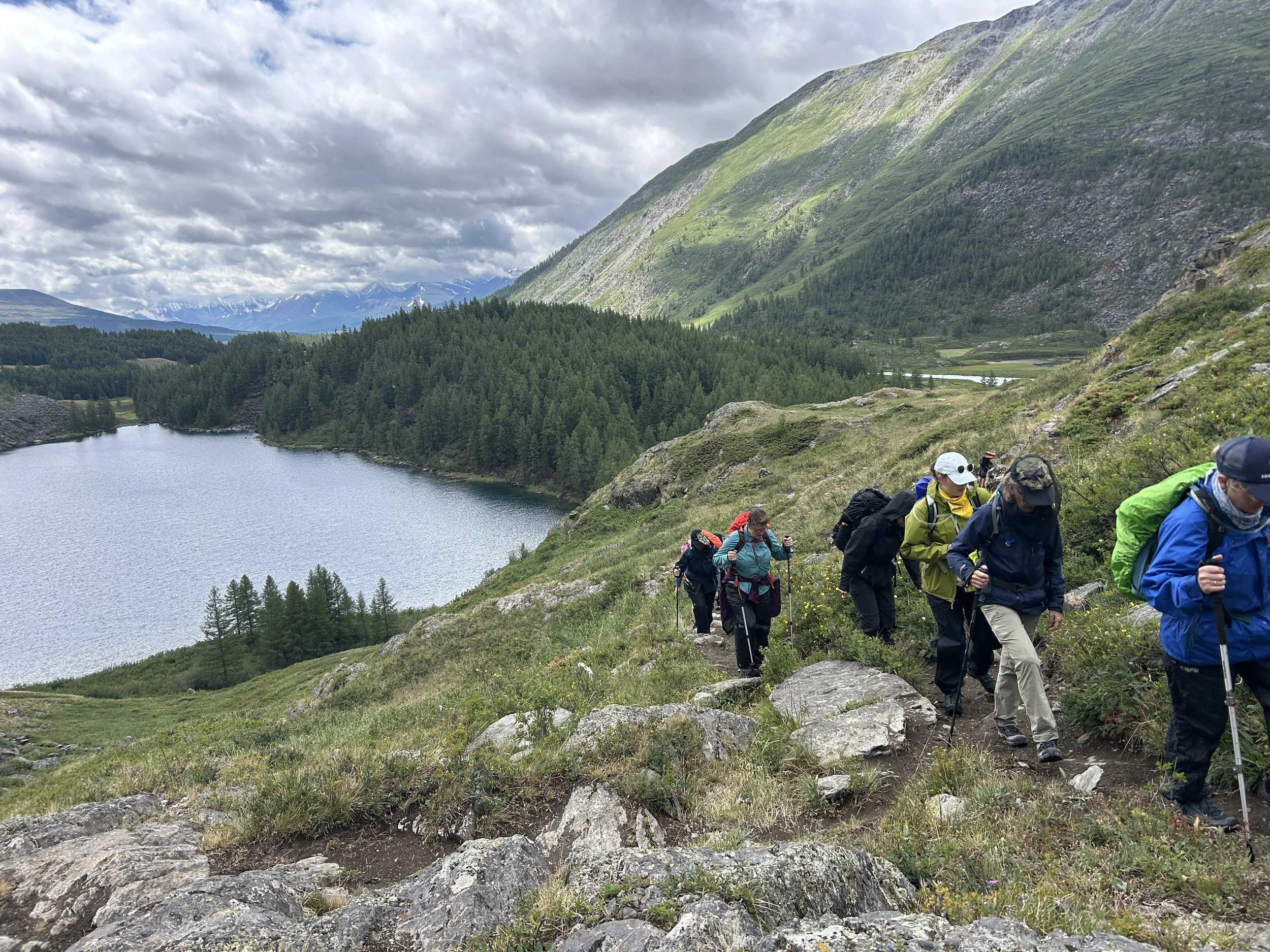
The terrain changes dramatically over the nine days.

The landscape varies dramatically throughout national park.
Where our walk commences, at the junction between Khoton and Khurgen Lakes, there are larch pines clustered along the western edge of the Khoton Lake and populating the distant slopes.

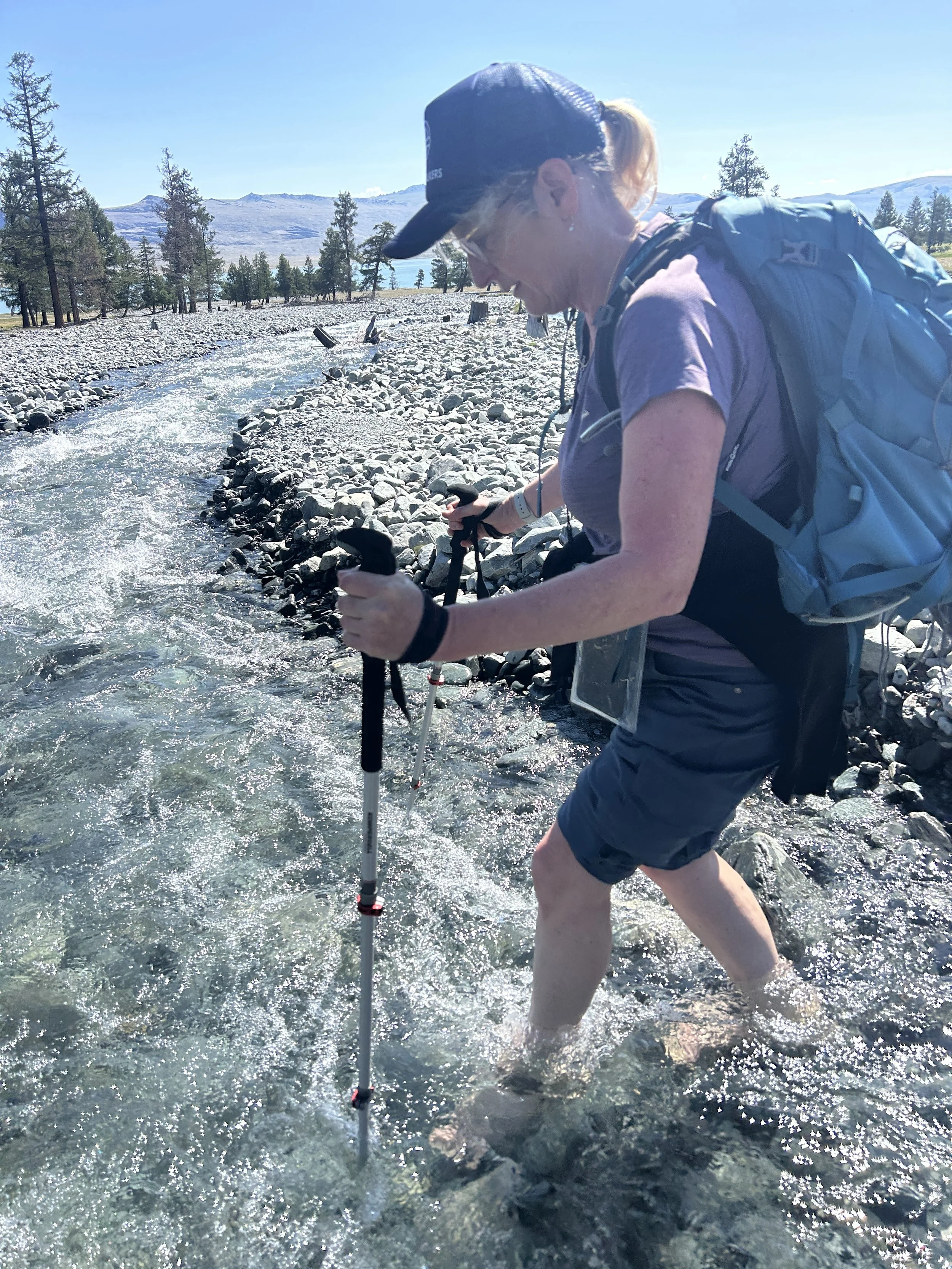
There are so many streams flowing from glaciers on the mountains - they are usually no more than knee deep and we cross most of them easily - they are, however, icy!

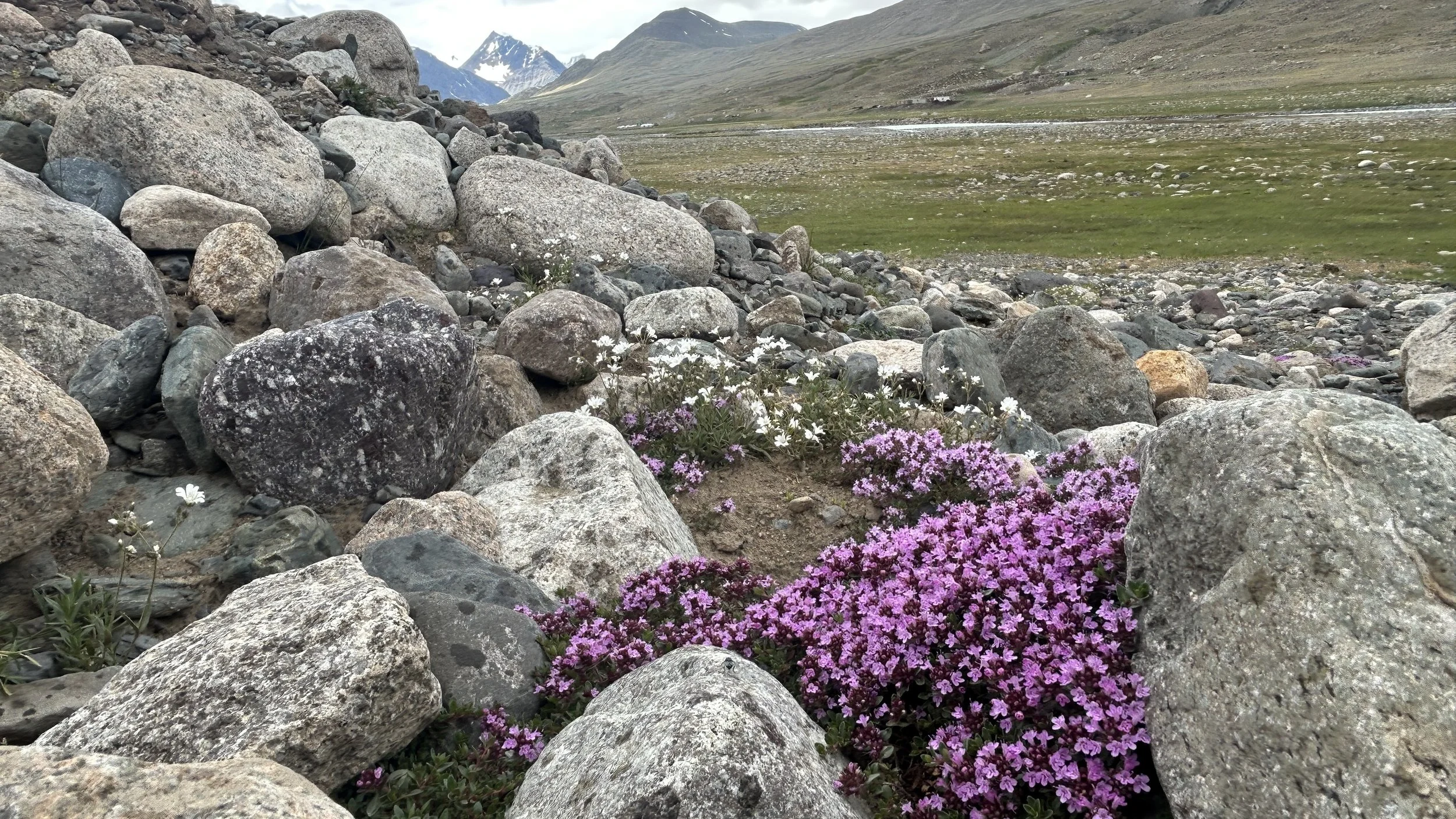
Some wildflowers are scattered near the streams. Edelweiss, forget-me-nots, the odd white poppy.

Deeper in the mountain, there are gorges, and fast-moving rivers before commencing the ascent over high passes.

There are huge boulders and one side of the mountain is visibly dry and rocky and the opposite side lush and green with more fir woodlands. The milky white river flowing rich with the sediment of the glaciers.

Nomads access their remote camps along a network of dirt tracks.

We love the wooden bridges that allow us to cross the wider and deeper rivers. Not the white colour of the water?

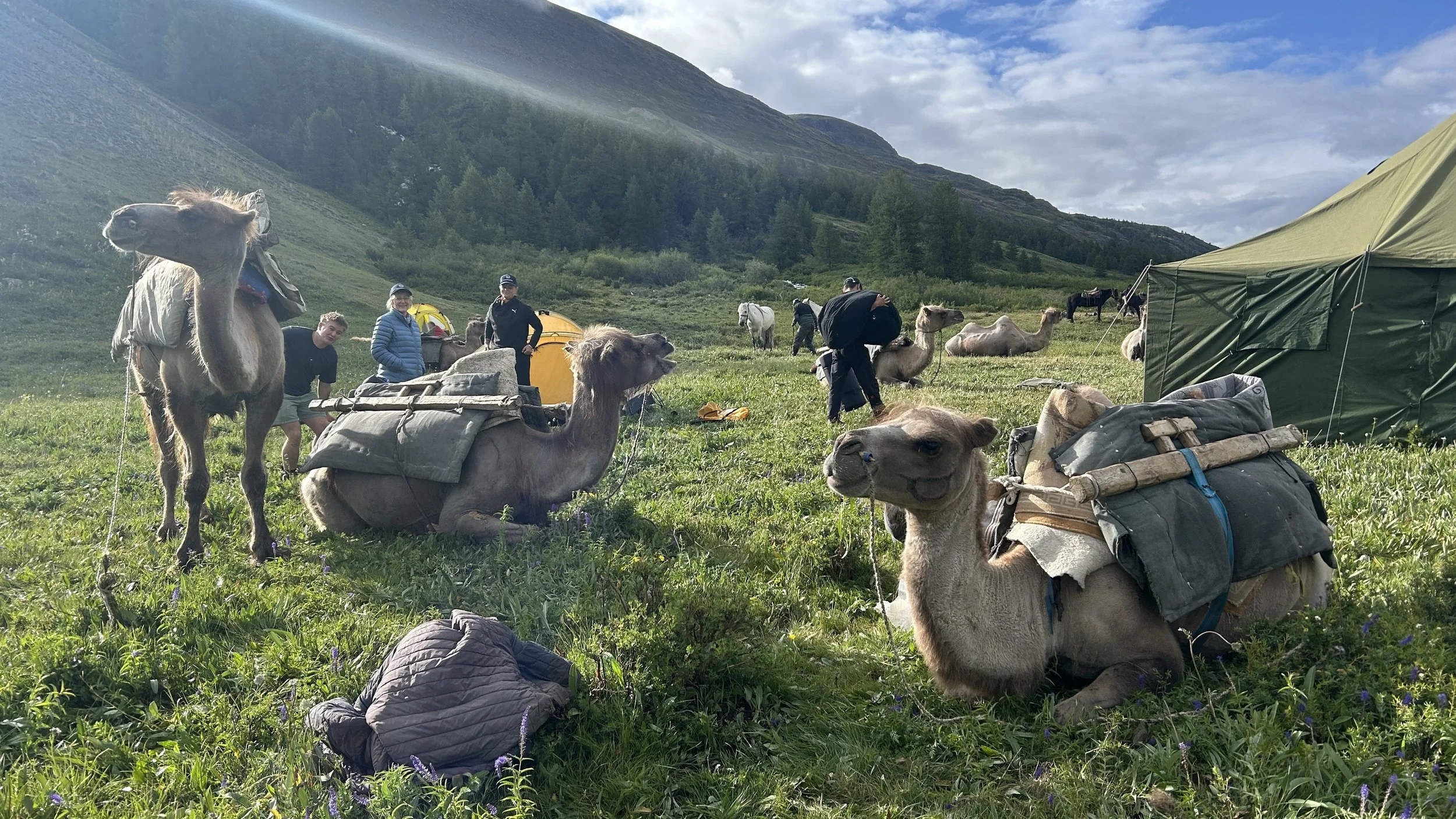
However, after a certain point, camels and horses are the only way to transport food and equipment. There are many nomads whose livelihood depends on commercially raising camels.

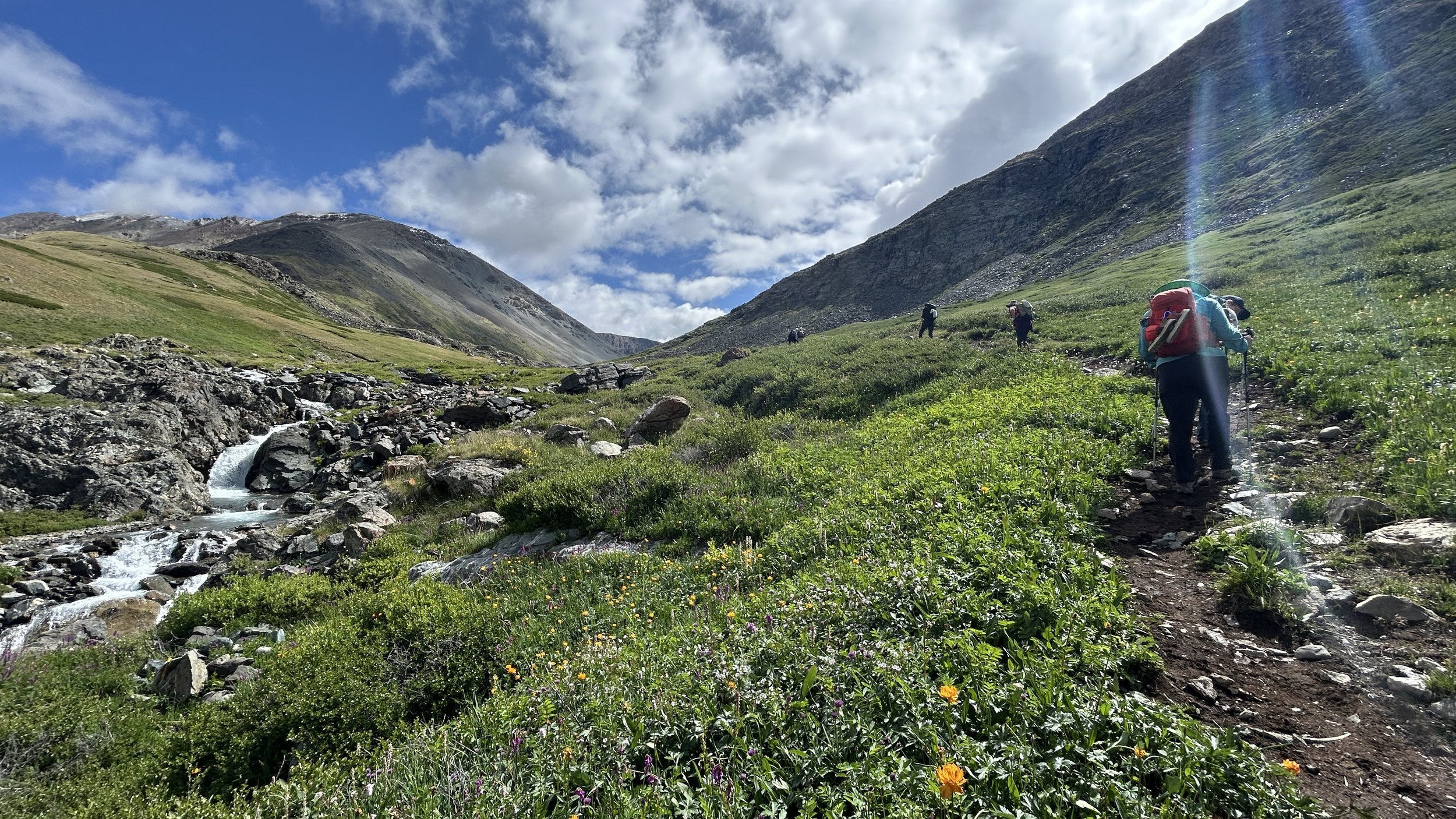
As the altitude rises we walk over rugged and dry mountain passes. The highest is 3200 metres, dark slate covers much of the pass. On the way up the mountains the display of wildflowers is extraordinary,

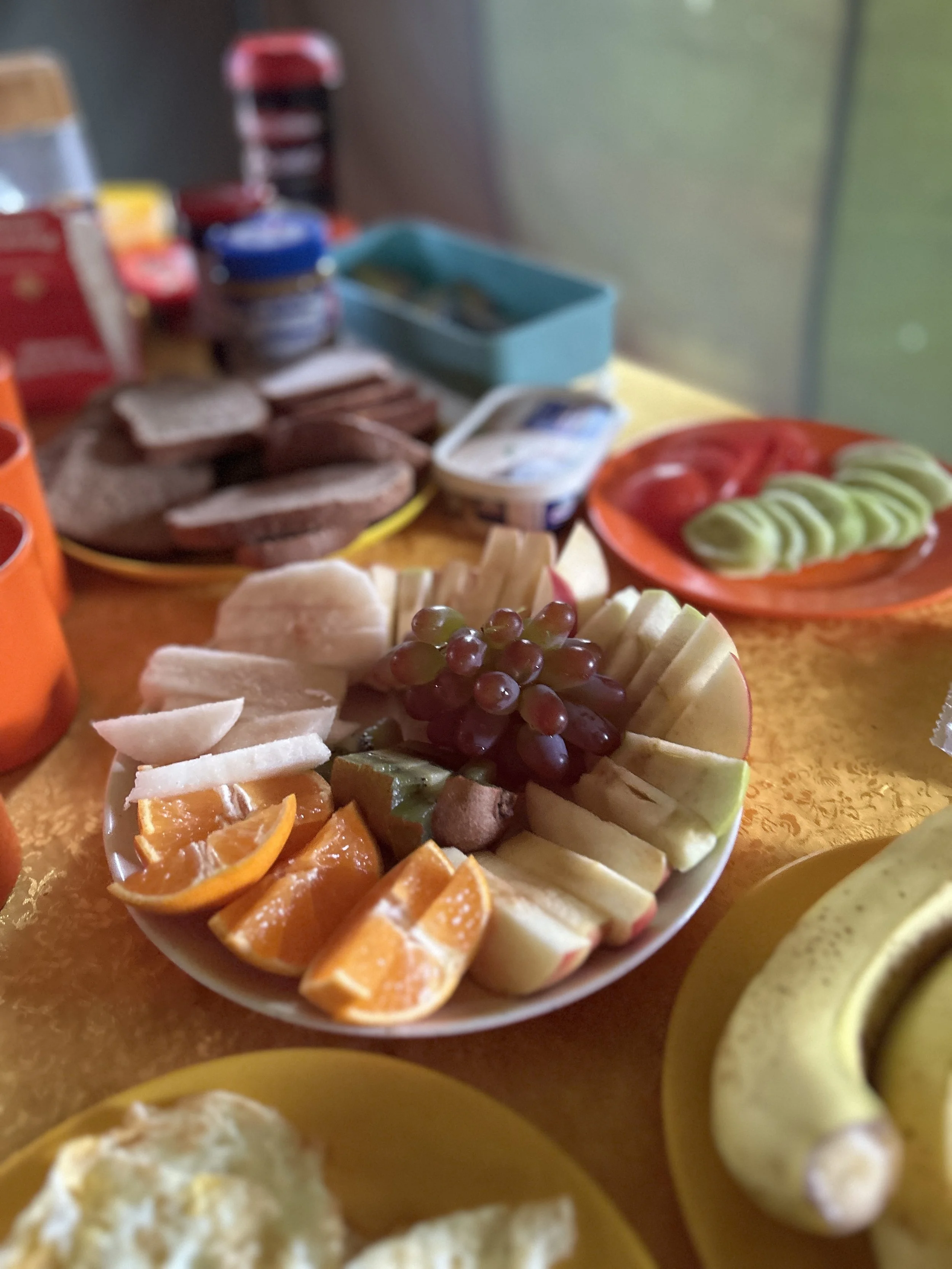
Fresh fruit is a real treat - and luxury on this expedition.

Borlotro - our gorgeous cook and her assistant cook busy in action.

Can you believe these vegan moms full of protein and veggies at 3,000 mts?

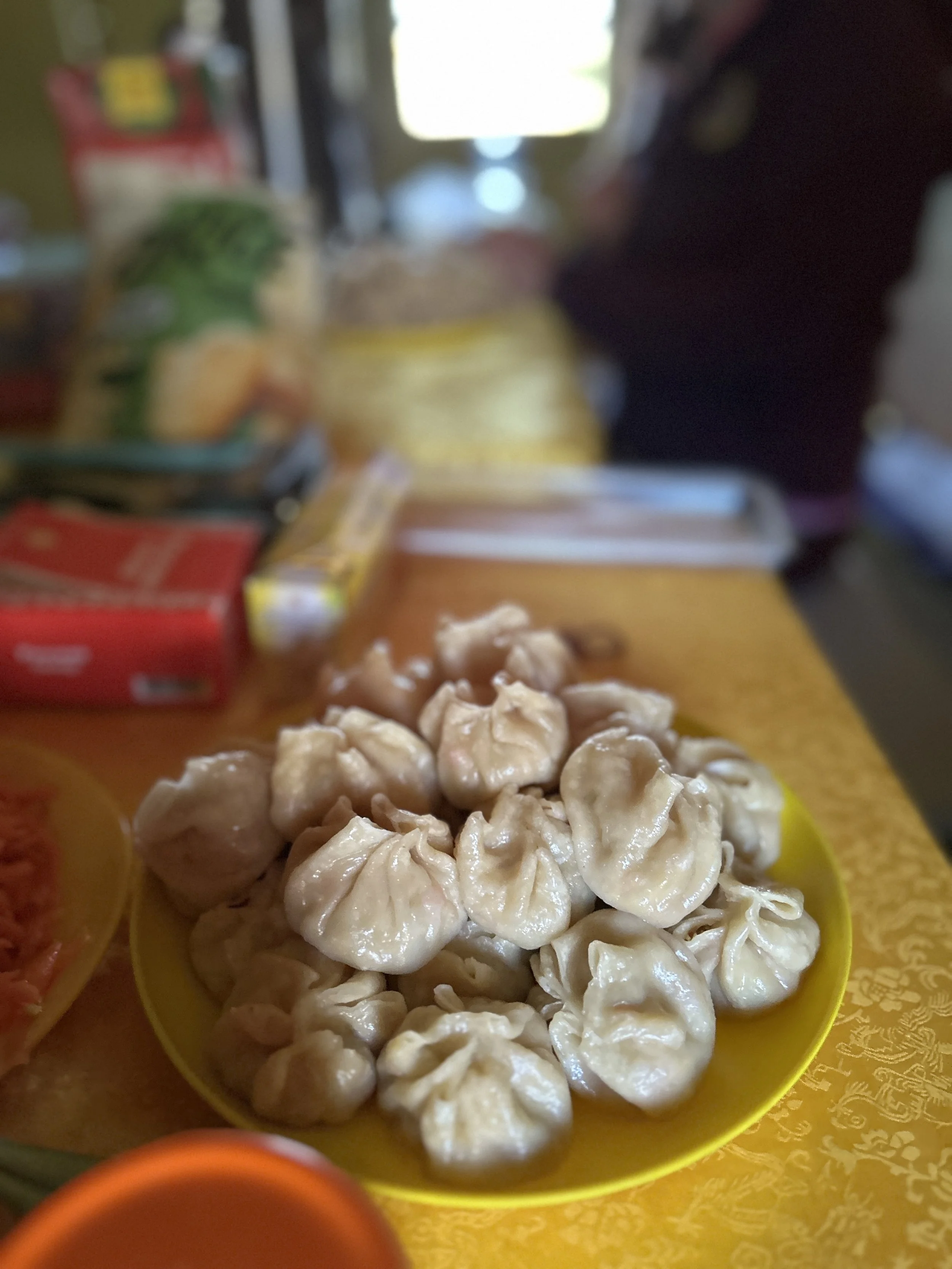
I don’t know how she did it but Borlotro (our expedition cook) served us fresh fruit and veggies every day of the hike, as well as some spectacular meals that would be challenging too cook in a well-equipped kitchen!

Camping takes on a whole new meaning when your views are 5 star in front ands a million stars above!

Up and up towards the highest pass 3, 200 mt.

Oh and this lake always takes our breath away.

NOMADIC LIFE

Kazakh and Tuvan nomads make their summer homes in the heart of the Altai Mountains where they fatten their animals on the grassy valleys of the Tavan Bogd National Park.

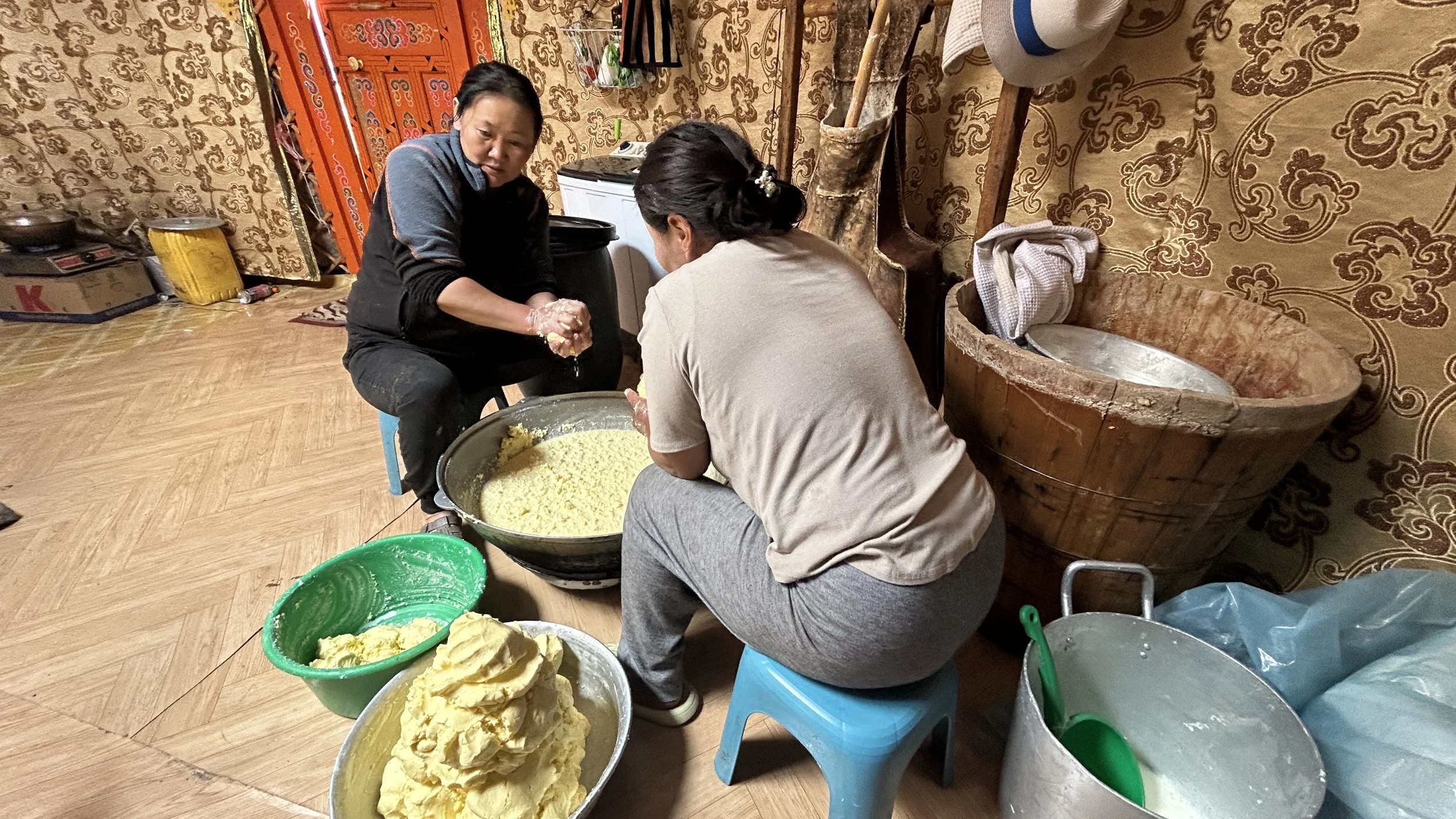
We are so lucky to be invited every year into the homes of local nomads - these sisters are making butter. Notice the large leather receptacle next to the wooden vat? That’s where they mix the mare’s milk to make Airag - the local alcohol with very high alcohol content.

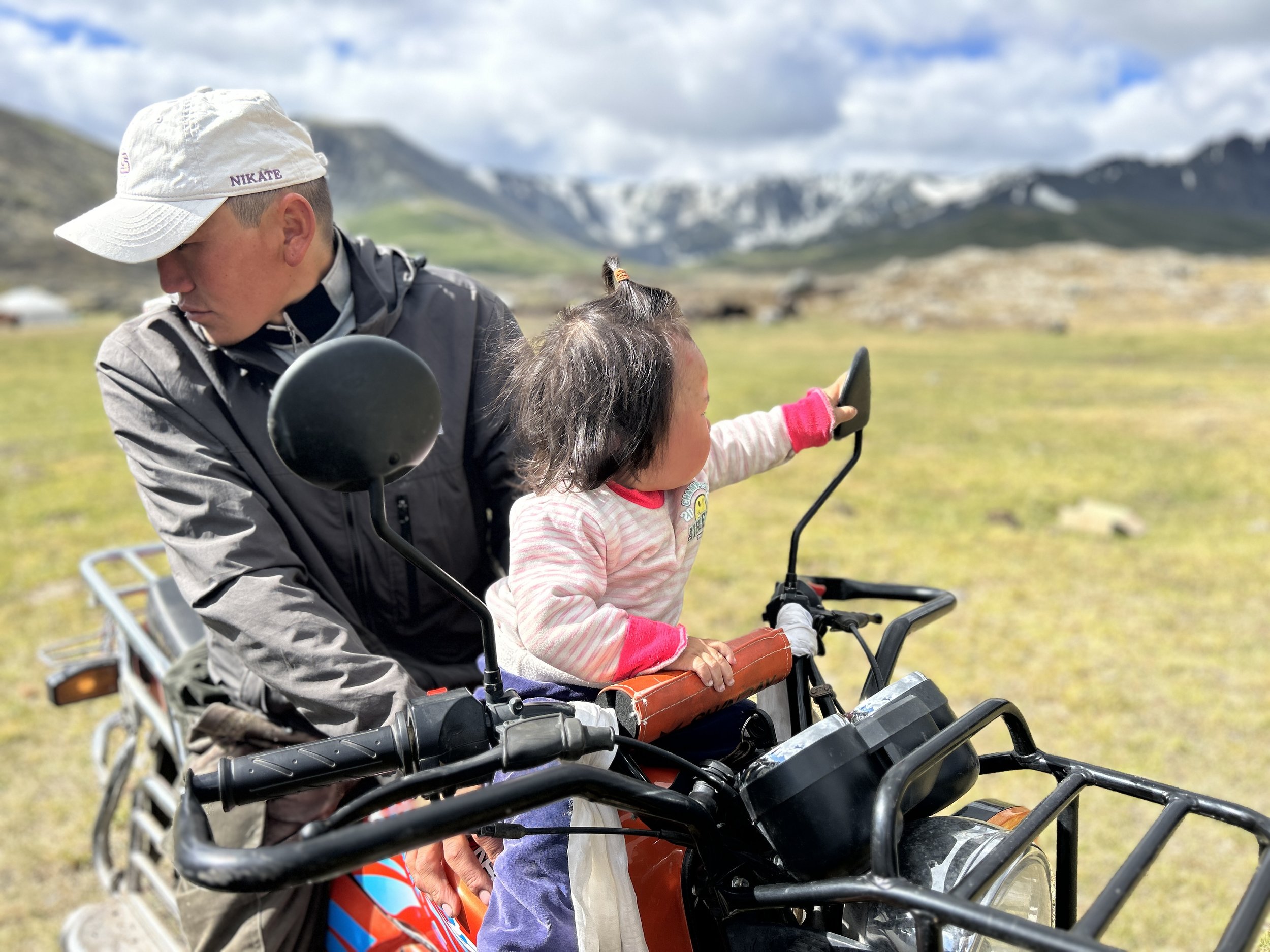
This Tuvan father and daughter are part of a family camp that we see every year - the baby is a new addition to the family. Tuvan nomads originate from the southern Russian region of Siberia. IN the are near Khovsgol Lake there are the more better known Reindeer People who are of Tavan origin, but through the Altai Mountains nomadic Tunas also prevail.

Tuvan nomads bring their animals to pasture in the park every year.

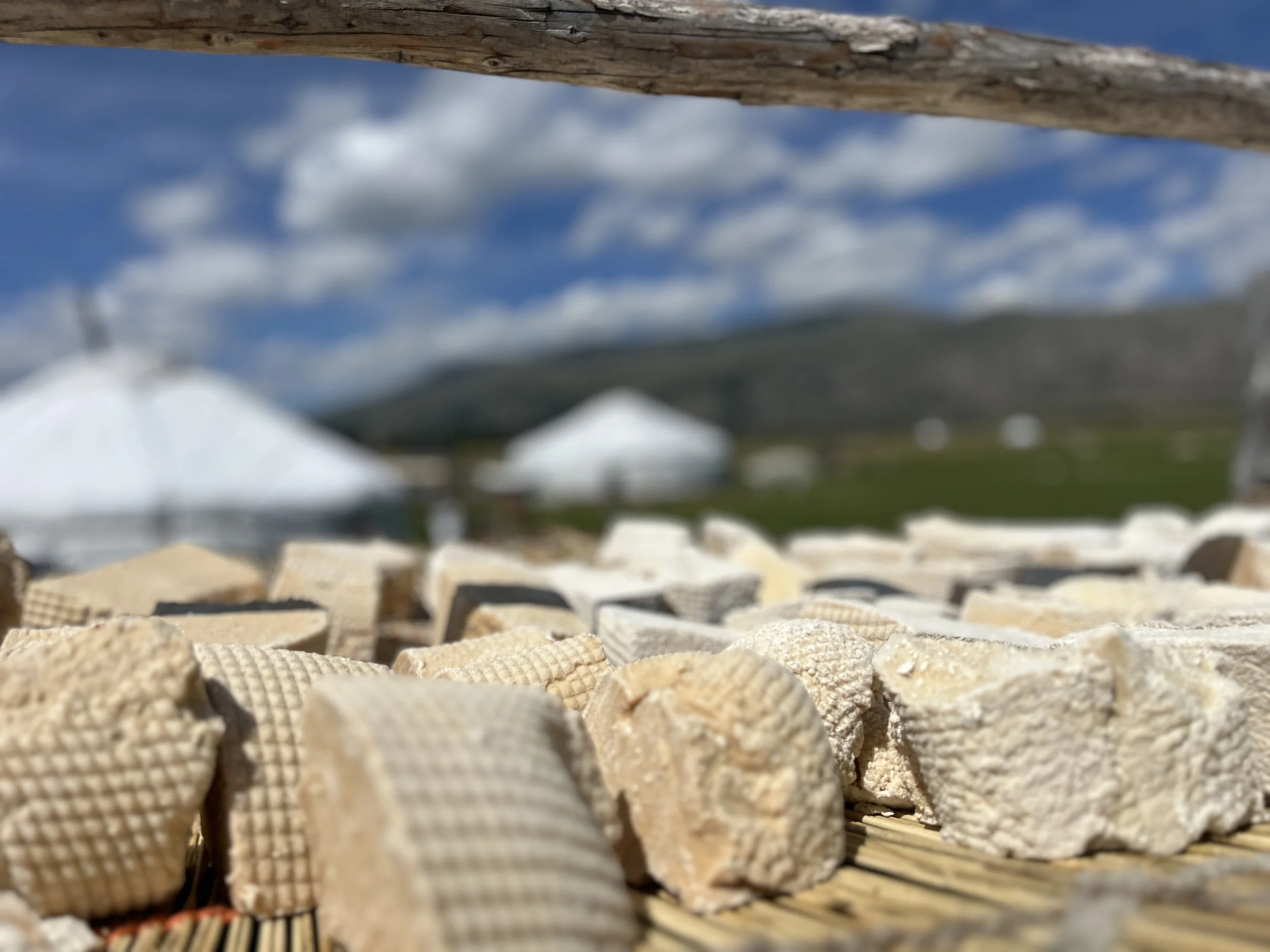
cheese drying out in the sun and fresh air.

Tuvan women milking yaks

THE CHALLENGE

Whether it’s the physical challenge of walking 15 - 20 km daily, steep ascents and descents, the altitude of 2,500 plus Mts; or the mental and emotional challenge of being out of our comfort zones, the remoteness and wilderness, or the disconnection from the rest of the world. Or the discomfort of sleeping in tents, changeable weather and unfamiliar foods, there is no question that walking through the Altai Mountains int eh Tavan Bogd National Park is a challenge for most people who join this adventure.

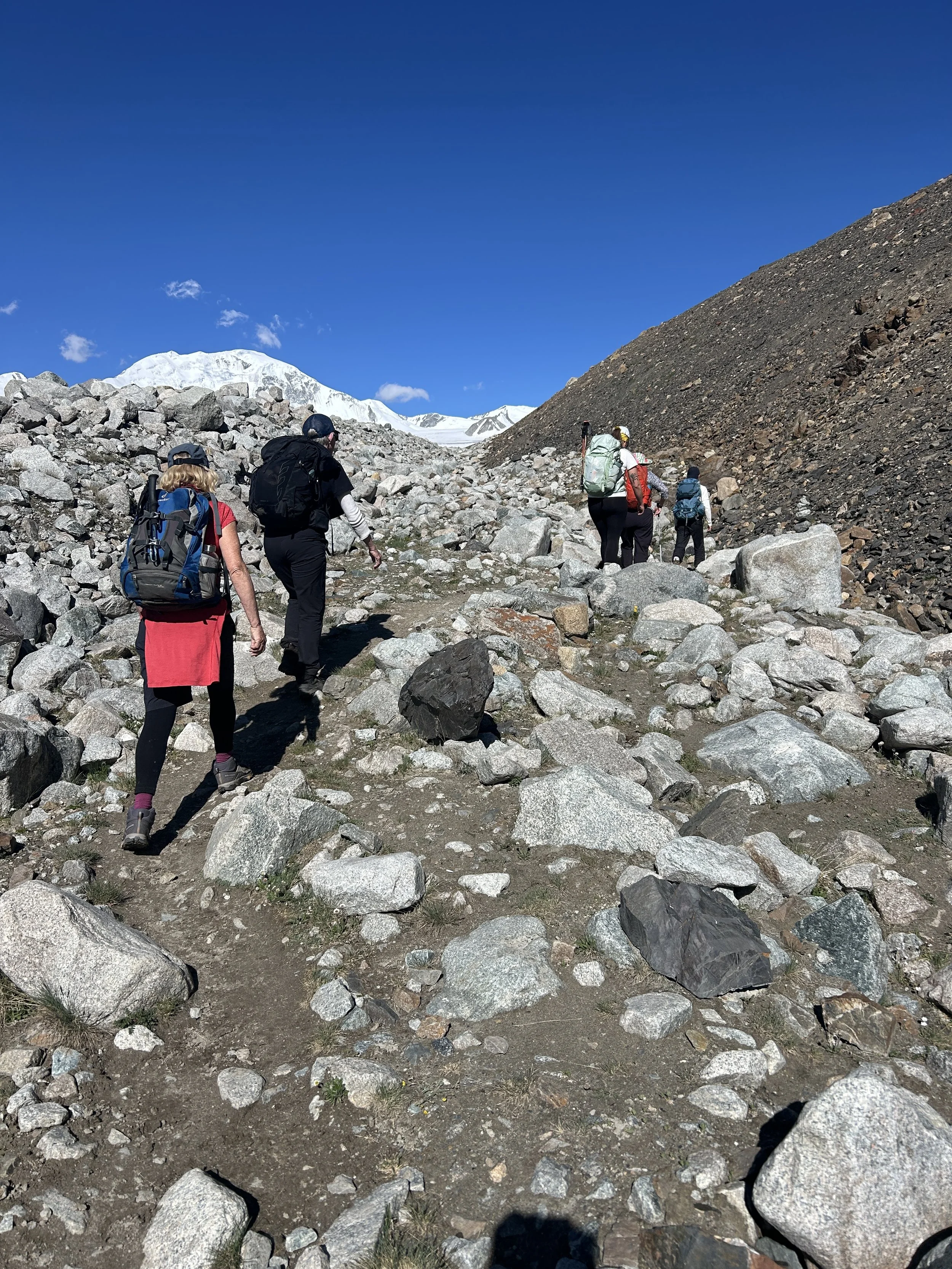
While the ascent is steep - getting back down can be equally challenging.

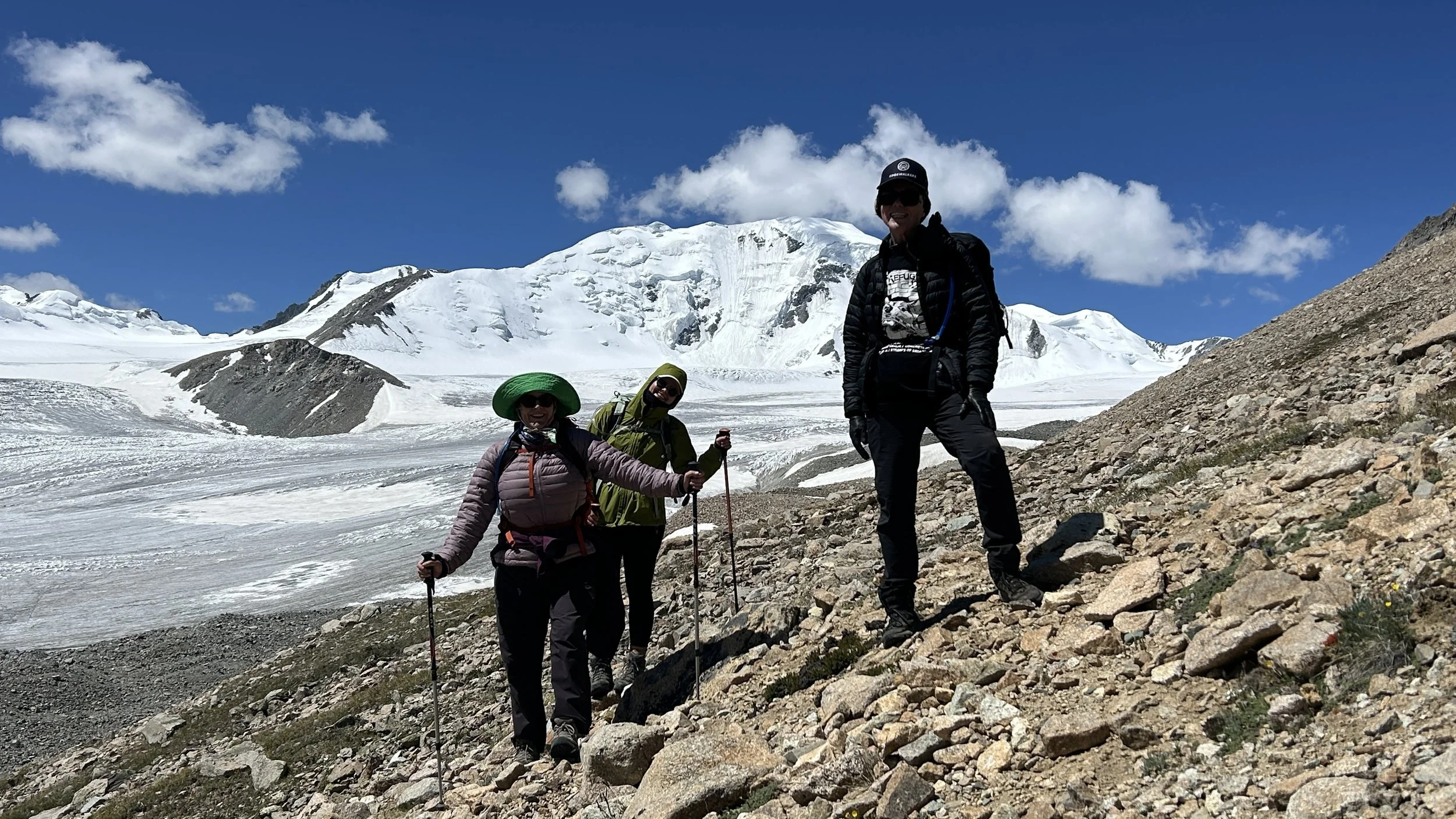
Camping beside White River - aptly named - this river flows directly from the Potanin Glacier - Mongolia’s longest.

one of the longer and more challenging days from 2600 to 3, 100 mt - but what a view to walk towards!!

Those who attempt to climb to the 4,045 mt summit of Malchin Peak truly understand the physical challenge of walking on scree.

Walking through the Altai Mountains in the TAVAN BOGD National Park in Northwest Mongolia is not for the faint-hearted. It is for the adventurous hearted, the brave-hearted, the open-hearted and the humble-hearted. It is for those that are ready to push through their limitations and step outside of comfort and familiarity to experience the wild and pristine natural beauty of remote wilderness - to experience what not many people will experience in their lives.

Back to Top
erika@edgewalkers.com.au

Fremantle - Western Australia 6160

+61 406 758 062
Adventure Tourism Trade Association Logo
Australia's southwest logo.jpg
Perth Airport Tourism Awards Finalist Ecotourism
tripadvisor_logo.jpg

At Edgewalkers we respectfully acknowledge all First Peoples of the land on which this business thrives. We pay our respect to traditional elders from the past, present, and future; we celebrate their culture, heritage, and identity and we aspire to promote and instill a sense of custodianship and responsibility for ‘country’ in all our activities and dealings.

Edgewalkers is a vegetarian company - one of the ways we are aspiring to reduce our carbon footprint.

Terms and Conditions


© Edgewalkers 2025. All rights reserved. Privacy Policy. ABN 59615095406

Edgewalkers Every Woman Expo discounts on our walks & retreats from 21-30 June