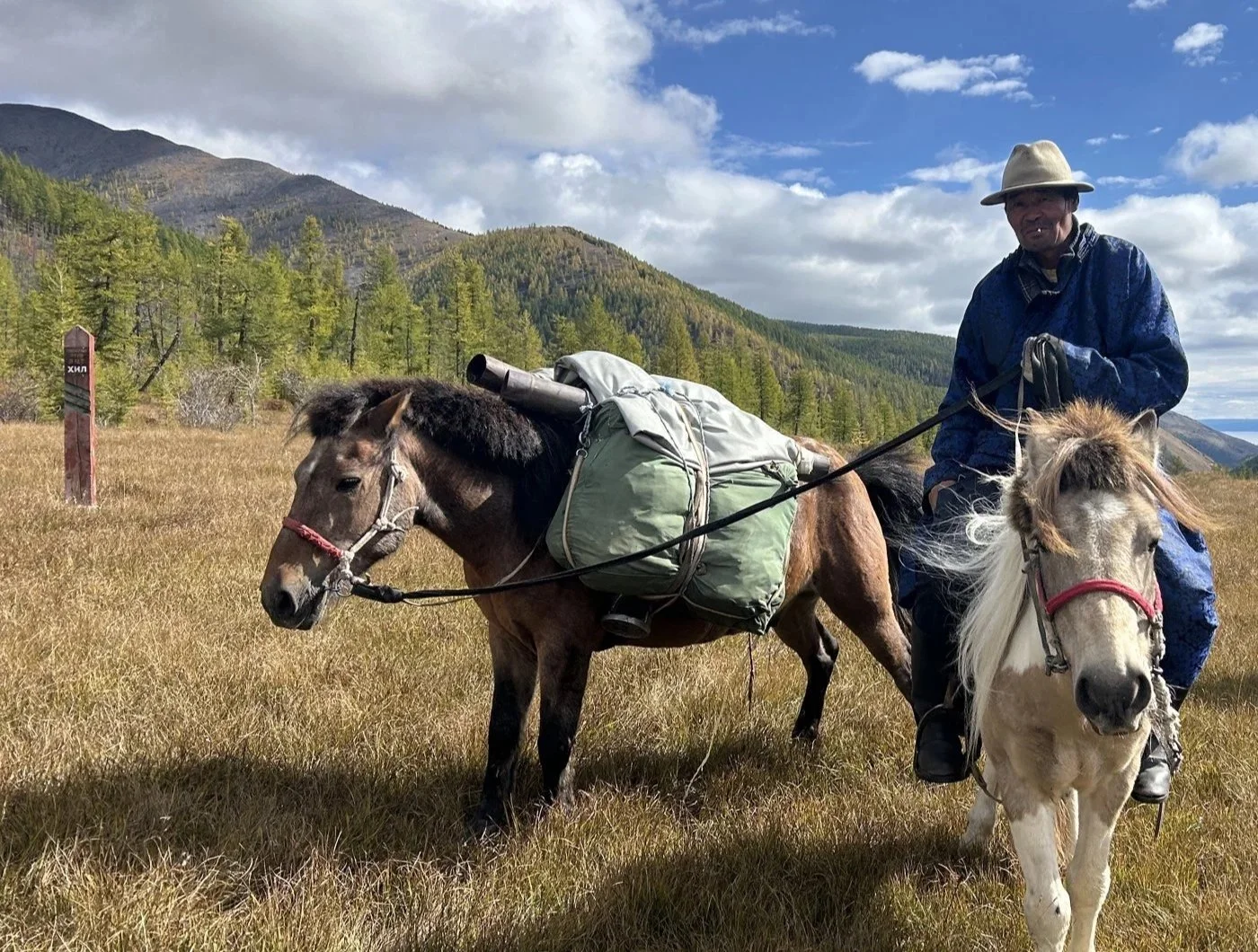
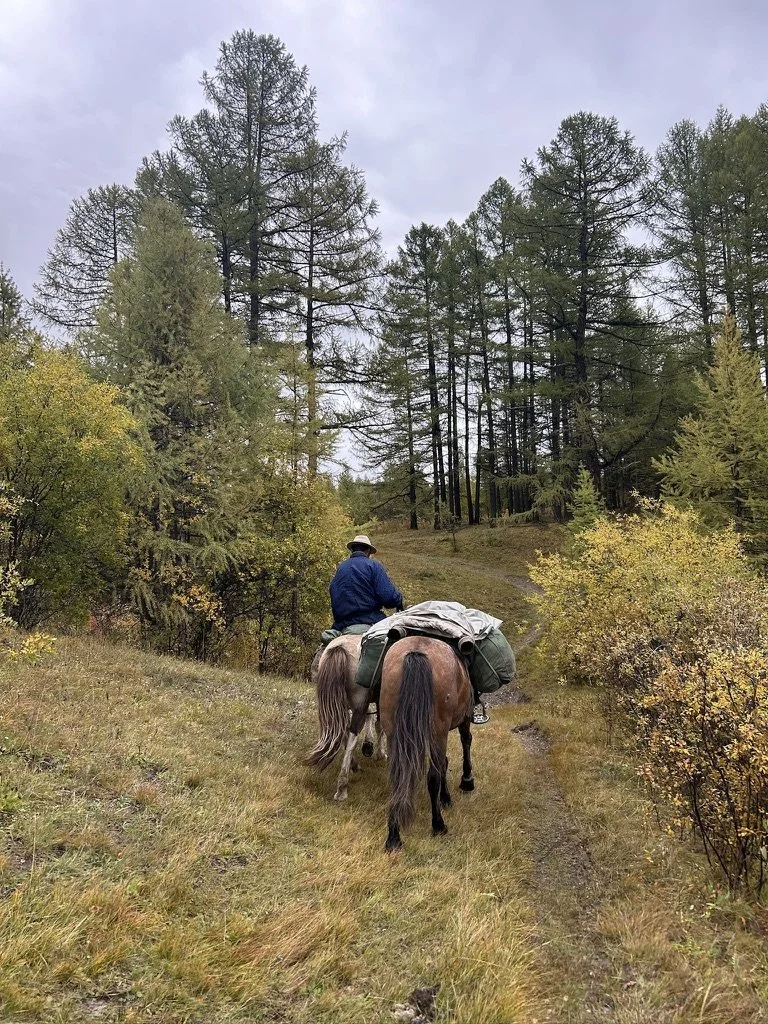
It had started to rain as we left Renchinlkhümbe, a small town in Mongolia’s Darkhad Valley that the locals call Tumbe. I had a large loaf of fresh bread in my pack, and three days of walking ahead of me with Batulzii, a Darkhad horseman, to Khuvsgul Lake.
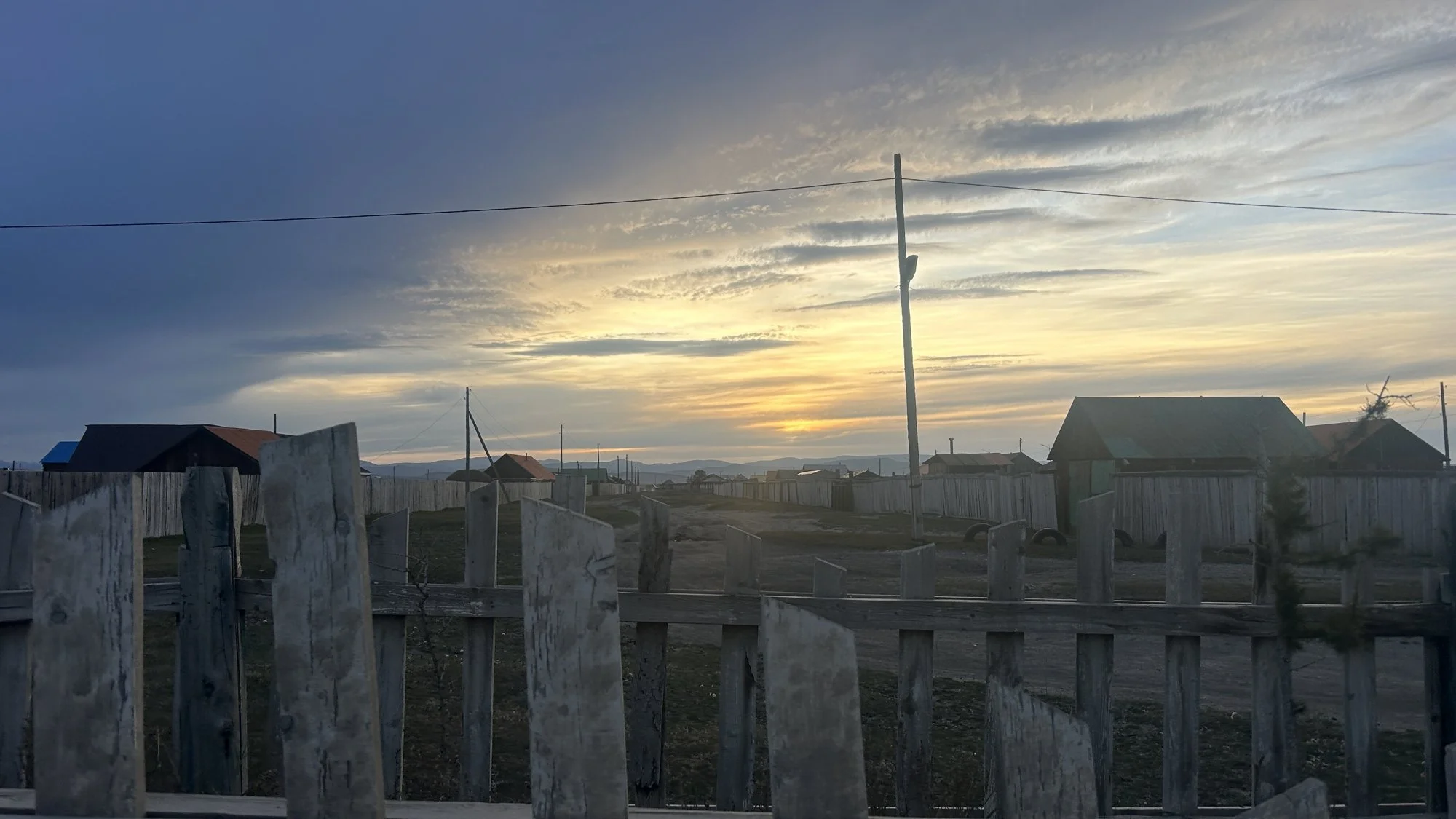
Wooden fences and houses in Renchinlkhümbe (Tumbe) at dusk, Darkhad Valley
We hadn’t gone far when he pulled in at his mother’s place, motioned for me to sit and wait, and left. So I sat with his mother while she made flatbreads on the stove.
When Batulzii came back, it was clear what he’d been doing.
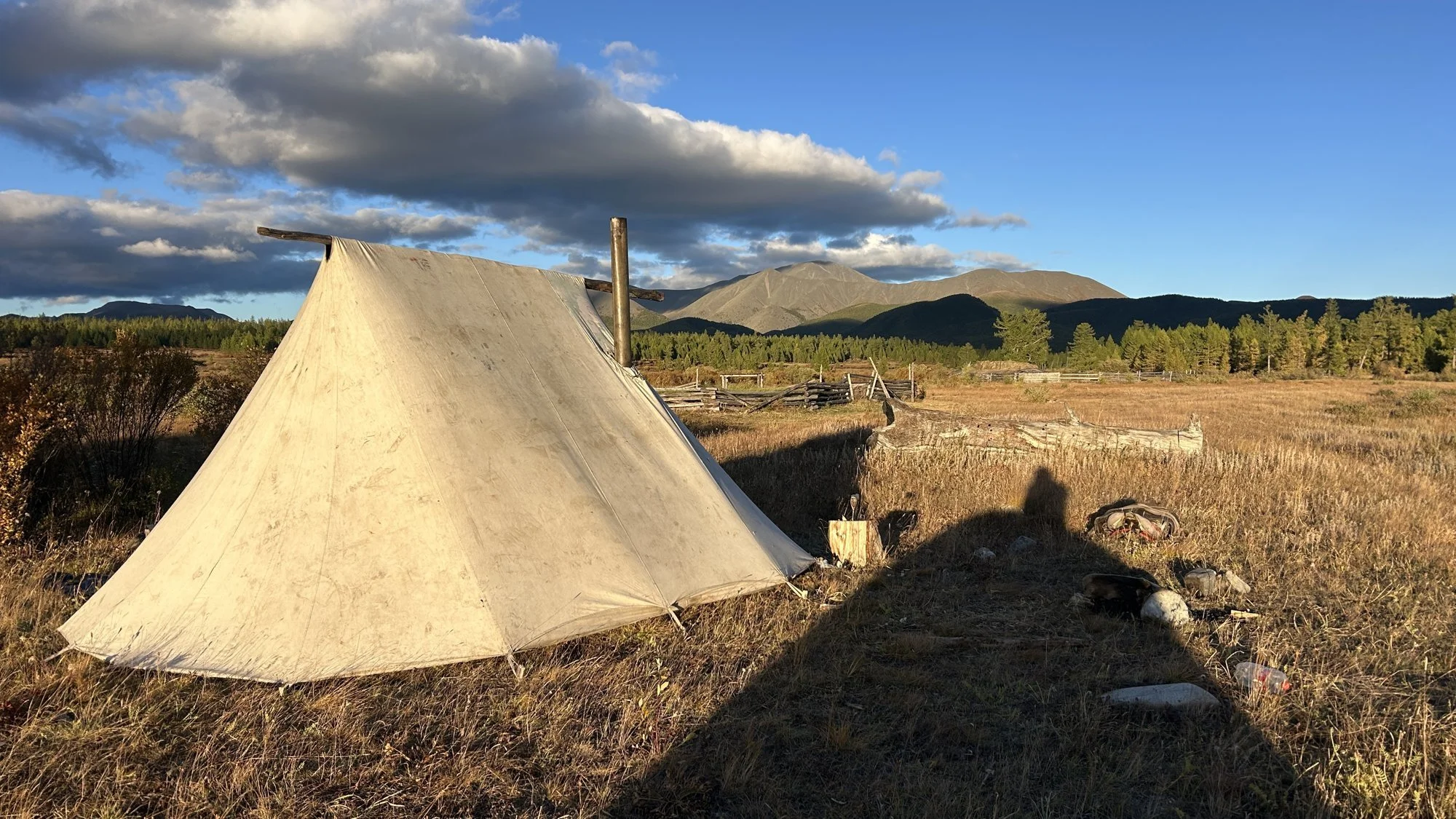
He’d covered our gear in plastic to keep out the rain, and tied the two pieces of the stove’s chimney to either side of the saddle.
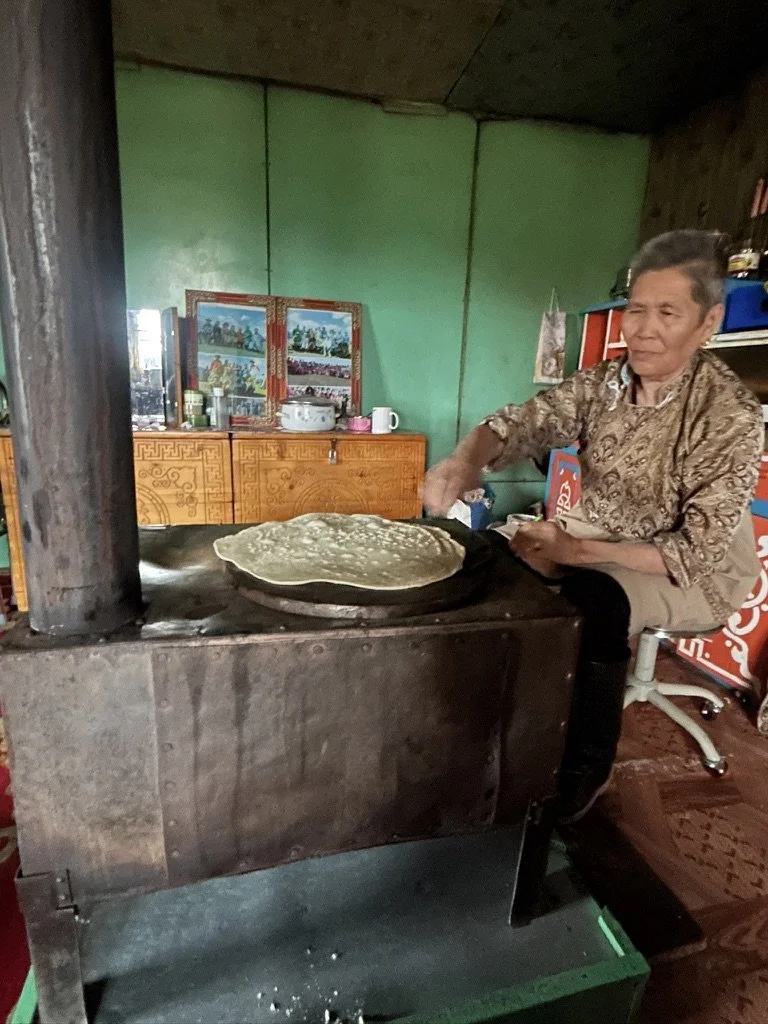
Batulzii’s mother cooking flatbread on a wood stove in her home
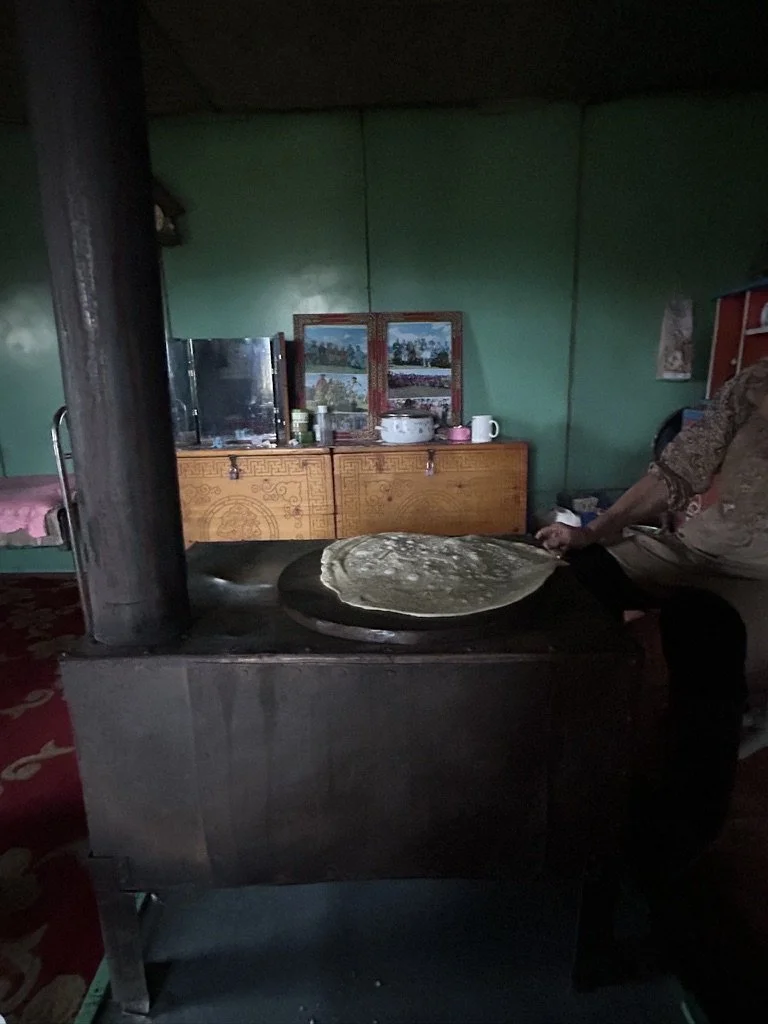
Batulzii’s mother at her wood stove in Renchinlkhümbe
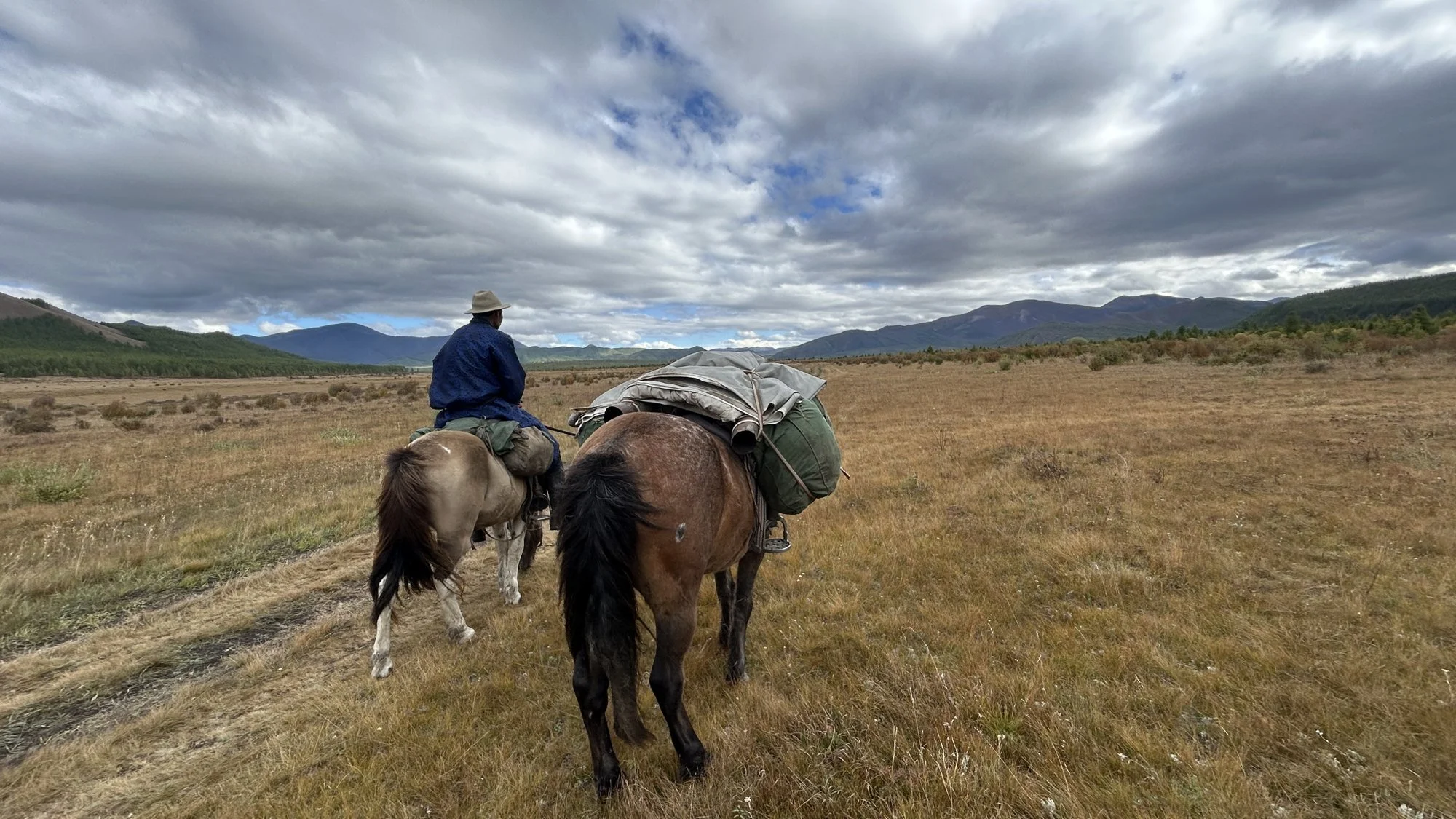
Living the Darkhad Valley
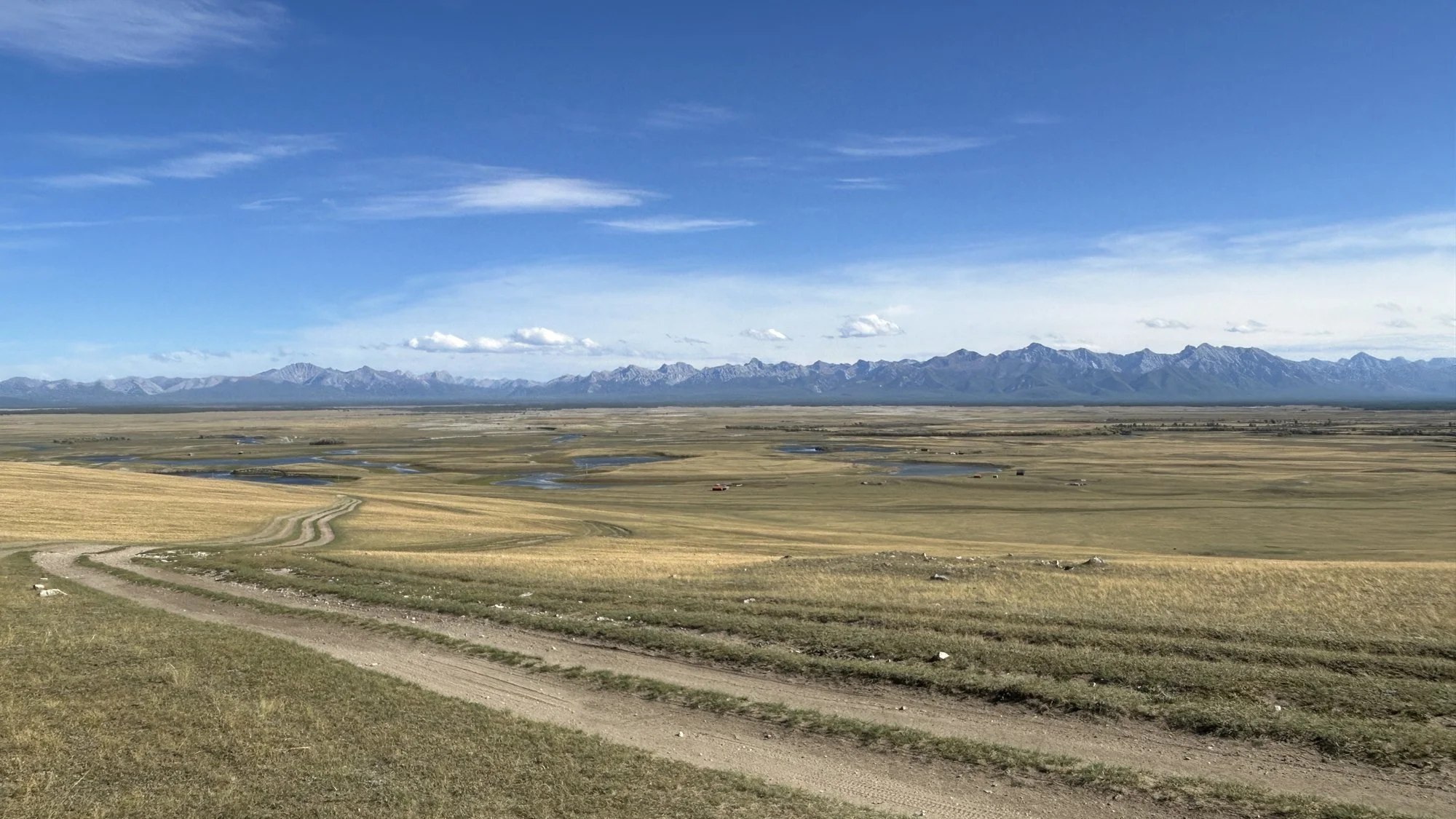
The valley takes its name from the Darkhad people, who herd sheep, yaks and horses here and speak their own dialect of Mongolian. It’s remote, ringed by mountains, with the Khoridol Saridag Range on its eastern side, between the valley and Khuvsgul Lake. Our way to the lake was over the Jigleg Pass, which cuts through the range. The valley was once the bed of a large glacial lake. Now it’s steppe and wetlands, crossed by rivers, with larch forest on the hills. It only became part of Mongolia in 1925, when it was handed over from Tuva.
The Darkhad Valley is the gateway to the taiga forests where the Dukha reindeer herders, also known as the Tsaatan, live. It’s a place where traditional Mongolian shamanism is still strong.
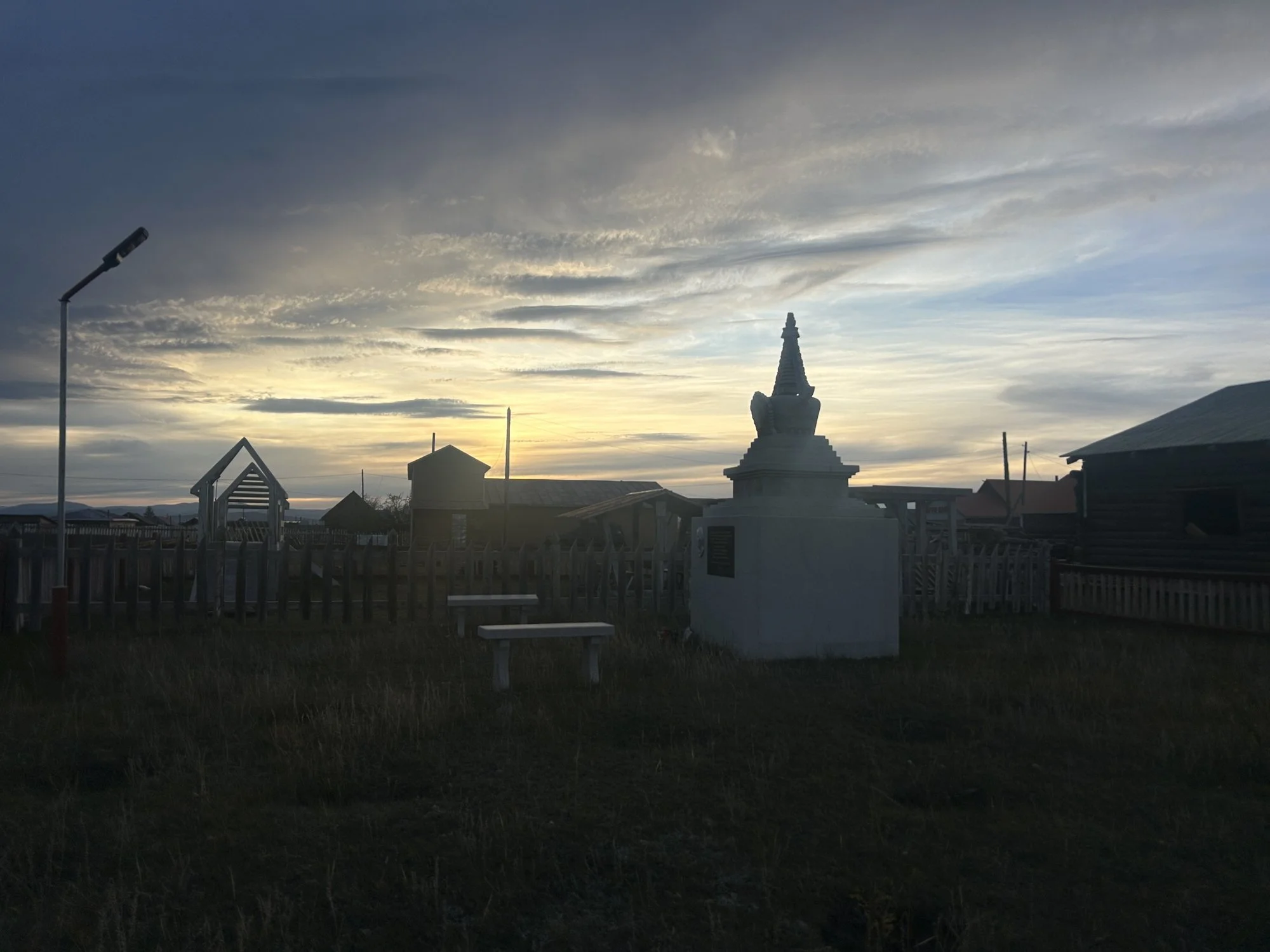
A Buddhist stupa in Renchinlkhümbe (Tumbe) at dusk
People here remember a dark chapter too. In the late 1930s, Mongolia’s communist government, following Stalin’s lead, destroyed almost every Buddhist monastery in the country and killed thousands of lamas. Tumbe had its own monastery, Zöölöngiin Khüree, founded in 1750.
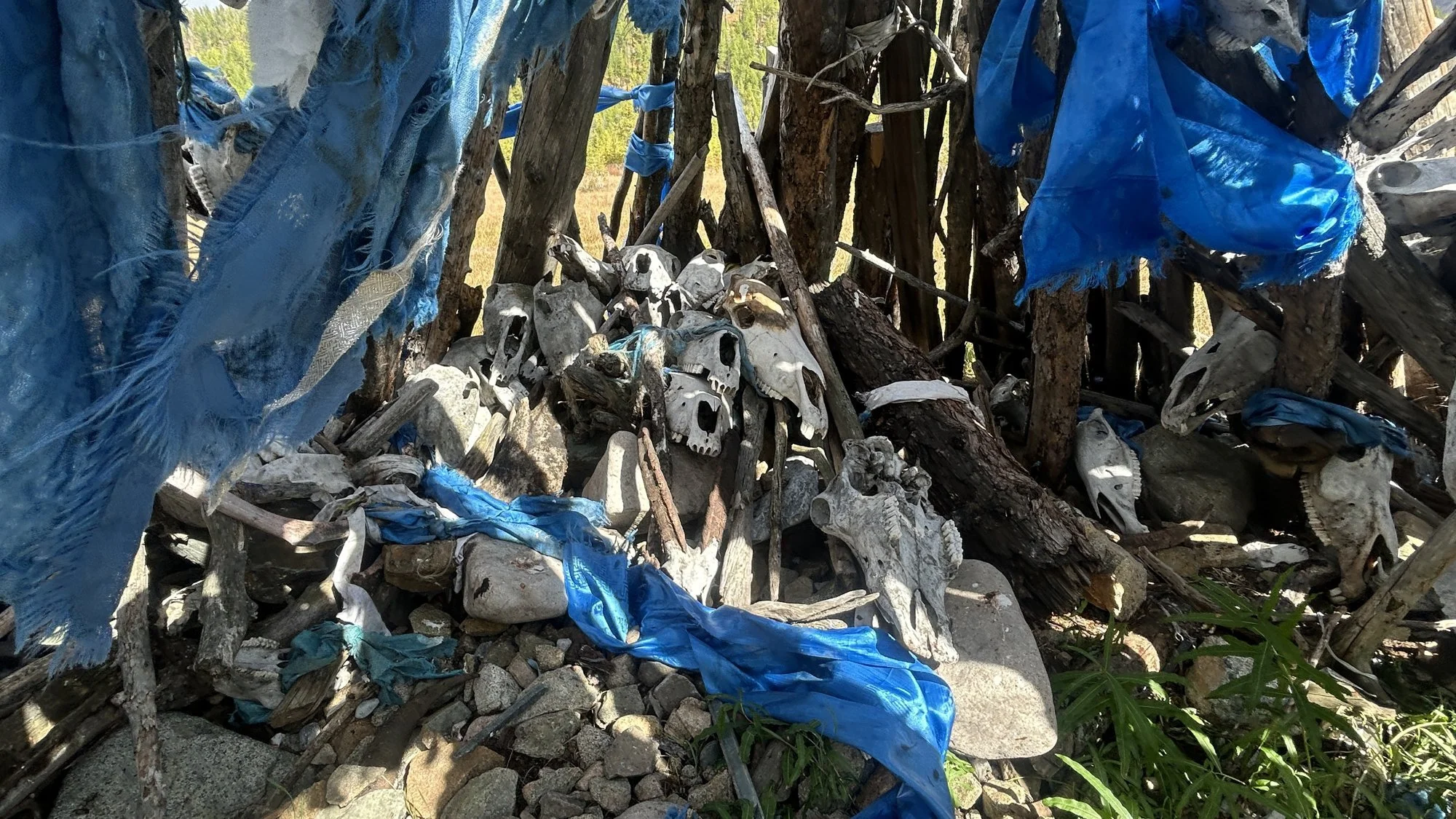
A shamanic ovoo with horse skulls and blue cloth offerings on the Jigleg Pass
Around Mongolia - especially around mountain passes, you can find ovoos or shrines, where there are offerings t the mountains spirits and deities. In other parts of Mongolia, the ovoo I’ve passed have been Buddhist and made of stone. This one was shamanic, made of wood. Its offerings were horse skulls, and wooden poles hung with flags.
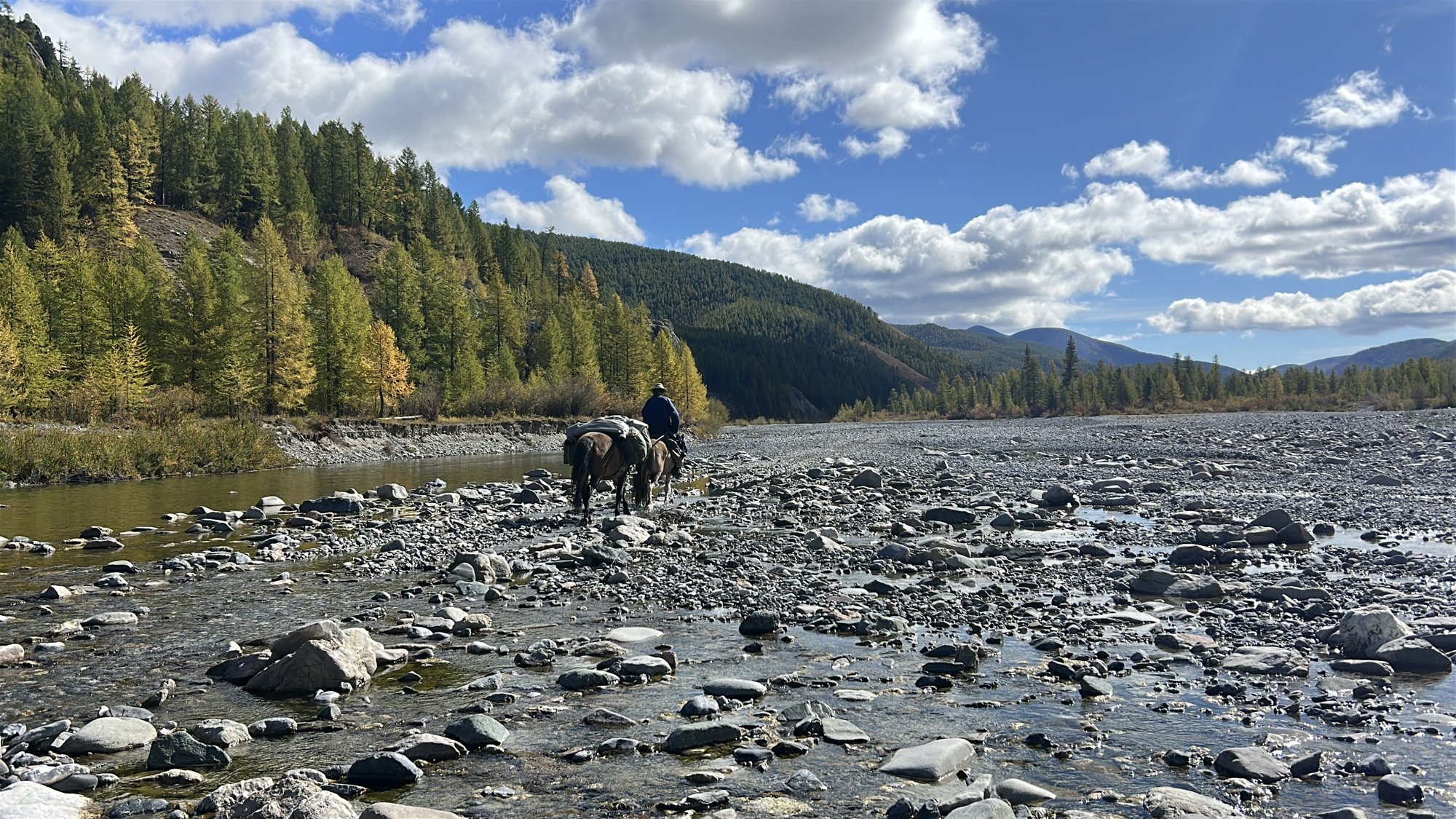
Batulzii leading the horses across a stony river
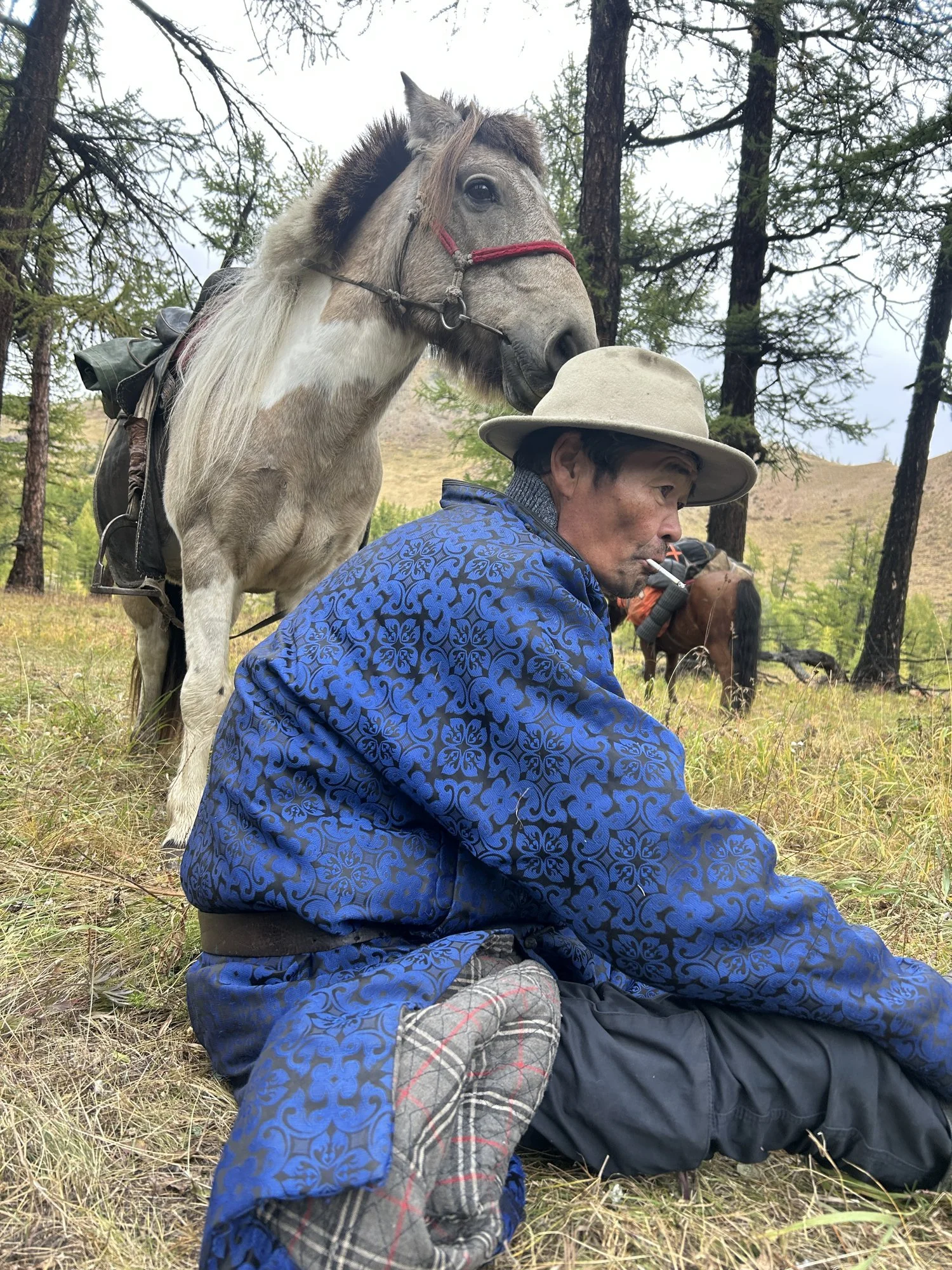
Batulzii was quiet. He spoke few words. We had no common language but we didn’t really need one. We were not that much apart in age. At some point we worked out our ages: he was 54, and he was surprised to learn I was 57. Each time we stopped for a break, he’d light a cigarette and lie on his side in the grass, smoking quietly.
He was kind to his horses, and he seemed at peace with everything around him.
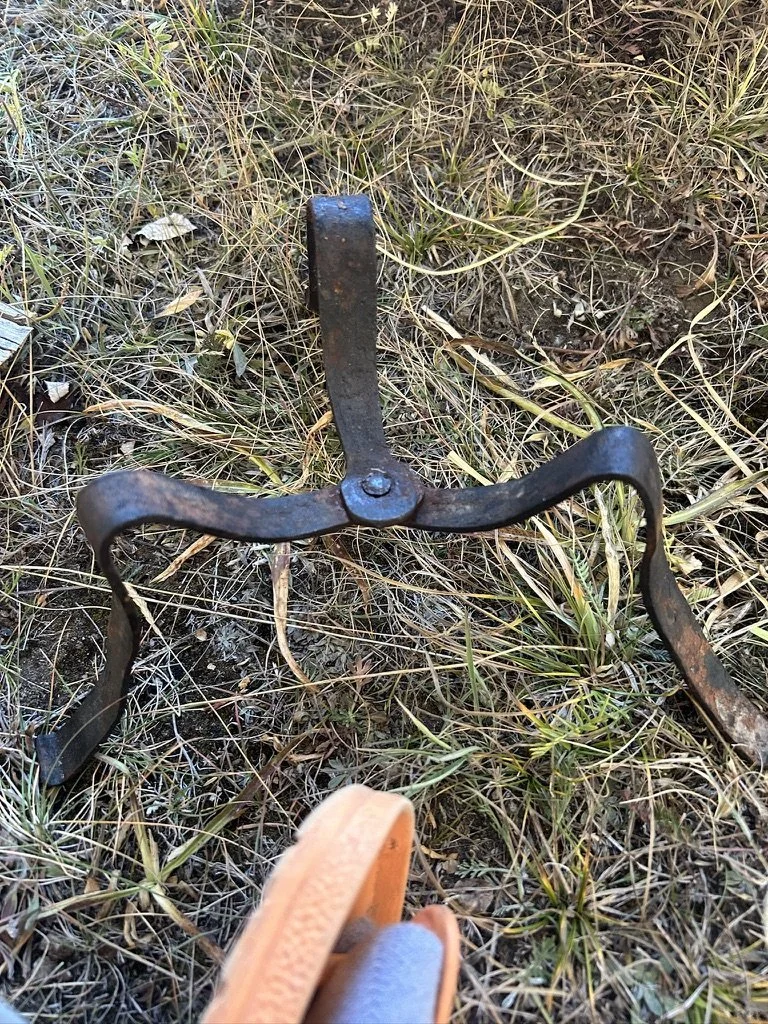
We cooked our own food. Two pans sat in the opening of Batulzii’s stove, for cooking and boiling water. He carried a knife and an axe, each in a metal sheath, and a metal bowl he used for everything, including his tea. He drank a lot of tea. He had a tool to grab the side of a hot pan and lift it off the fire, and a collapsible stand to rest it on.
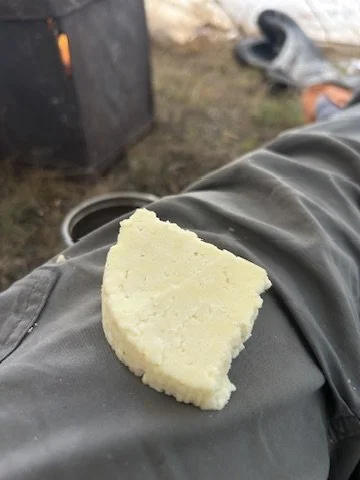
He cooked mutton. I’m vegetarian, so I shared my bread from Tumbe, and he shared his big chunk of yak’s cheese with me.
Each time we left a camp, he made sure the fire and embers were out and that no rubbish was left behind.
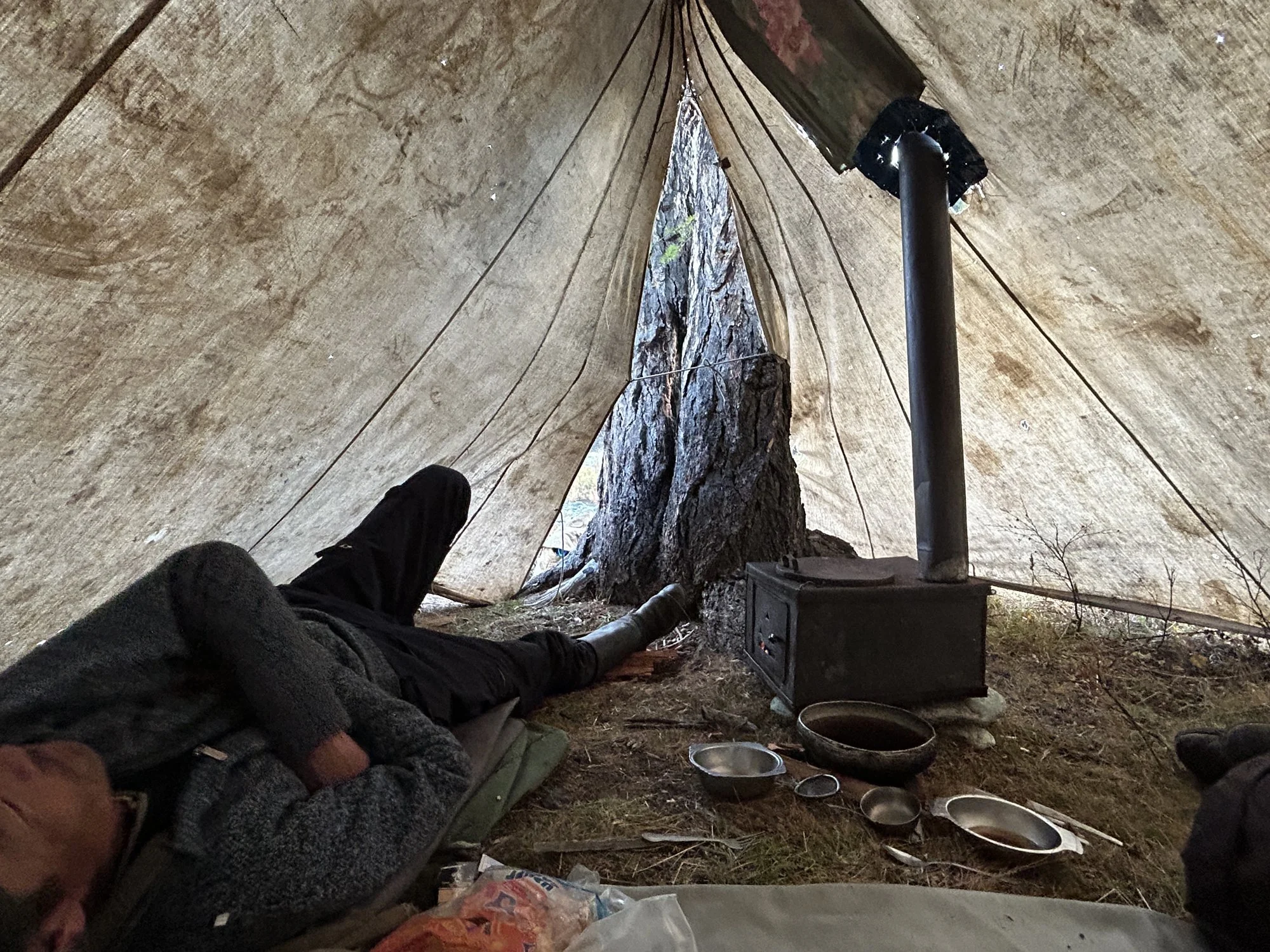
Batulzii’s camp kit: metal bowls, pots, a ladle, a knife and an axe
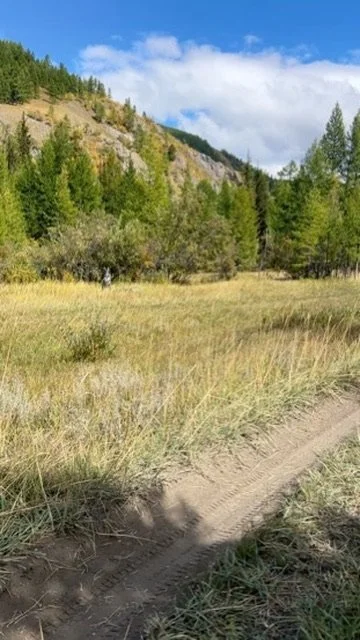
Mongolians call Khuvsgul Lake Dalai Eej, Mother Sea. Almost 70% of the country’s fresh water is in it. Its water leaves through the Egiin Gol and travels on, by way of the Selenge River, to Lake Baikal in Siberia.I have great memories of those three days walking in serene and peaceful quiet through the pristine and remote wilderness of the Khuvsgula Lake region in the company of Batulzii. It was a rich cultural experience I’ll never forget.
Thank you, Batulzii. Баярлалаа.
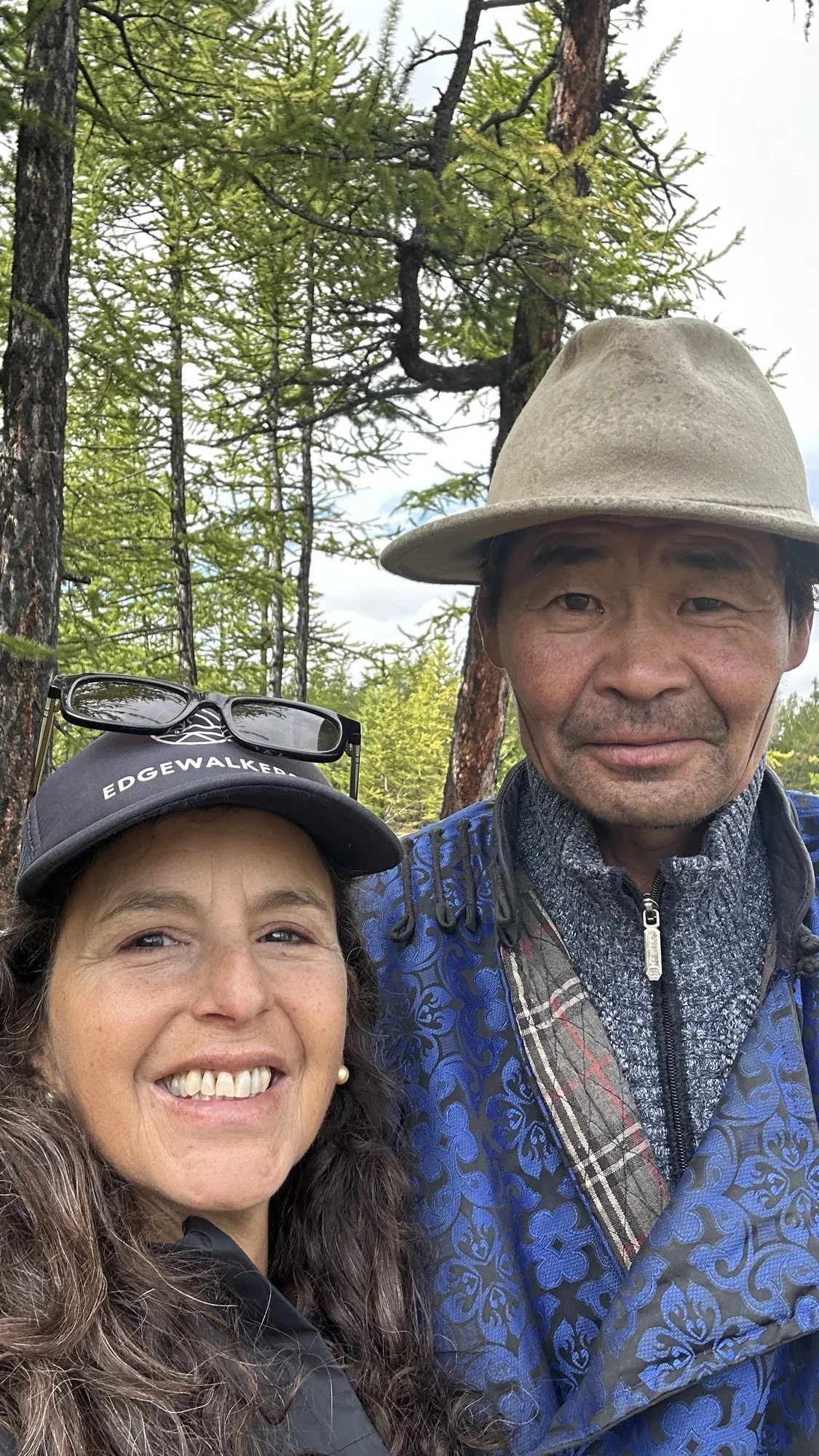
Erika Jacobson and Batulzii together on the trail