
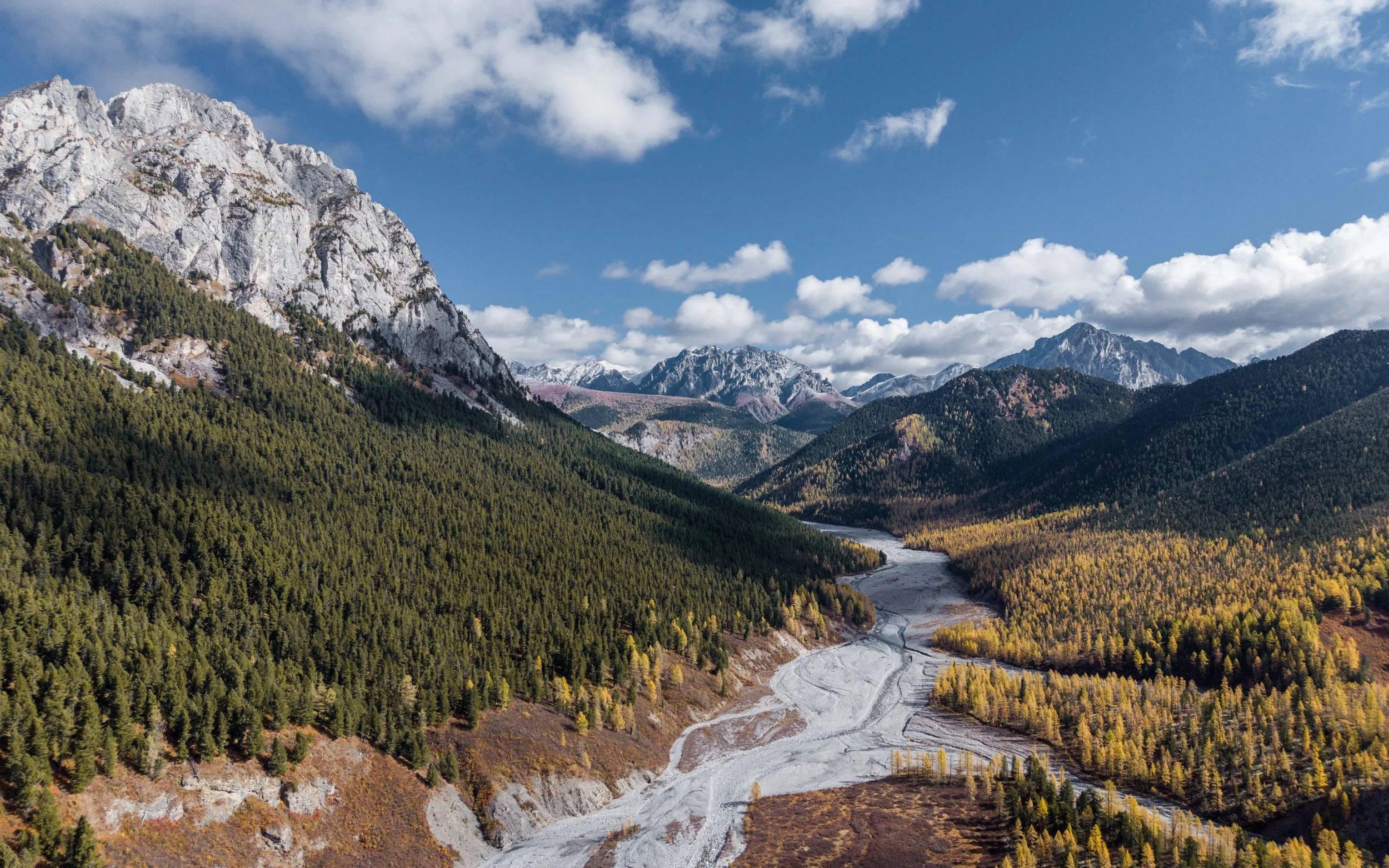
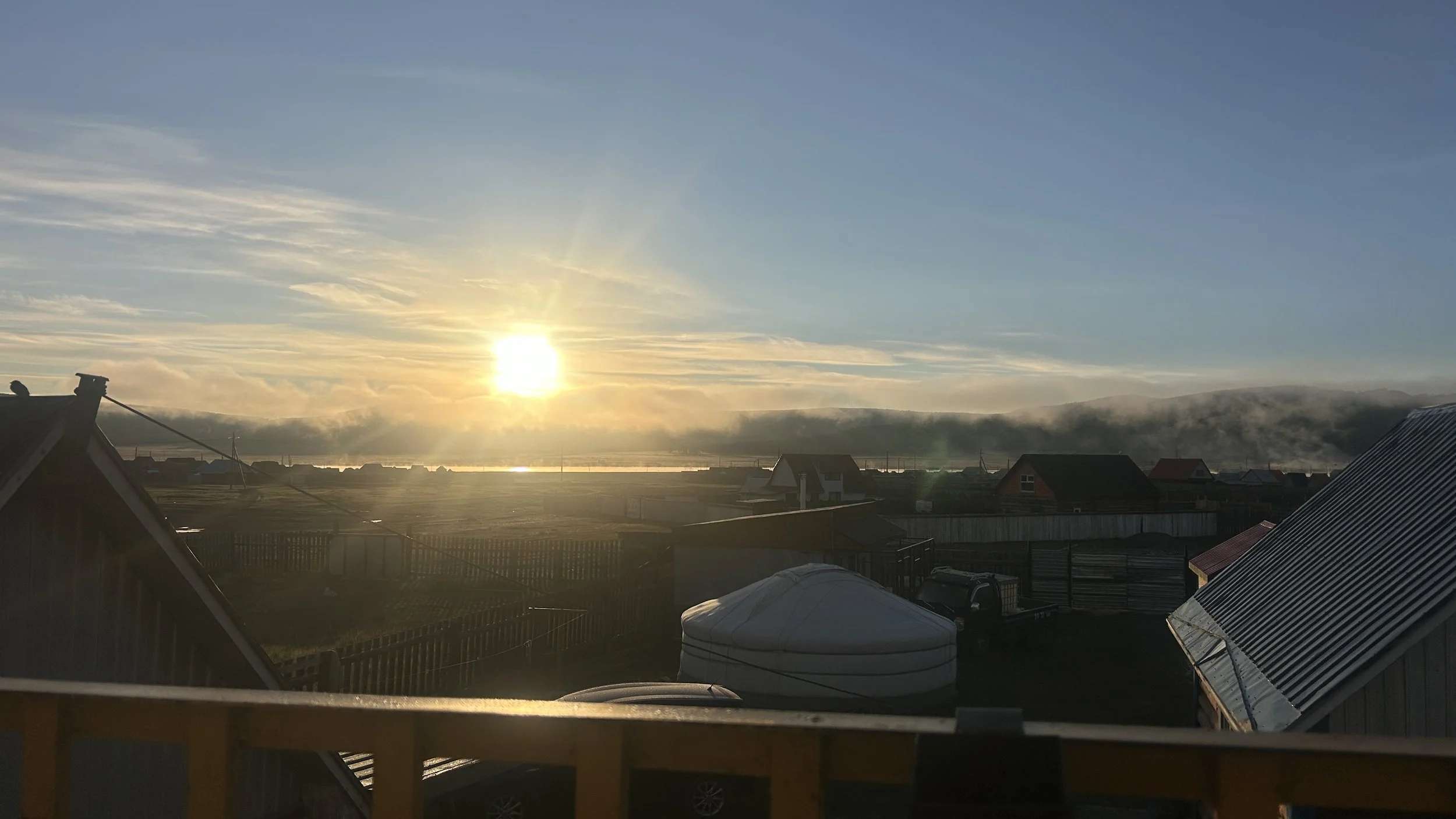
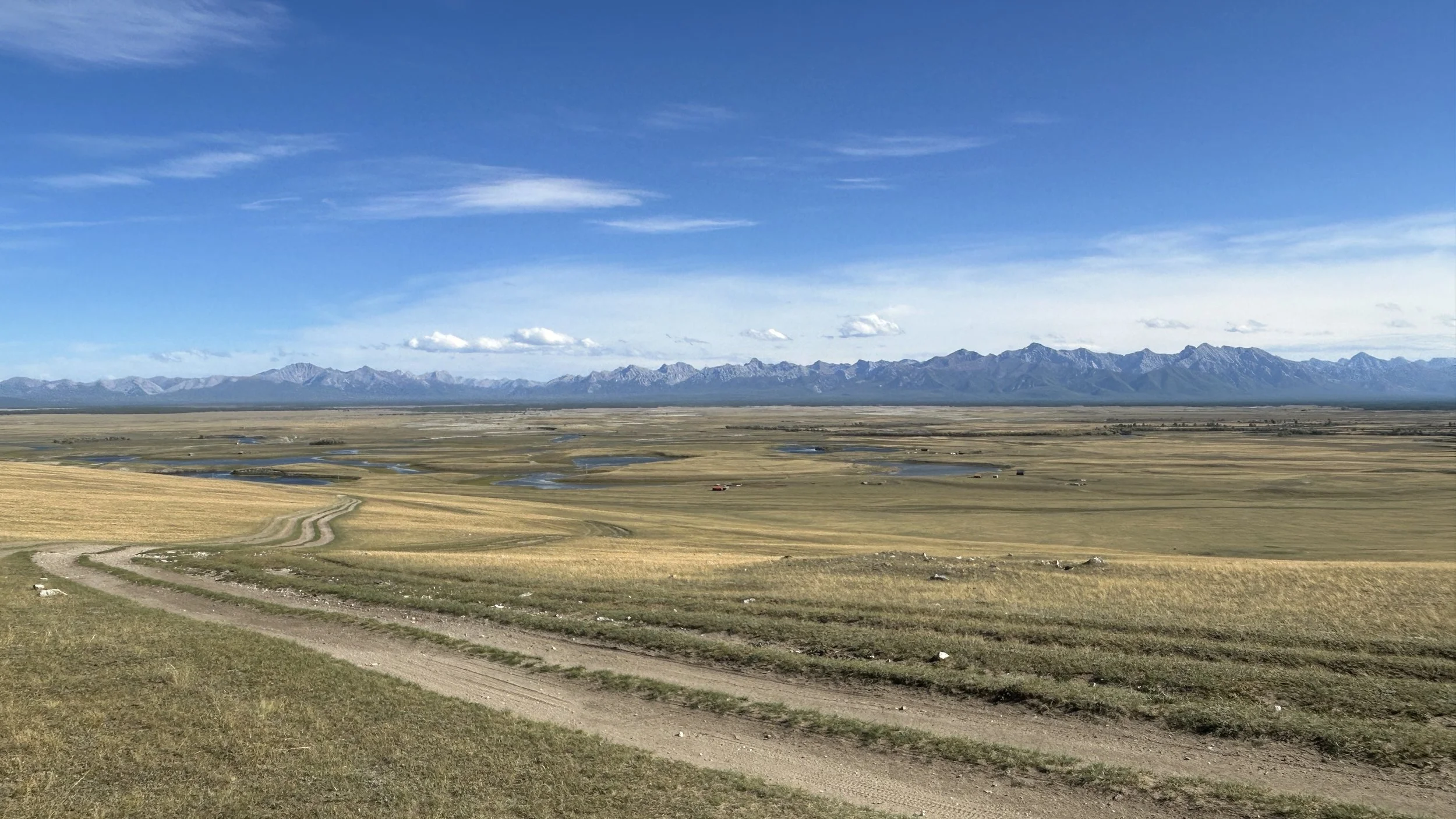
These are the Khoridol Saridag Mountains - a protected wilderness in northern Mongolia that stretches along the west of Khuvsgul Lake (below left) and east of the Darkhad Valley.
I spent my two weeks in late August and early September 2026 scoping a new walking itinerary for Edgewalkers. You could call it one of the many perks of my job.
Let me take you on a photo account of this extraordinary experience through this wild and pristine landscape.
But first - see the reindeer?
One of the highlights was spending a day among the Reindeer herders in the Taiga Forest. Keep reading and I’ll tell you more.
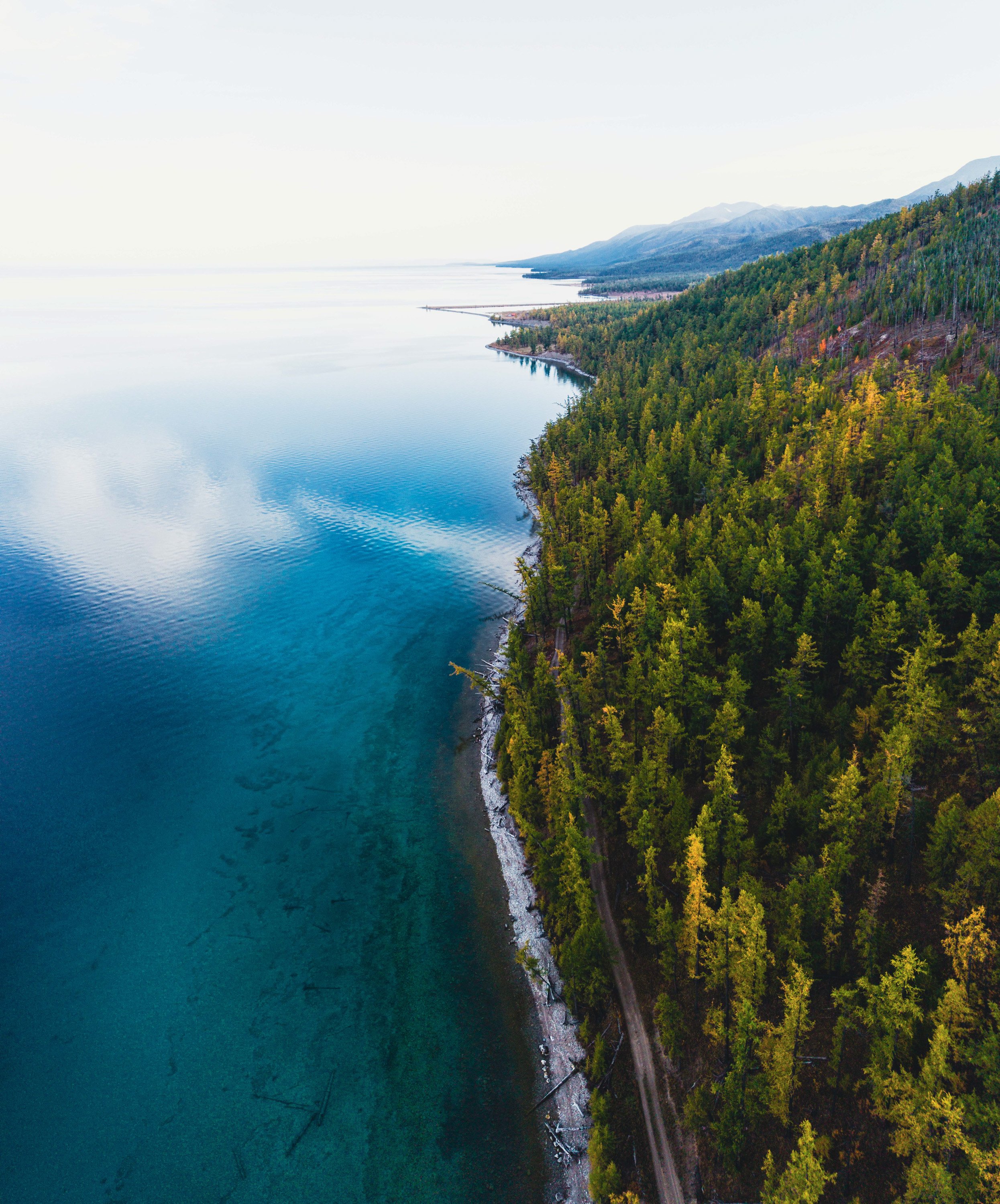
Khuvsgul Lake - Mongolia
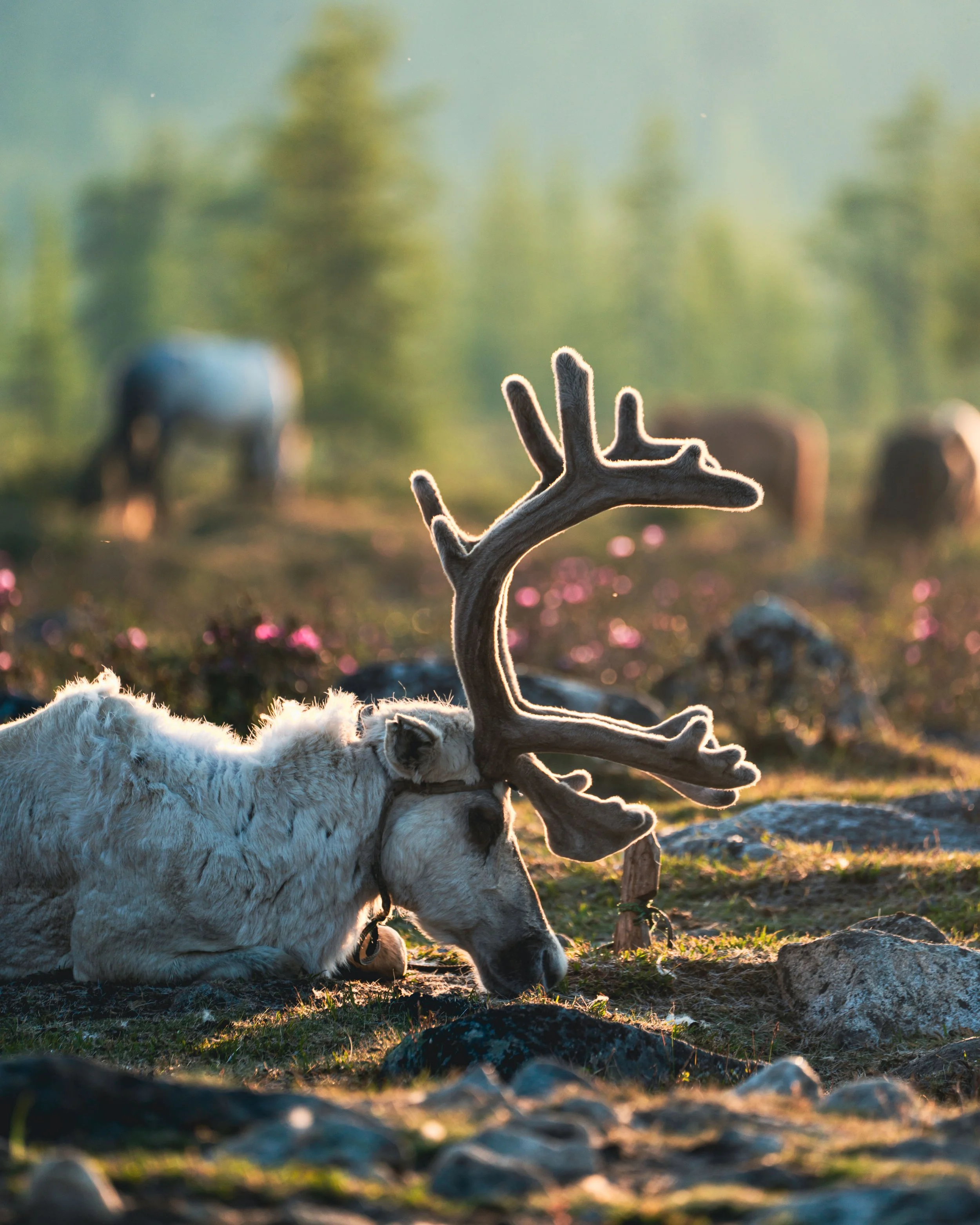
Reindeer in the Taiga - north Mongolia
The adventure starts with a flight from Ulaanbaatar to Murun, the largest town near Khuvsgul Lake.
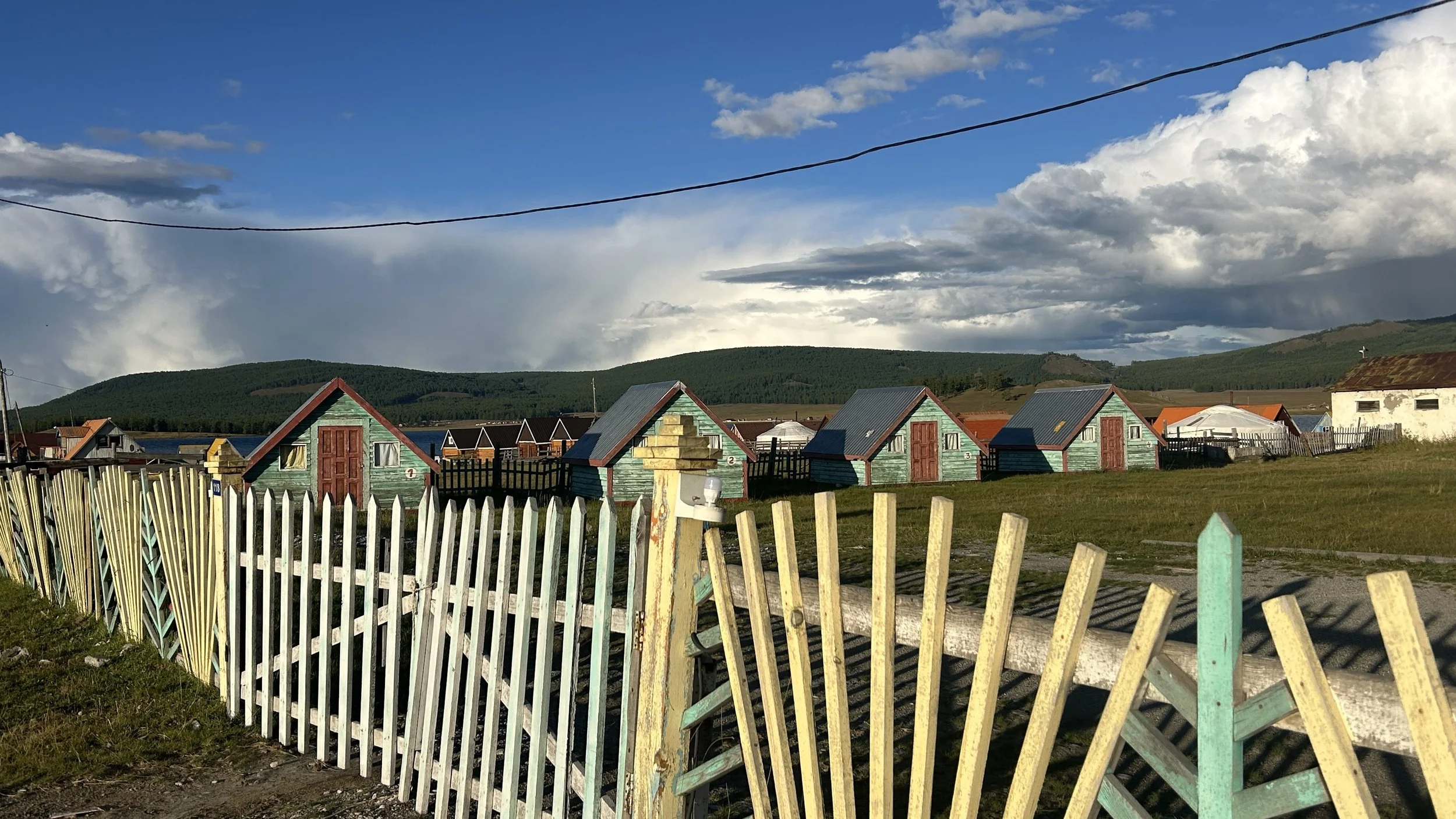
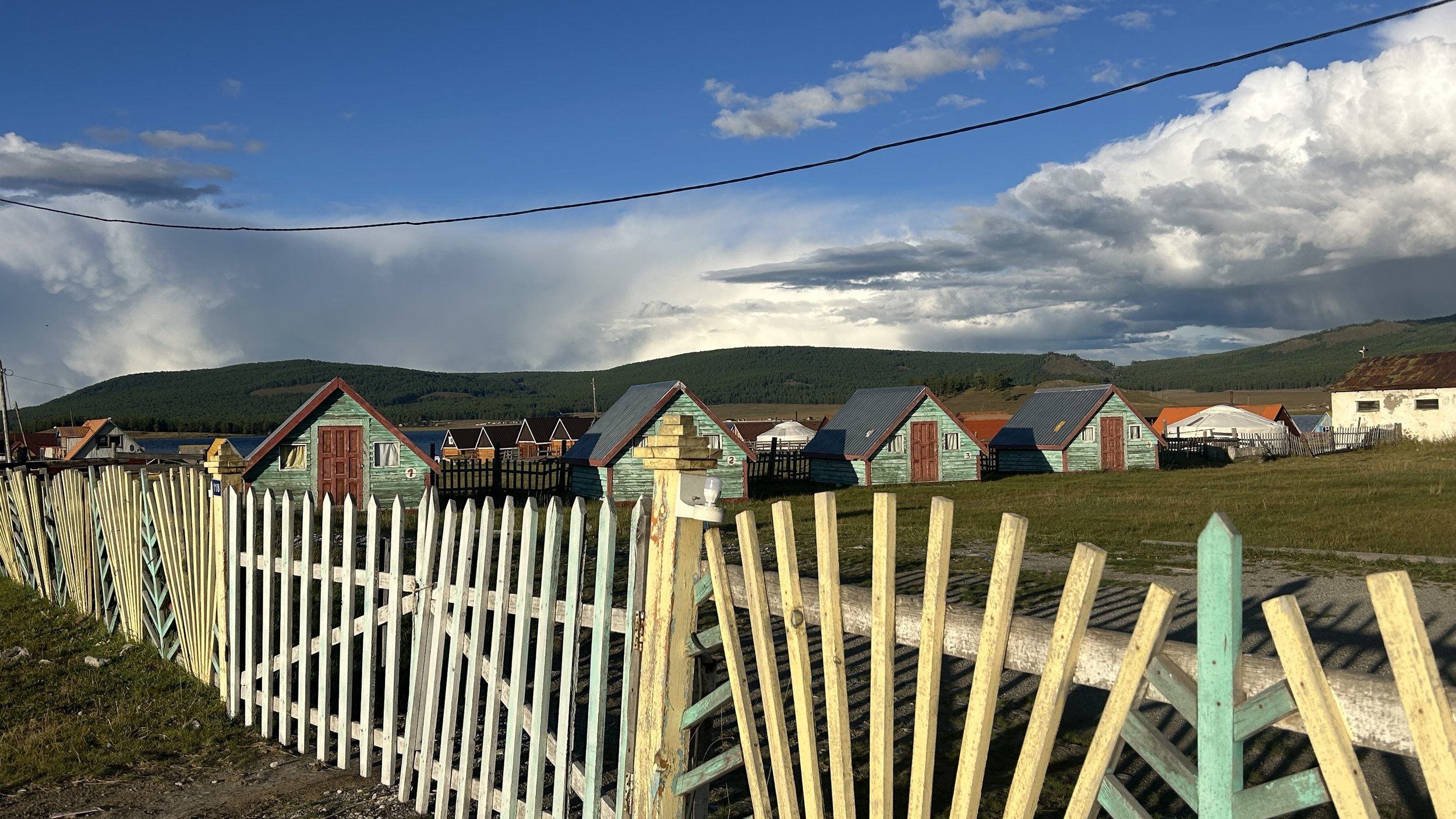
I first went to Murun and Khatgal, the main settlement on Khuvsgul Lake, in 2015 on my first ever trip to Mongolia. The picture below (far right) is a selfie in front of the ger camp that I stayed in.
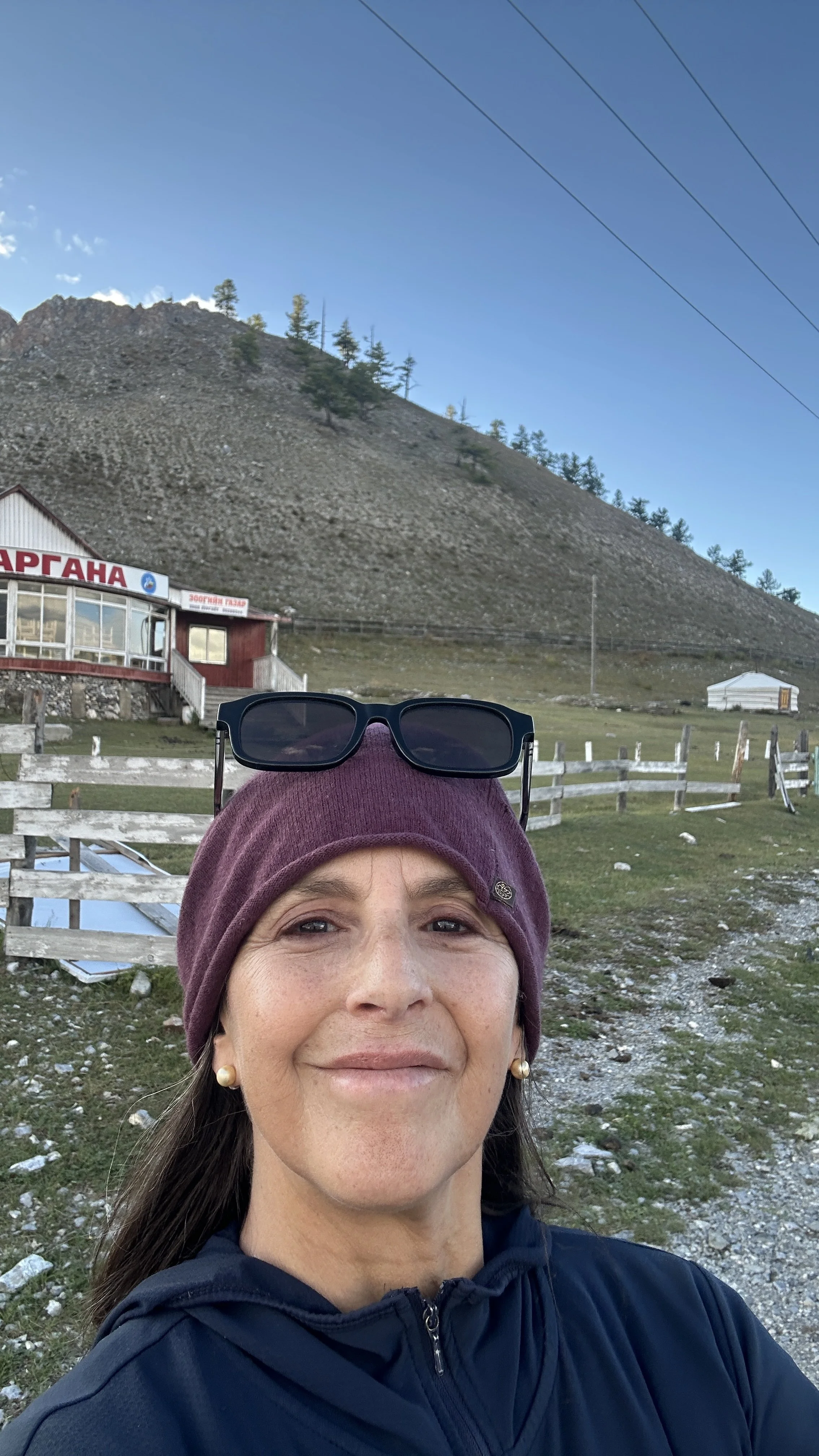
This whole region is called the gateway to the subarctic taiga (boreal) forest, home to a number of ethnic groups, including the Tsaatan people - reindeer herders.
This small semi-nomadic community, also known as Dukha, moves with the seasons to bring their herds to parts of the forest where they can find the special moss.
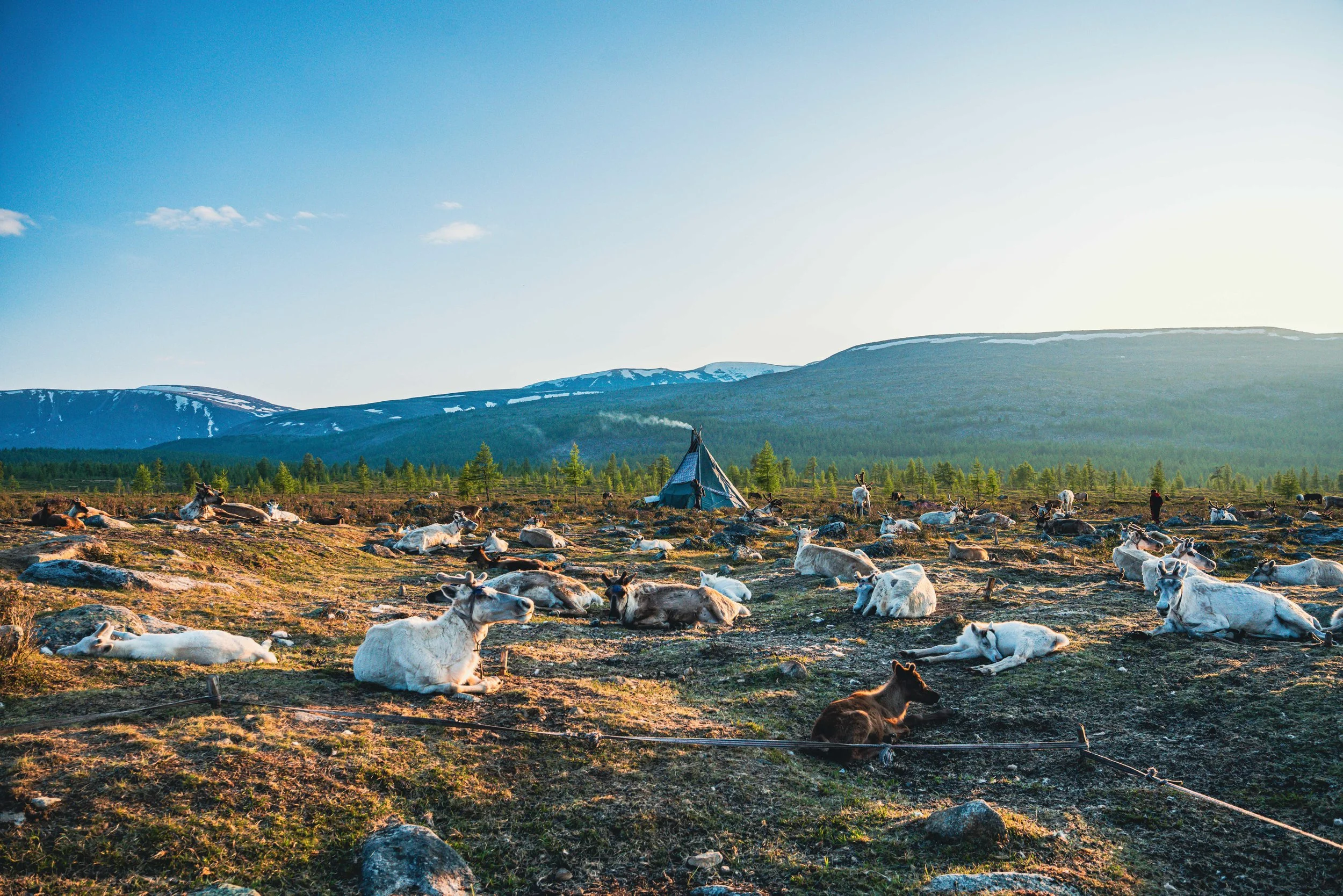
The Dukha people are semi-nomadic and live in portable tipis called ortz.
The last reindeer herders of Mongolia
No one else in Mongolia herds reindeer, and few people anywhere on Earth still live this way. Their name in Mongolian, Tsaatan, means "those who have reindeer". Their roots lie across the border in Tuva, now part of Russia. For generations their families moved freely through these mountains, until the border closed in 1944. Many stayed on the Mongolian side, and in 1956 Mongolia accepted them as citizens.
Today only a few hundred Dukha remain. They live in two groups – the East Taiga and the West Taiga – and the reindeer shape their days, their food and their beliefs. They milk them, make cheese and yoghurt, and ride them through forest where no horse could go. In 1990 an outbreak of brucellosis hit the herds hard, and the families have spent years building them back.
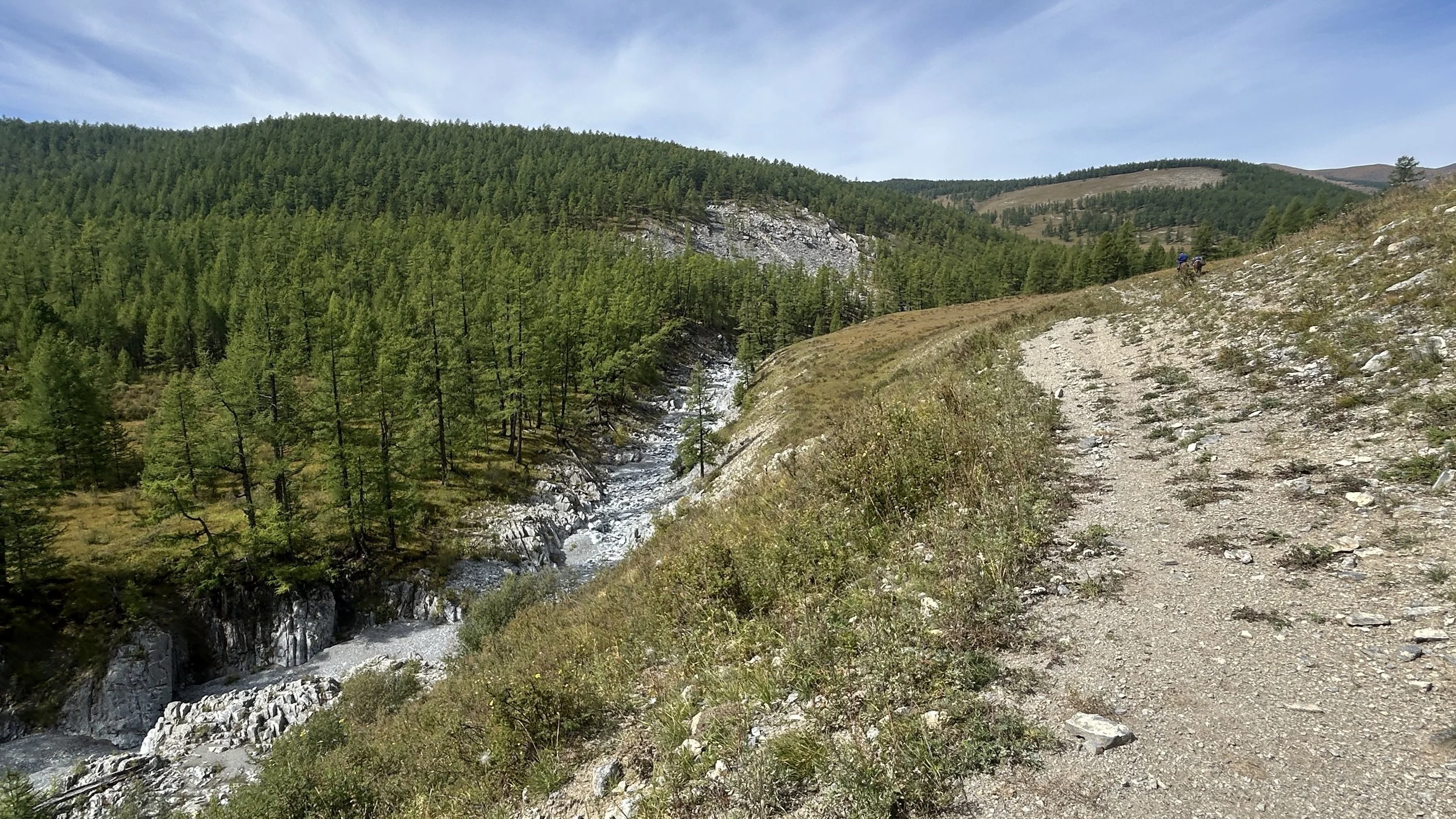
To reach their summer camp we rode five hours – over boulders, through bog and across streams, deeper and deeper into the forest. Then the trees opened, and there they were: the tipis, wisps of smoke, and reindeer lying on the ground, some tethered, some walking around.
I slept in a tipi with a small wood stove, its chimney poking through the top. Even in early September the nights were turning cold, and the stove kept me warm. I woke the next morning still in my sleeping bag, and through a gap in the opening I could see a couple of calves suckling from its mother. I lay there and watched, hardly believing where I was.
I had no idea what to expect, so I had brought a few gifts – ginger, garlic, jam and biscuits. I took them to the tent closest to mine and offered them, and the family invited me in for tea. The tea was made with reindeer milk. I had come on my own, with no one to translate, so I sat and took it all in: the family talking among themselves, my cup of tea, the mother boiling milk on the stove to make butter and yoghurt.
Sometimes we don’t need any words. It's one of the moments from the trip I treasure most.
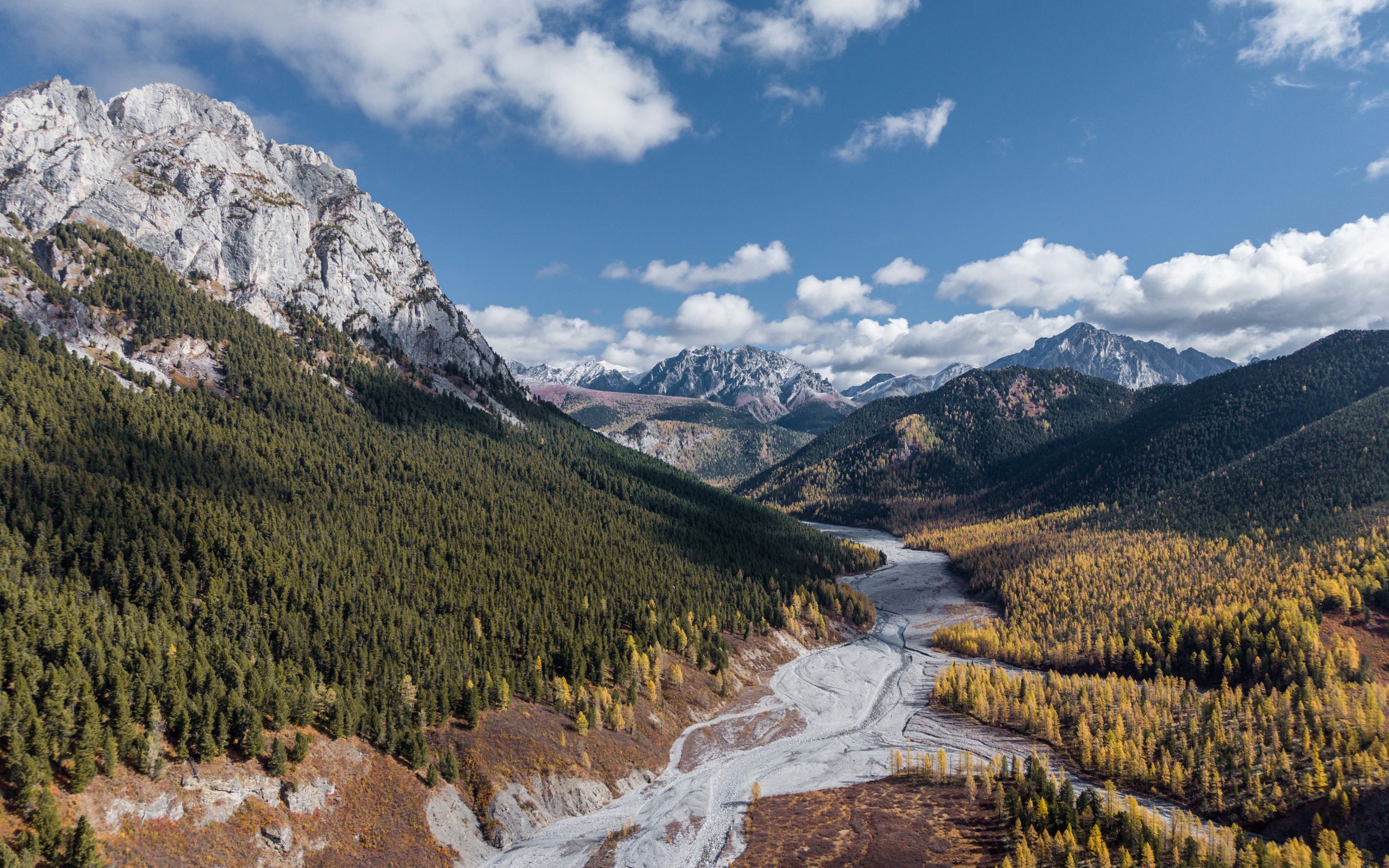
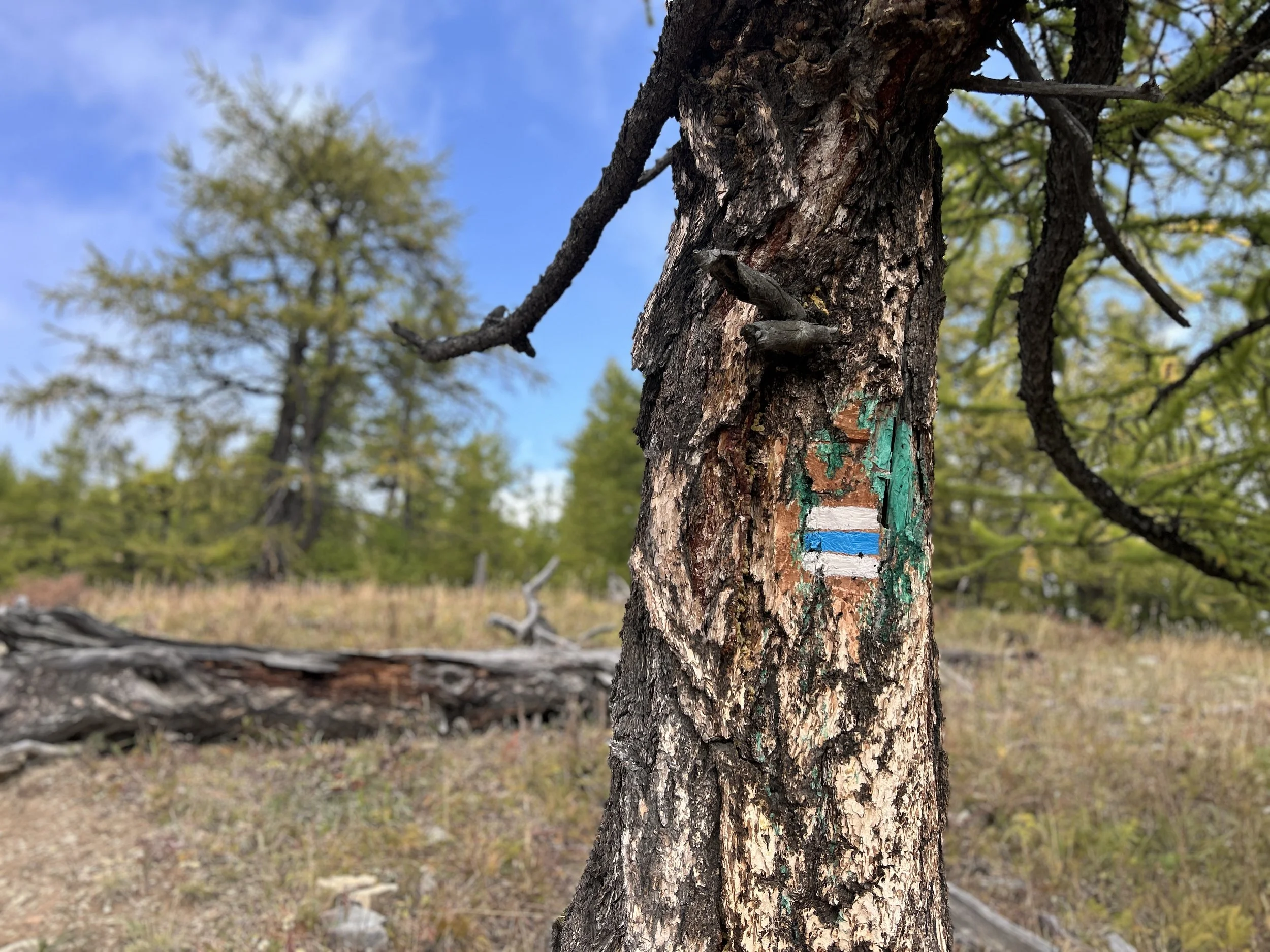
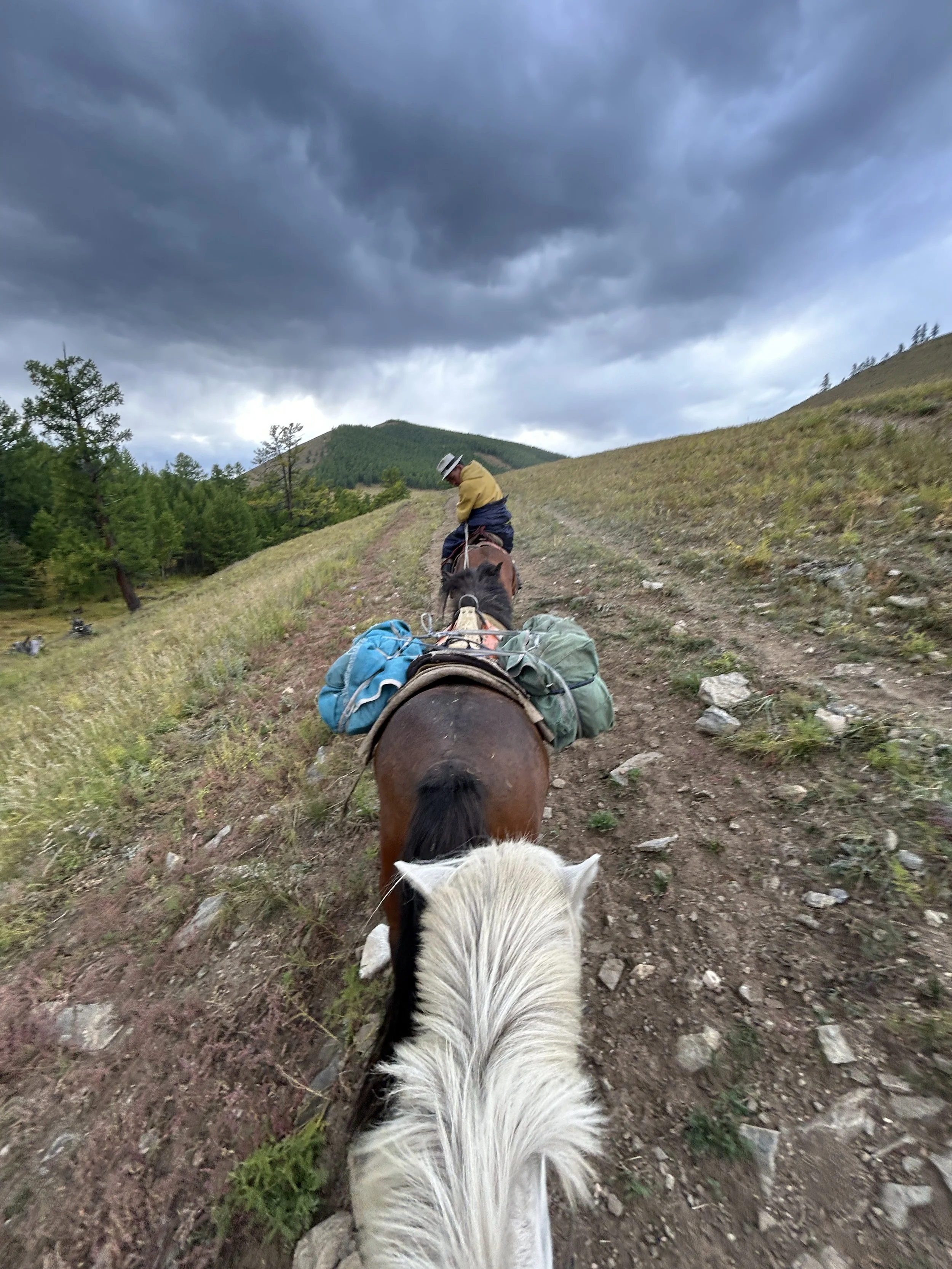
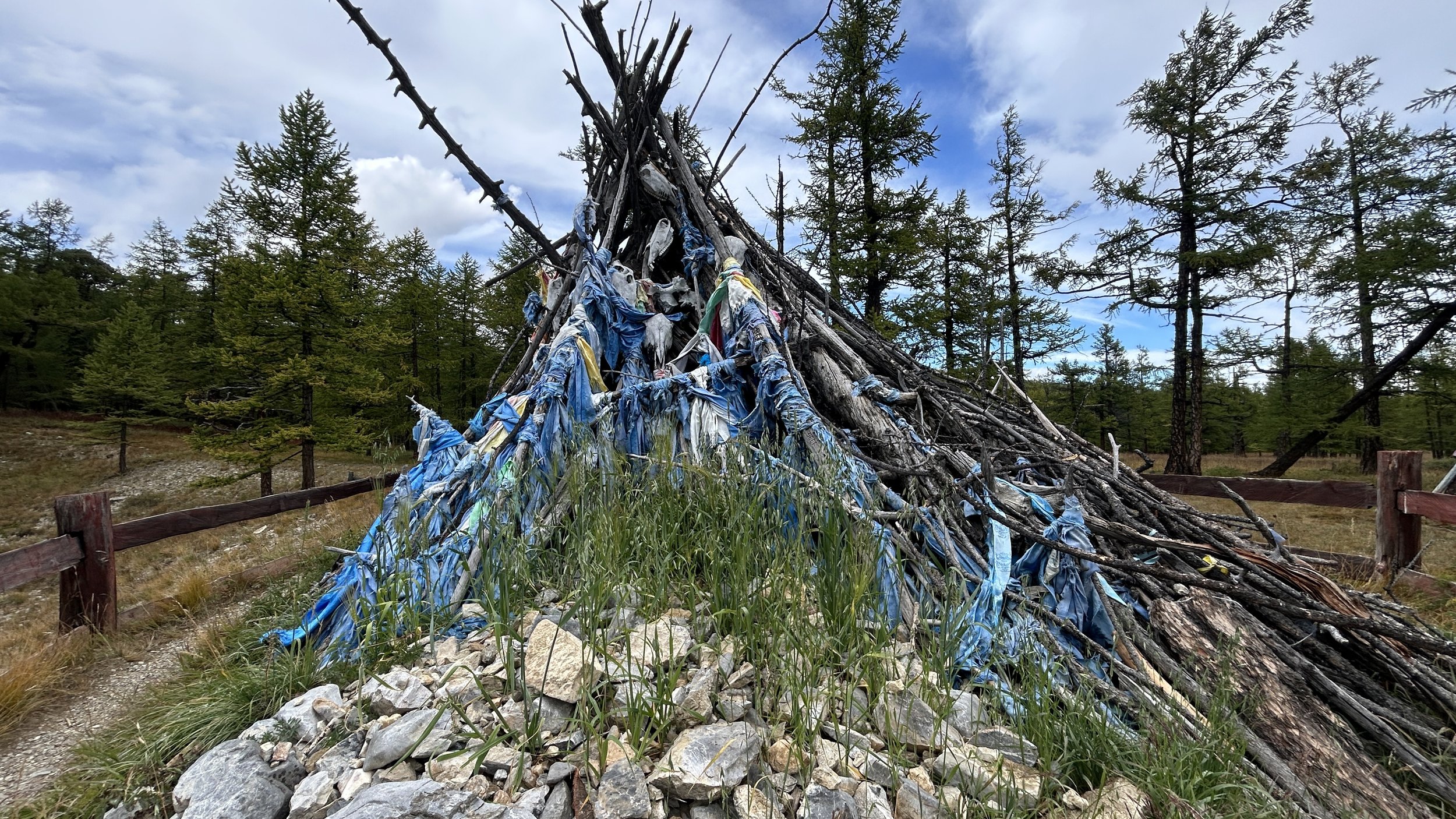
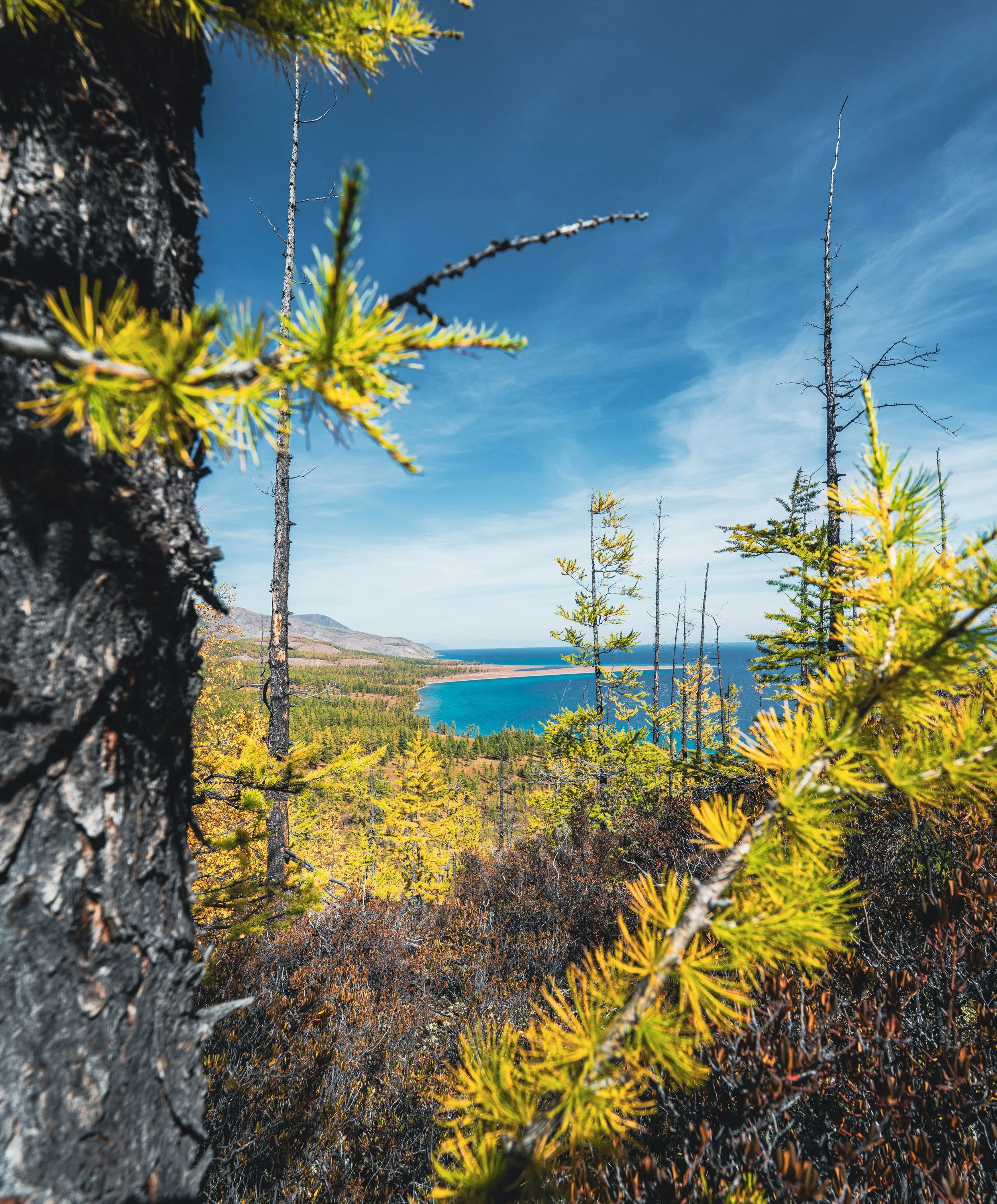
Into the boreal forest
The boreal forest is the largest land biome on Earth. It wraps around the top of the planet – Canada, Alaska, Scandinavia, Siberia – and one in every three trees in the world's forests grows in this northern belt. Northern Mongolia sits on its southern edge, where the Siberian forest meets the steppe.
Here the forest is mostly Siberian larch, a conifer that turns gold in autumn and drops its needles before winter. When I walked through in early September, the first larches were turning. The forest floor is a carpet of moss and lichen, and the reindeer depend on it.
In the early morning I walked down to an icy stream, its water so clear it looked fit to drink straight from the source. The light was beautiful, and the only sound was running water. The ground gave beneath my feet like a sponge – in the boreal forest, water moves under the moss as well as over it. All around me, larch stretched as far as I could see.
These forests matter far beyond Mongolia. Of all the carbon locked up on land, close to a third sits in this northern forest – in its trees, soils and frozen ground. It is also feeling the heat: Mongolia has warmed around three times faster than the global average, and its permafrost is thawing. Walking through it, I felt how precious and how fragile this place is.
Khuvsgul Lake – the Blue Pearl
Mongolians call Khuvsgul Dalai Eej, Mother Sea, and when you stand on its shore you understand why. It's 136 km long, more than 260 m deep and sits at 1,645 m above sea level. It holds about 70 per cent of Mongolia's fresh water. Scientists count it among the world's seventeen ancient lakes; it has been here for over two million years.
Khuvsgul takes in water from about a hundred streams and rivers but lets it go through a single outlet, the Eg. The Eg carries it about 1,000 km across Mongolia to the Selenge, and on into Lake Baikal in Siberia. The two lakes were shaped by the same forces in the earth's crust, and Khuvsgul's water ends its journey in Baikal – which is why Khuvsgul is sometimes called Baikal's younger sister. For half the year the lake lies frozen.
The lake and its mountains have been a national park since 1992, protecting moose, ibex, argali, lynx, brown bear and wolves where the grasslands of Central Asia give way to the Siberian forest.
The Khoridol Saridag Mountains
From the lake we walked into the Khoridol Saridag protected area. Protected since 1996, it’s home to snow leopard, musk deer, brown bear, Eurasian elk and argali sheep.
We followed grassy trails and old dirt roads, crossed streams, and wore our sandals through the boggy parts. We camped beside a mountain stream, and crossed the main pass into a wide, dry river bed, with the whole range behind us.
The Darkhad Valley
On the far side of the mountains lies the Darkhad Valley, a basin about 160 km long and 40 km wide. At the end of the last ice age, ice and meltwater filled this basin. What it left behind is a valley holding more than 300 lakes, laced with rivers. One of them, the Shishged, flows north into the Yenisei and on to the Arctic Ocean.
Think about that for a moment. On one side of the Khoridol Saridag, the water flows to Baikal. On the other, it flows to the Arctic. We walked across a watershed of two great river systems.
The valley takes its name from the Darkhad people, herders of sheep, yaks and horses, and it's known as a heartland of Mongolian shamanism, where the old practices survived the twentieth century. Like the Dukha, the valley has a border story: it belonged to Tannu Tuva until 1925, when it passed to Mongolia. Winters are brutal – the thermometer can fall past minus 50. In summer it's green, open and astonishingly quiet.
Three days with a Darkhad horseman
From the Darkhad I walked back toward the lake through the Jigleg Valley, mountains on either side. For those three days, from Tumbe to the shore of Khuvsgul, my companion was a Darkhad horseman – and he gave me some of the most memorable moments of the whole trip.
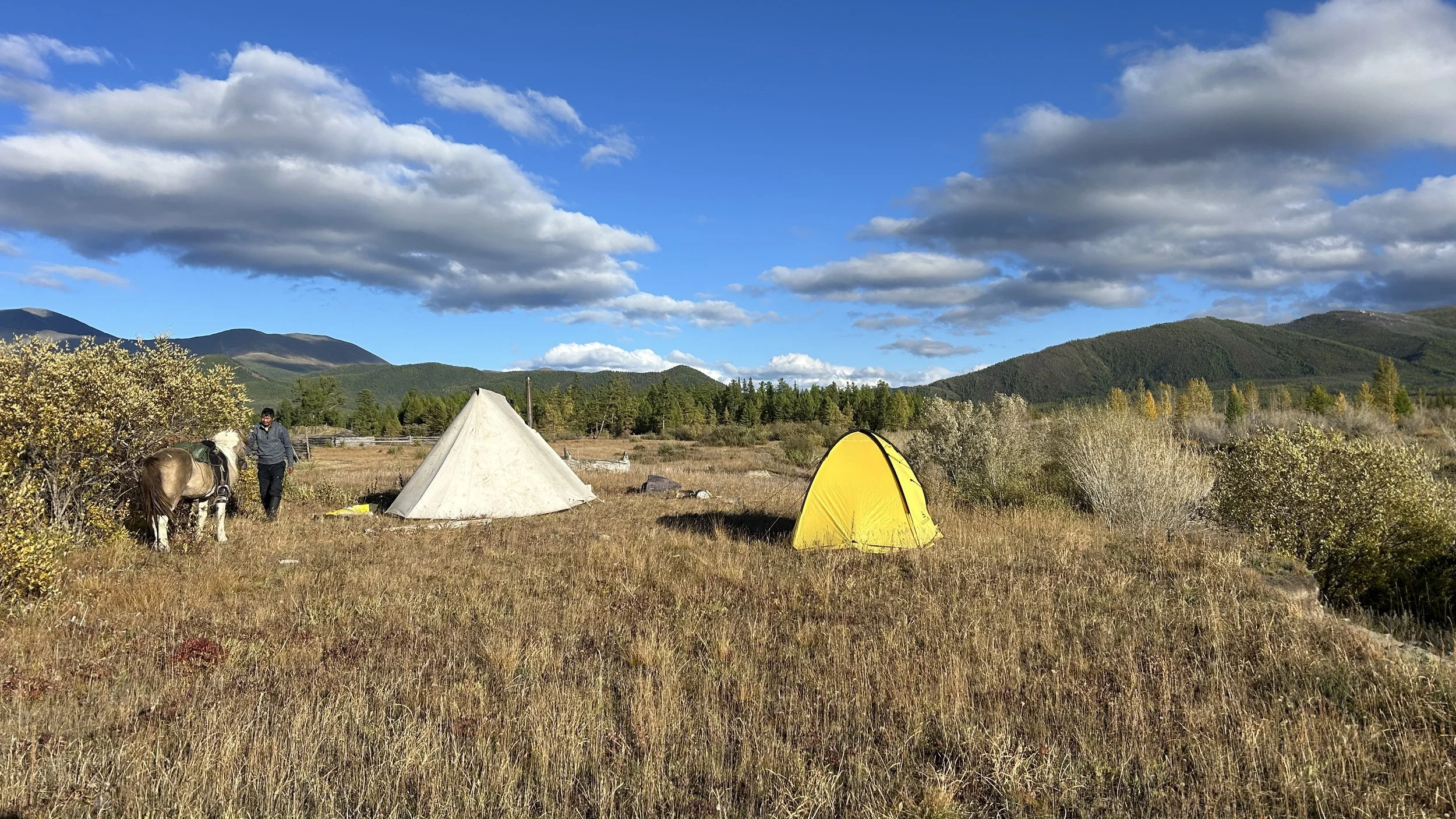
He was at home in the wilderness in a way I've rarely seen. At our first camp he took an axe to a couple of logs and used them to set up a small canvas tent. He carved the pegs to hold it down from wood he found around the campsite. Then he took what looked like a flat sheet of rusted metal and folded it into a stove, and from the side of one of the horses he pulled a couple of pipes and joined them into a chimney.
By the time I had put up my lightweight hiking tent, he had pitched his shelter, built a stove and lit a fire that warmed the whole inside. I sat with him, sipping black tea and watching the trees and the stream through the gap in the tent door. He didn't speak English, and we didn't need to talk. We sat in silence, warm and cosy, in the middle of nowhere. It was perfect.
After we shared a meal I went back to my own tent. When I woke in the morning it was about minus five degrees, and my tent was frozen stiff.
On the third day we crossed the Jigleg Pass and came down to the shore of Khuvsgul. On the last day of the trip you can climb Chochu Peak (2,440 m) for a 360-degree view of the range you've just crossed and the lake stretching north toward Siberia.
Older than memory
People have lived in this landscape for thousands of years. About 20 km west of Murun stand the deer stones of Uushigiin Övör – tall granite stones that Bronze Age nomads decorated around 3,000 years ago with leaping deer, sun and moon. They're part of a UNESCO World Heritage listing, and they remind you that the Dukha and Darkhad belong to a very long line of people who learned to live well in this place.
Once again Mongolia provides a unique opportunity to be immersed in pristine, remote wilderness. There is no comparison to the wellbeing that this creates and the beauty it exposes you to.
Photos by Erika Jacobson, with some by Amartuvshin Khurelbaatar (Tushu)