• Mongolia Walking Adventure Tavan Bogd National Park
    • Peaks of the Balkans Hiking Adventure
    • Walking with Wildflowers - Fitzgerald Biosphere and Stirling Ranges
    • Walking with Wildflowers - Fitzgerald Biosphere
    • Bespoke
    • Mongolia Walking with Wildflowers Adventure Turgen Kharkhiraa National Park
    • Murchison Gorge Hiking Adventure - Kalbarri National Park
    • Cape to Cape End to End Walking Adventure
    • The Creativity Retreat with Dr Erika Jacobson
    • The Creativity Retreat - Botany - Creativity - Art
    • Cape to Cape Walking and Yoga Mini-Retreat
  • Blog
    • About Edgewalkers
    • Testimonials
    • Contact
    • Resources
    • Wildflowers Mindful Colouring
    • Interpreting Biodiversity Workshop
Menu

Edgewalkers | Walking Tours & Creativity Retreats

Walking you back to nature, creativity and adventure
  • Walking Adventures
    • Mongolia Walking Adventure Tavan Bogd National Park
    • Peaks of the Balkans Hiking Adventure
    • Walking with Wildflowers - Fitzgerald Biosphere and Stirling Ranges
    • Walking with Wildflowers - Fitzgerald Biosphere
    • Bespoke
    • Mongolia Walking with Wildflowers Adventure Turgen Kharkhiraa National Park
    • Murchison Gorge Hiking Adventure - Kalbarri National Park
    • Cape to Cape End to End Walking Adventure
  • Creativity Retreats
    • The Creativity Retreat with Dr Erika Jacobson
    • The Creativity Retreat - Botany - Creativity - Art
    • Cape to Cape Walking and Yoga Mini-Retreat
  • Blog
  • About
    • About Edgewalkers
    • Testimonials
    • Contact
  • The Biodiversity Project
    • Resources
    • Wildflowers Mindful Colouring
    • Interpreting Biodiversity Workshop
Blog Archive
  • 2016 13
  • 2017 8
  • 2018 16
  • 2019 12
  • 2020 11
  • 2021 6
  • 2022 6
  • 2023 7
  • 2024 3
  • 2025 4
  • 2026 2

Walking the edge

Short written and image essays on walking, nature and creativity.

With a special focus on women, wildflowers and biodiversity, the writing informs and reminds the reader of the many ways nature shapes cultures, sustains wellness and inspires creativity.

Featuring Western Australia's southwest, Mongolia and other Edgewalkers destinations.

Dr Erika Jacobson -


Instagram @edgewalkers_

View fullsize The wildflowers of Western Australia epitomise resilience.
Over their 115-million-year existence in Western Australia’s Southwest they have adapted, diversified, and made the most of the harshest and inhospitable conditions.
Drought, fire, inte
View fullsize The Carnaby Cockatoos need our help -  an important breeding ground in the Cocanarup Reserve near Ravensthorpe, Western Australia - was recently devastated by lightning fires.
The Cocanarup Alliance is raising funds to help in the recovery and lifesa
View fullsize
View fullsize
View fullsize The Peaks the Balkans.
22 June - 4 July
You won’t forget this adventure.
Are you up for this?

#walkingadventures #peaksofthebalkans #edgewalkers #
View fullsize
View fullsize
View fullsize
View fullsize There are many elements that make walking through the Altai Mountains in northwest Mongolia a unique adventure. 

The remote and untamed wilderness of the Tavan Bogd National Park, the immersion over nine days in this pristine natural environment of

Subscribe

Sign up with your email address to receive news and updates.

We respect your privacy.

Thank you!

Article Categories

  • Biodiversity
  • Creativity
  • Margaret River
  • Mongolia
  • Retreats
  • Walking
  • Wildflowers

Article Tags

  • wildflowers
  • walking
  • mountains
  • biodiversity
  • creativity
  • rivers
  • habits
  • UNESCO
  • motivation
  • Cape to Cape
  • Retreats
  • Fitzgerald River National Park
  • National Parks
  • Margaret River

Wildflowers of Western Australia - Beacons of Resilience

February 24, 2026

The wildflowers of Western Australia epitomise resilience.

Over their 115-million-year existence in Western Australia’s southwest they have adapted, diversified, and made the most of the harshest and inhospitable conditions.

Drought, fire, intense heat, soils that lack nutrients, few pollinators - not the most ideal situation.

And yet they endure. Continue to thrive.
Here is a profile of five stunning WA plants endemic to the Fitzgerald River National Park and the features that make them beacons of resilience:

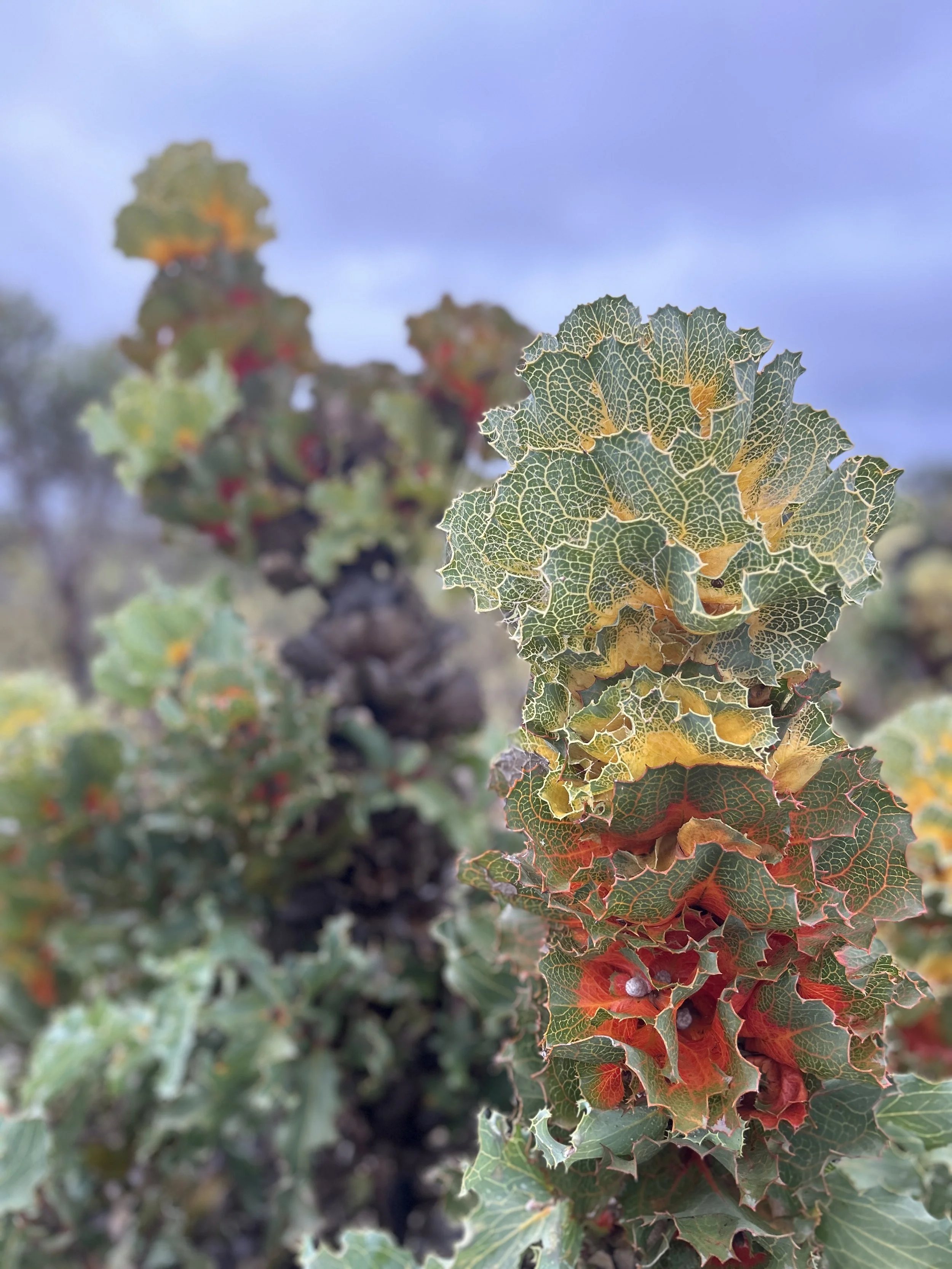
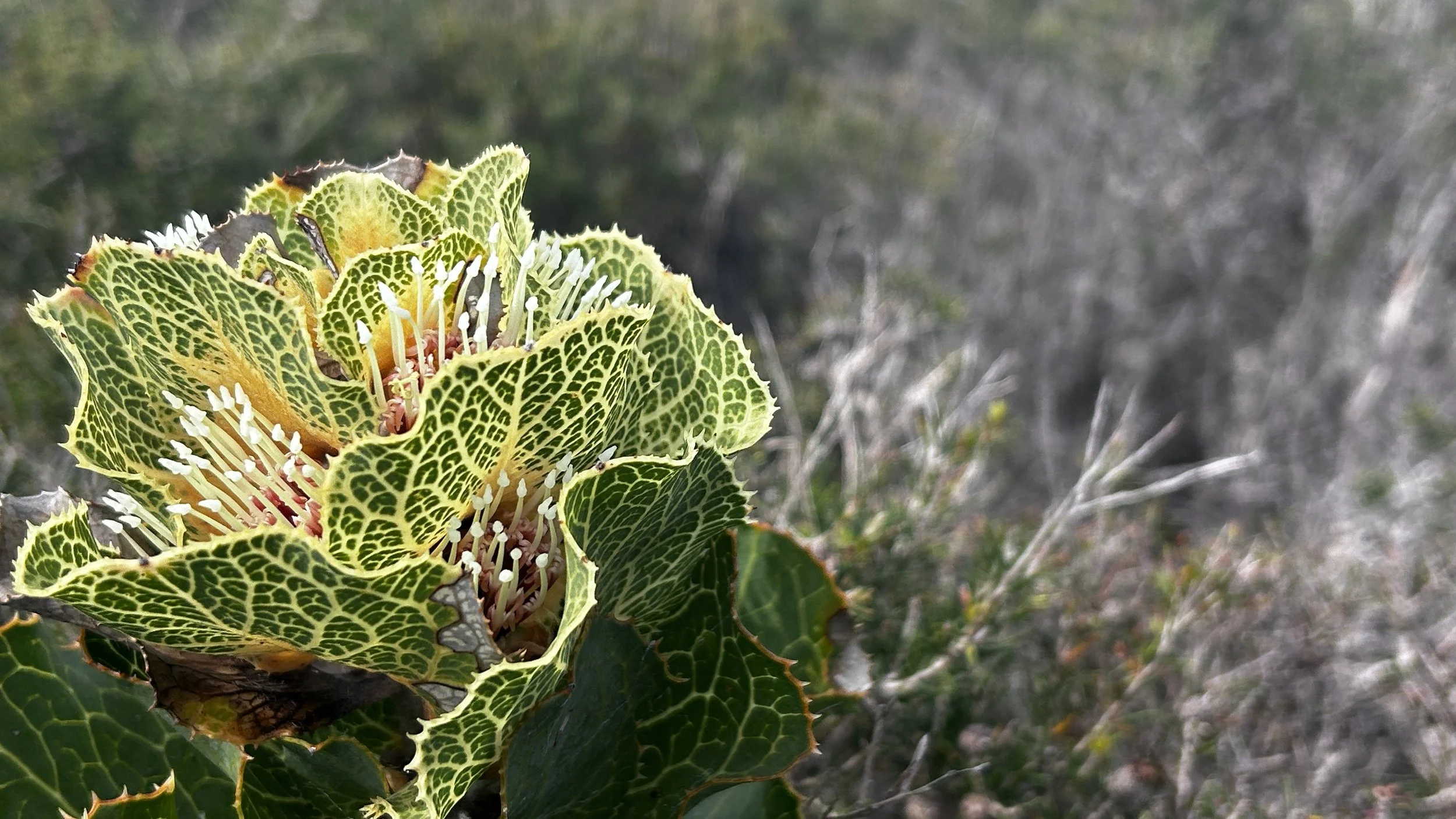
1. ROYAL HAKEA - Hakea Victoria
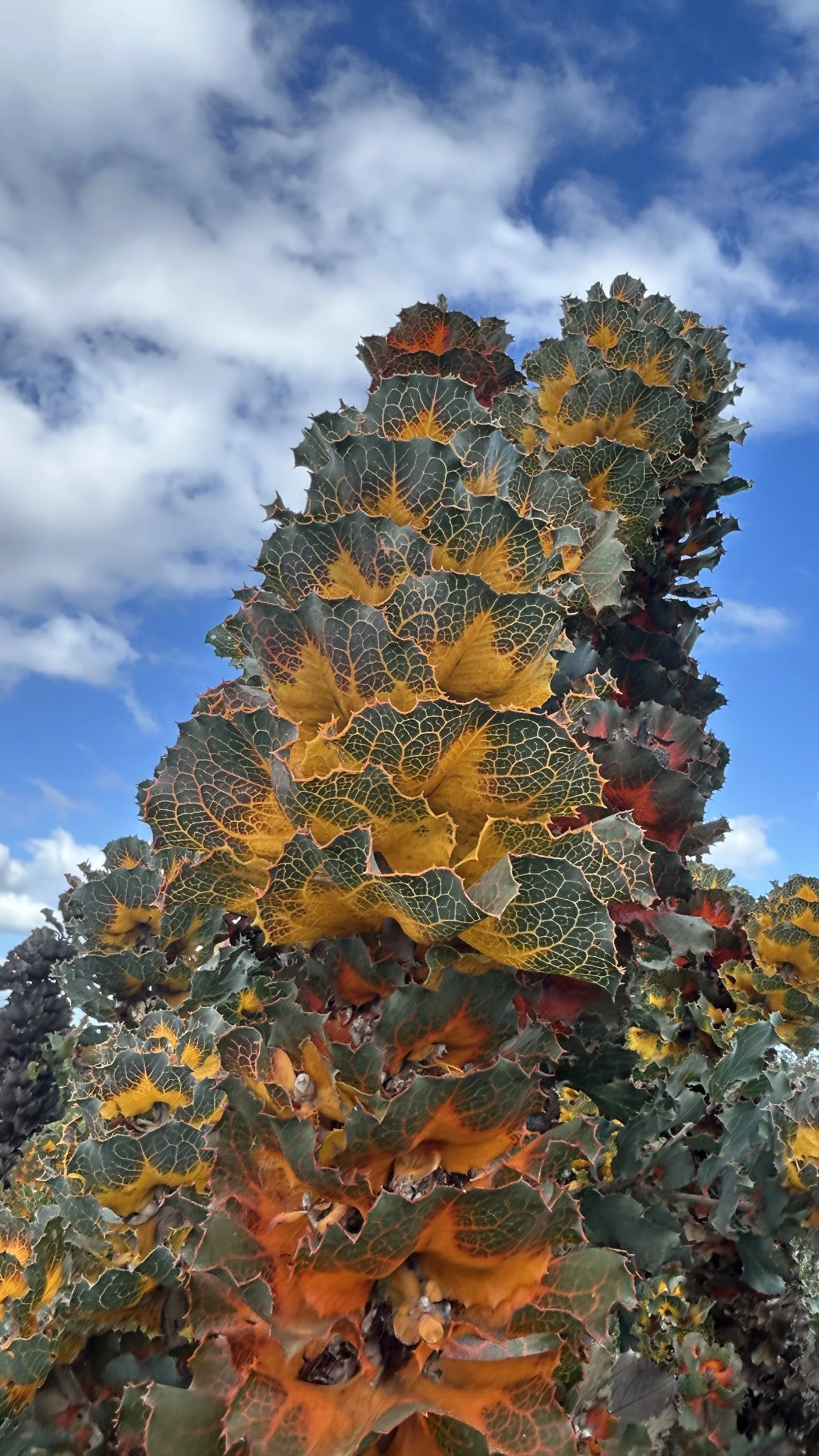
The Royal Hakea - iconic species endemic to the Fitzgerald River National Park displays its colourful leaves - hardened and spiky to protect its delicate velvety flower.
The Hakea is a genus of Australian wildflowers belonging to the Proteaceae family, with about 150 species, the majority are endemic to the southwest of Australia.

The Royal Hakea is a much-admired species of Hakea endemic to the Fitzgerald River National Park with exceptional characteristics that allow it to survive in the dry and hostile conditions of that area. Most distinctive are its rough, thick and leathery leaves that grow stacked like colourful concave bowls with sharp crinkly edges helping it reduce water loss and also being pecked by birds of larger animals.
Like all hakeas, over its 18-million-year evolution, this plant has created a thick and hard woody pod to protect its tiny seed from birds and fire. The pods are serotinous, that is, they release their seeds during fire.

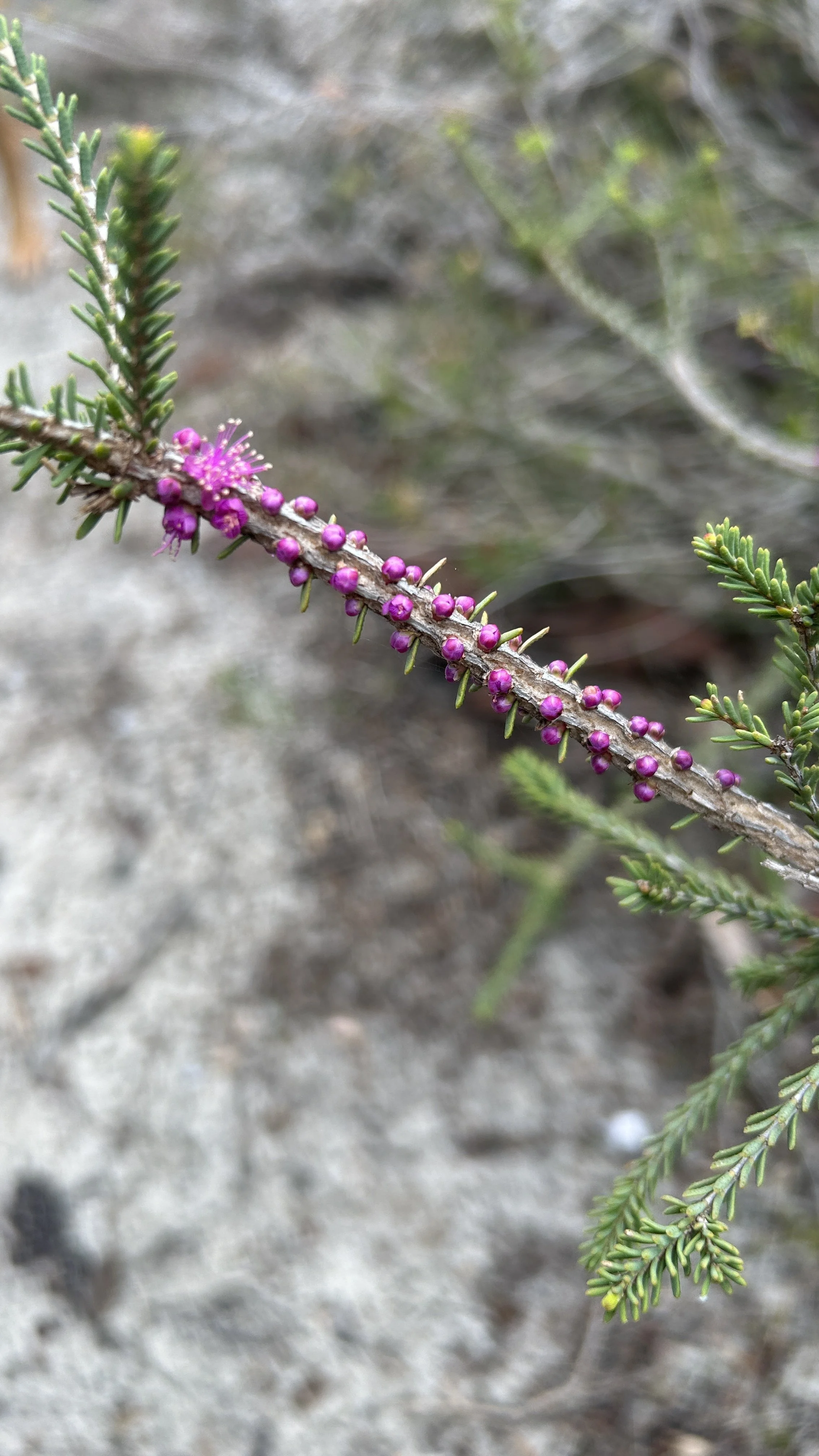
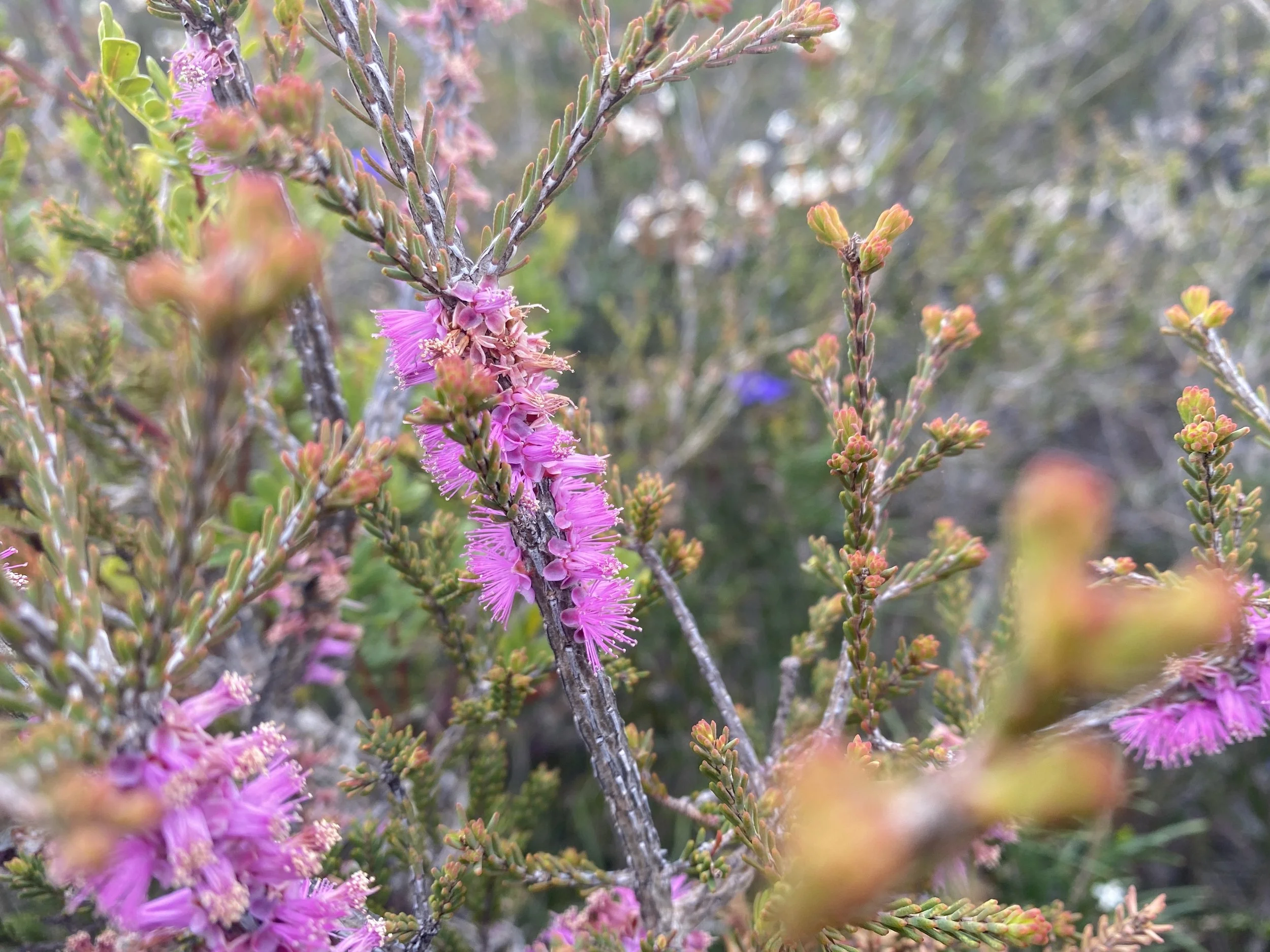
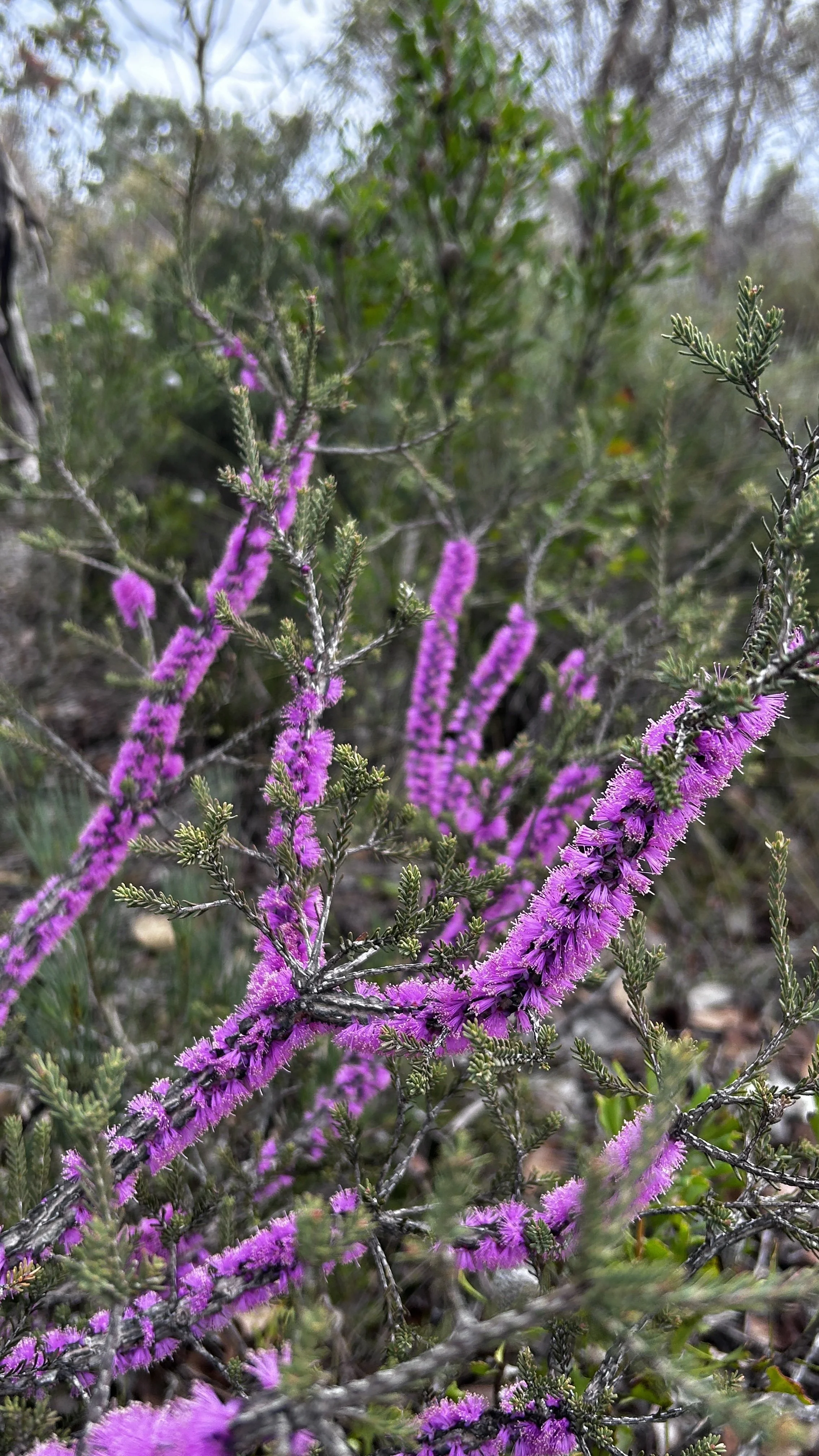
2. CORKY HONEY MYRTLE - Melaleuca suberosa

Sometimes when you look at the Corky Honey Myrtle is looks like it belongs underwater with its dense leaves and asymmetrical branches.
Like other plants in the Myrtaceae family, Melaleuca suberosa, possesses qualities that allow it to survive extreme heat and dry conditions. Its thick and ridged bark acts as insulation protecting it from heat and reducing loss of moisture. The compact and crowded leaves also offer ptoection and reduce water loss.
It also has a deep and widespreading root system that can access water even in poor, sandy and rocky soils.

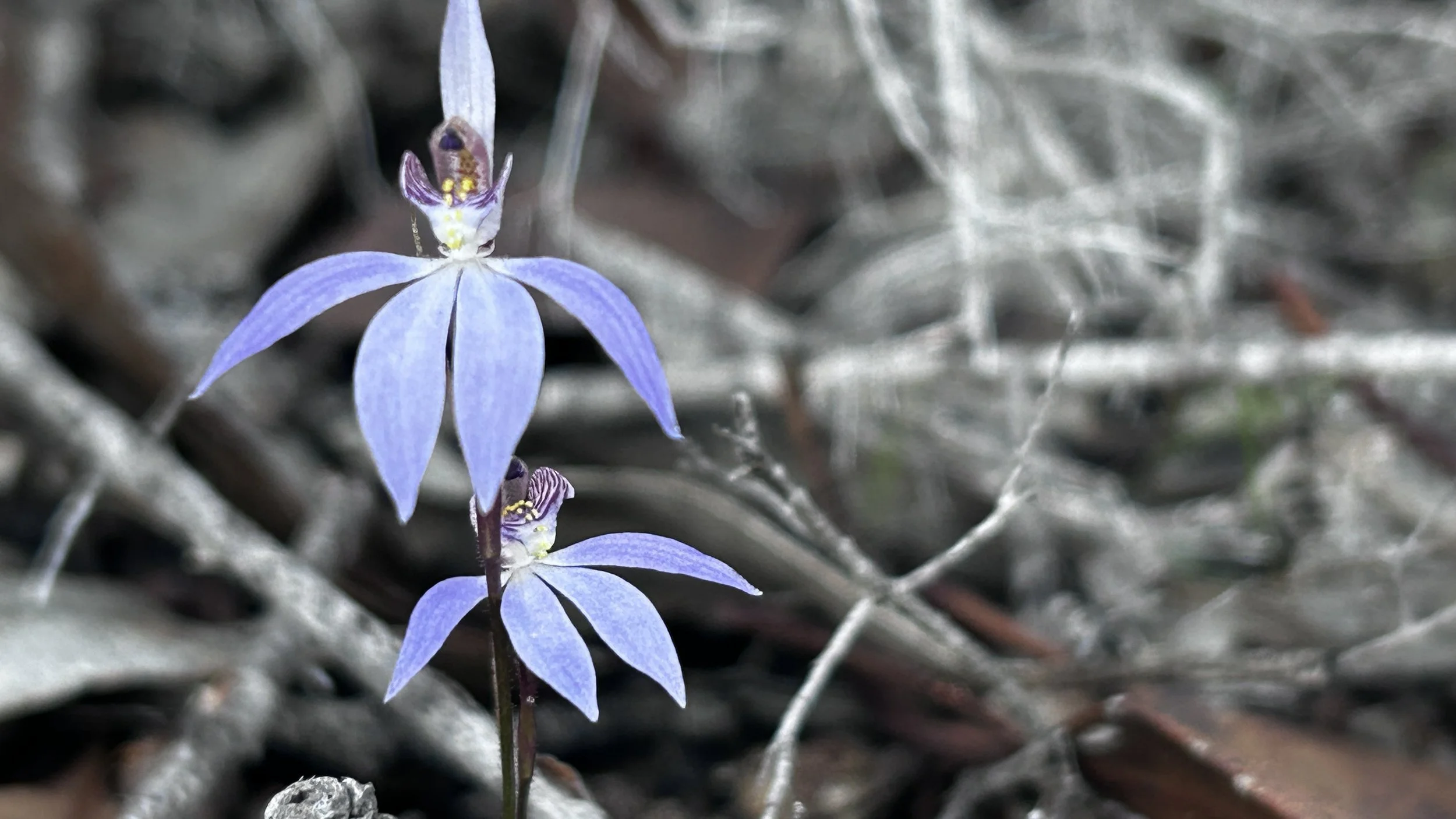
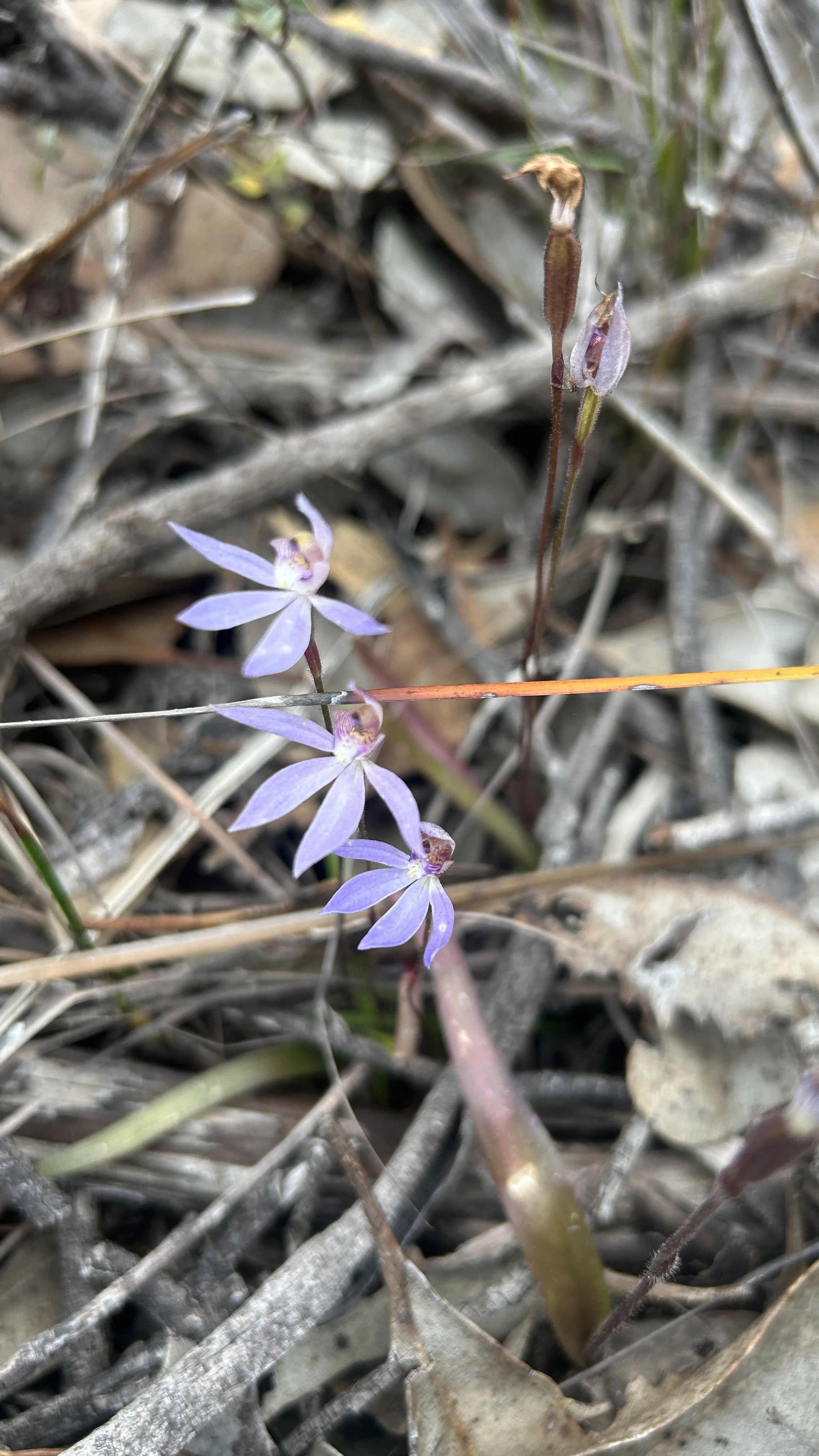
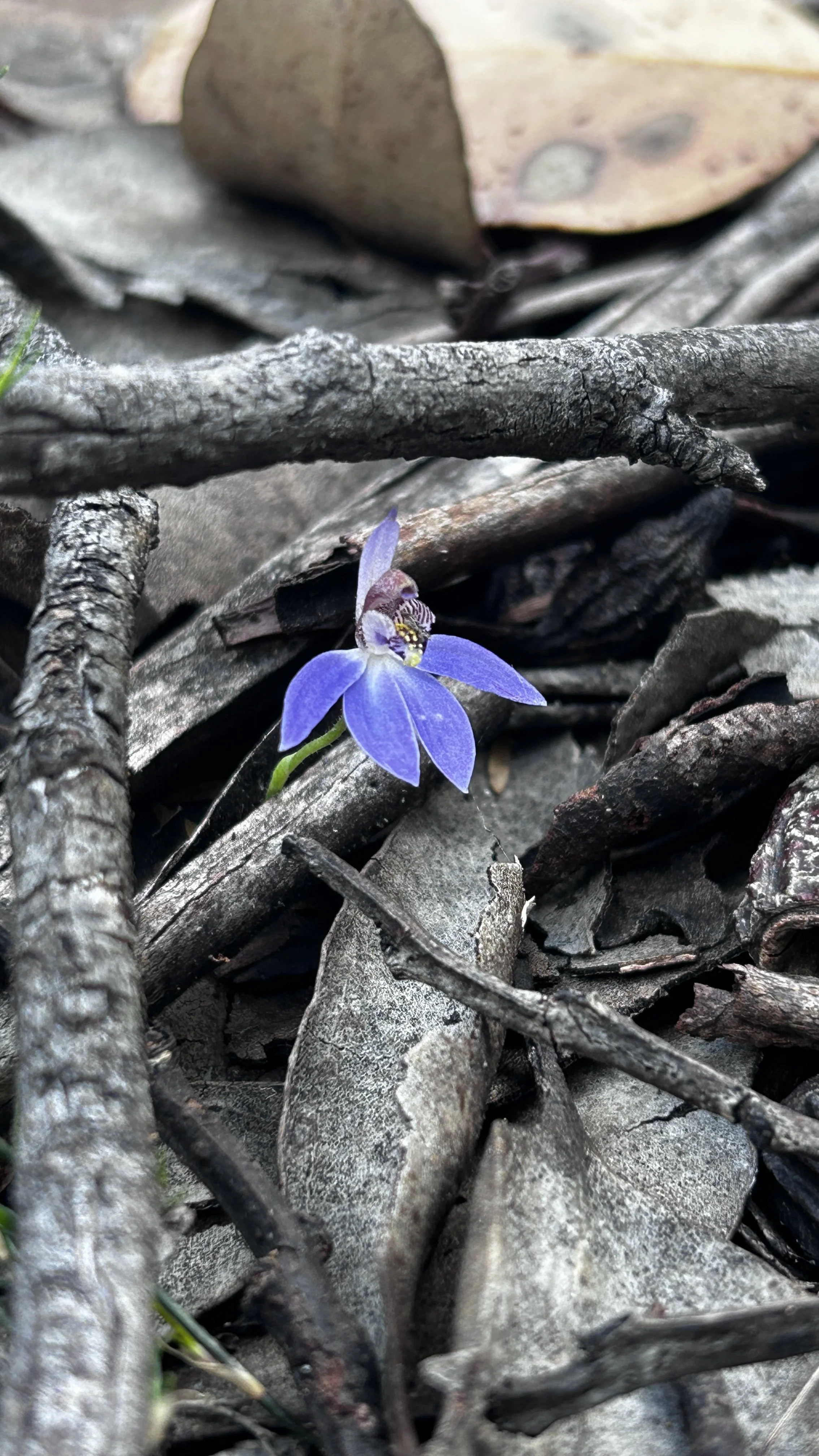
3. WESTERN TINY BLUE ORCHID - Cyanicula aperta

This tiny orchid belongs to the - despite its delicate appearance grows on rocky outcrops and sandy, loamy soils. Like other native West Australian orchids in it relies on a special - mycorrhizal - relationship with soil fungi who by infecting the germinating seeds allow nutrients and water that the plant would not access with its own root system. Another important adaptation is that it is stimulated by fire - often flowering profusely after hot fires - this is due to many reason, but on of them is that fires remove completion, let in more light and allow the flowers to be highly visible to pollinators as they contrast against the burnt ground.

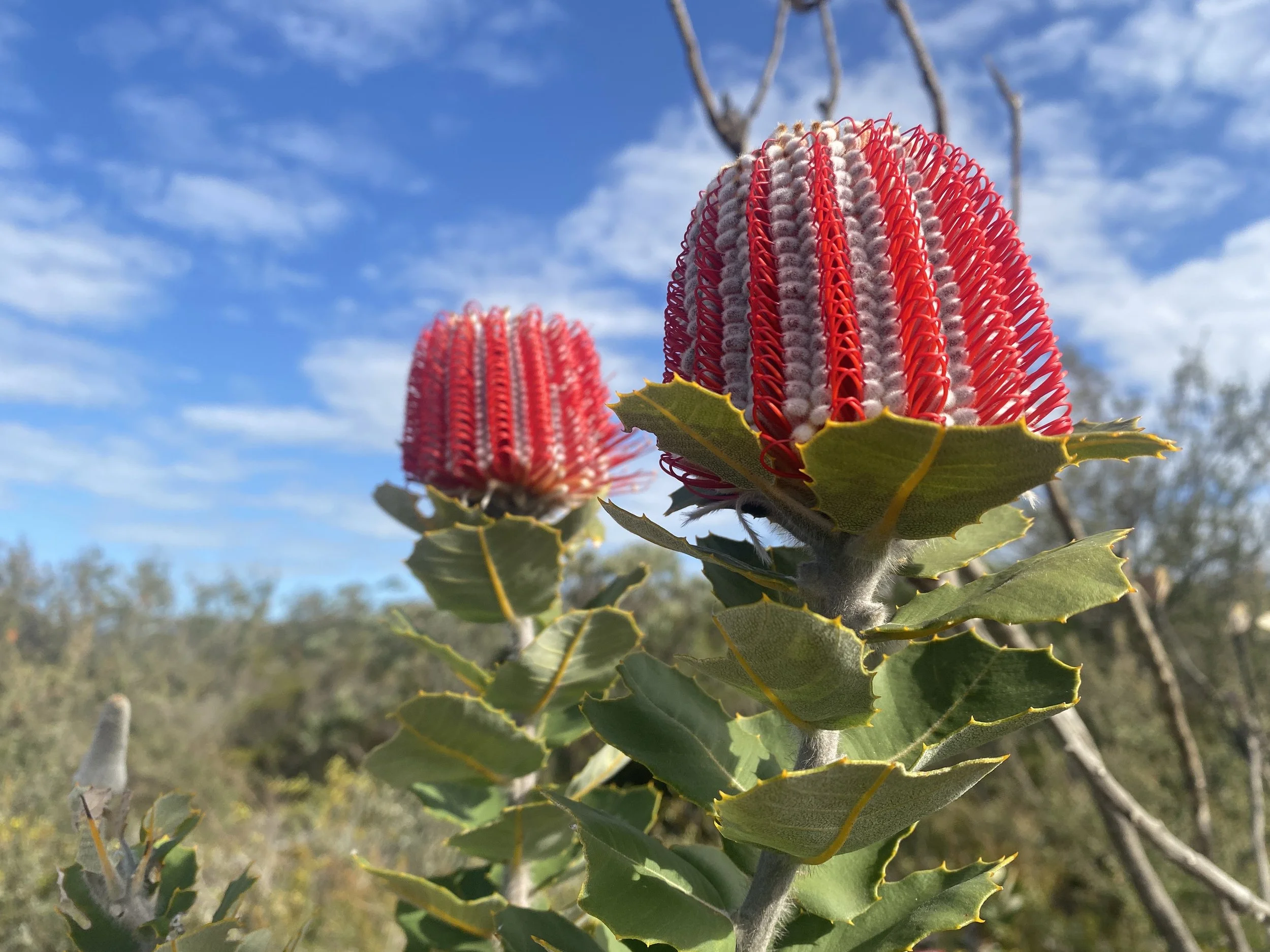
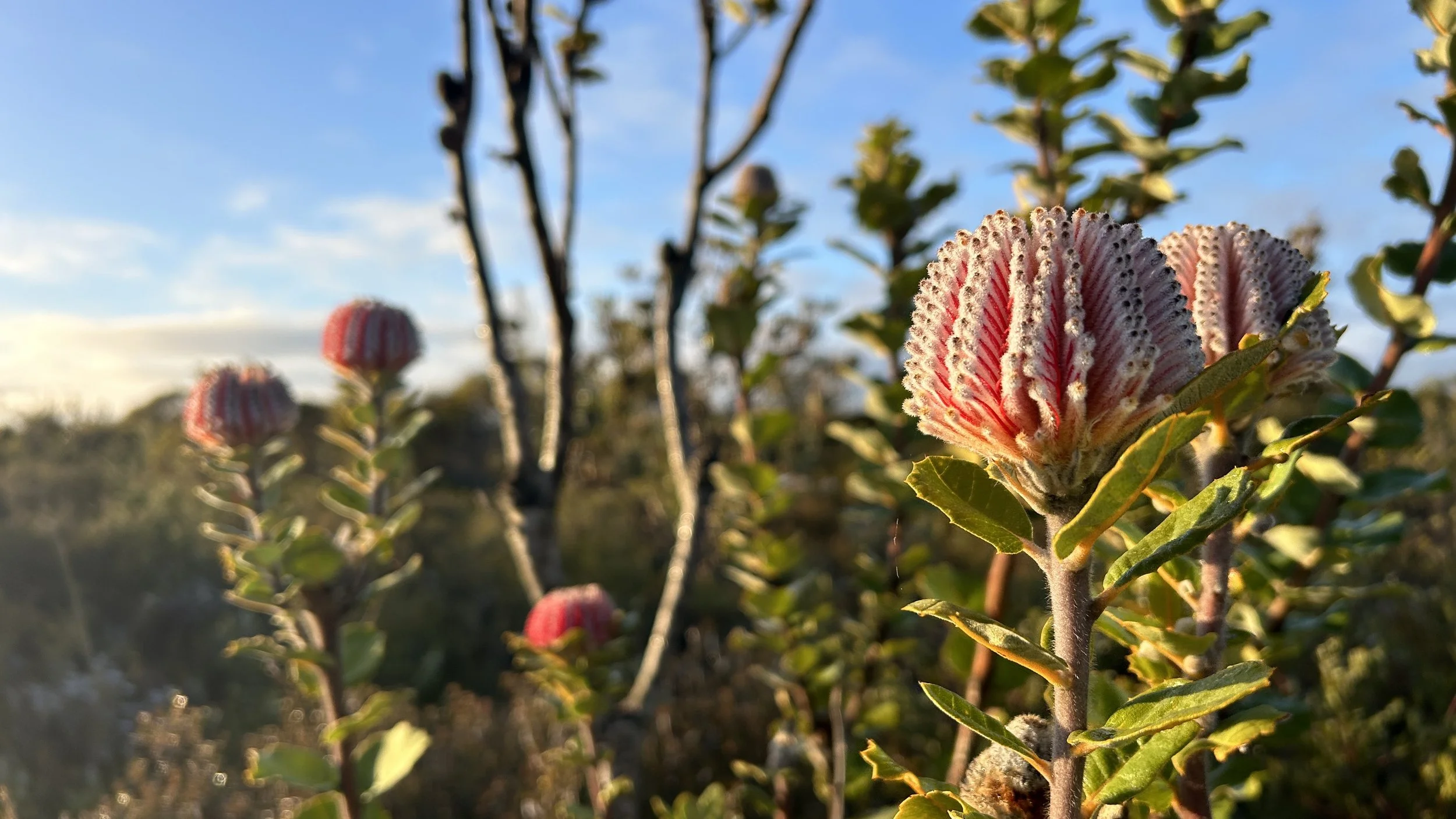
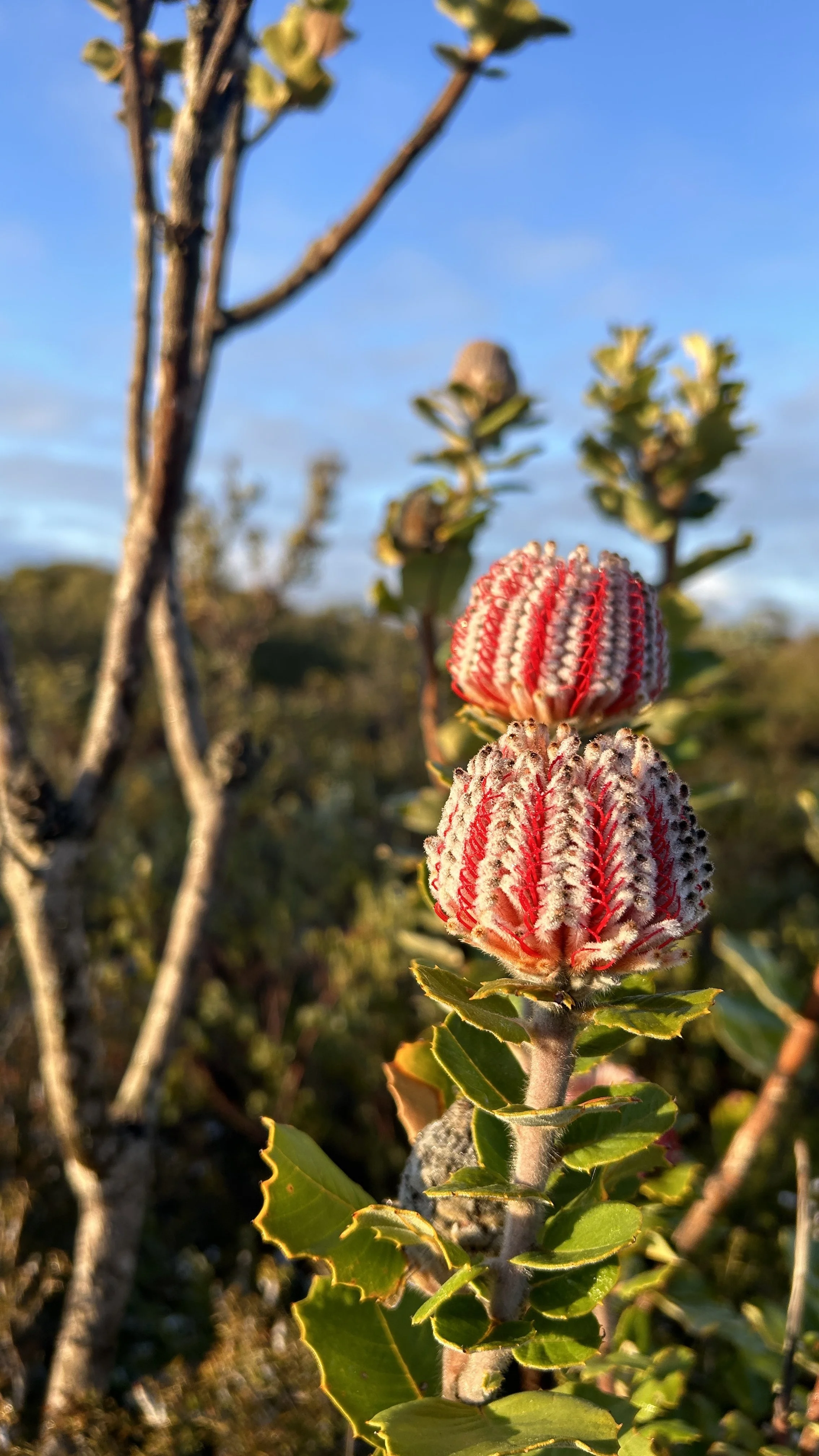
4. SCARLET BANKSIA - Banksia coccinea

Banksias are another member of the Protaeceae family. Paleo-botanists estimate that protaeceae have been around for approximately 60 million years and are perhaps the first angiosperms that adapted to the challenging climate of the southwest of Australia.

Like other Banksias (and many proteaceae), the Scarlet Banksia has ‘proteoid’ roots - roots that are clustered together to optimise its absorption of water and nutrients. They can also go deep into its preferred sandy soils to get at any moisture found there.
Its seed is also protected and released with fire. An additional quality is its tolerance to the salt content of coastal winds.
The Banksia coccinea is a principal food source for another endemic species of the southwest of Australia, the Honey Possum. This tiny marsupial relies on their nectar and in turn area major pollinator for the species.

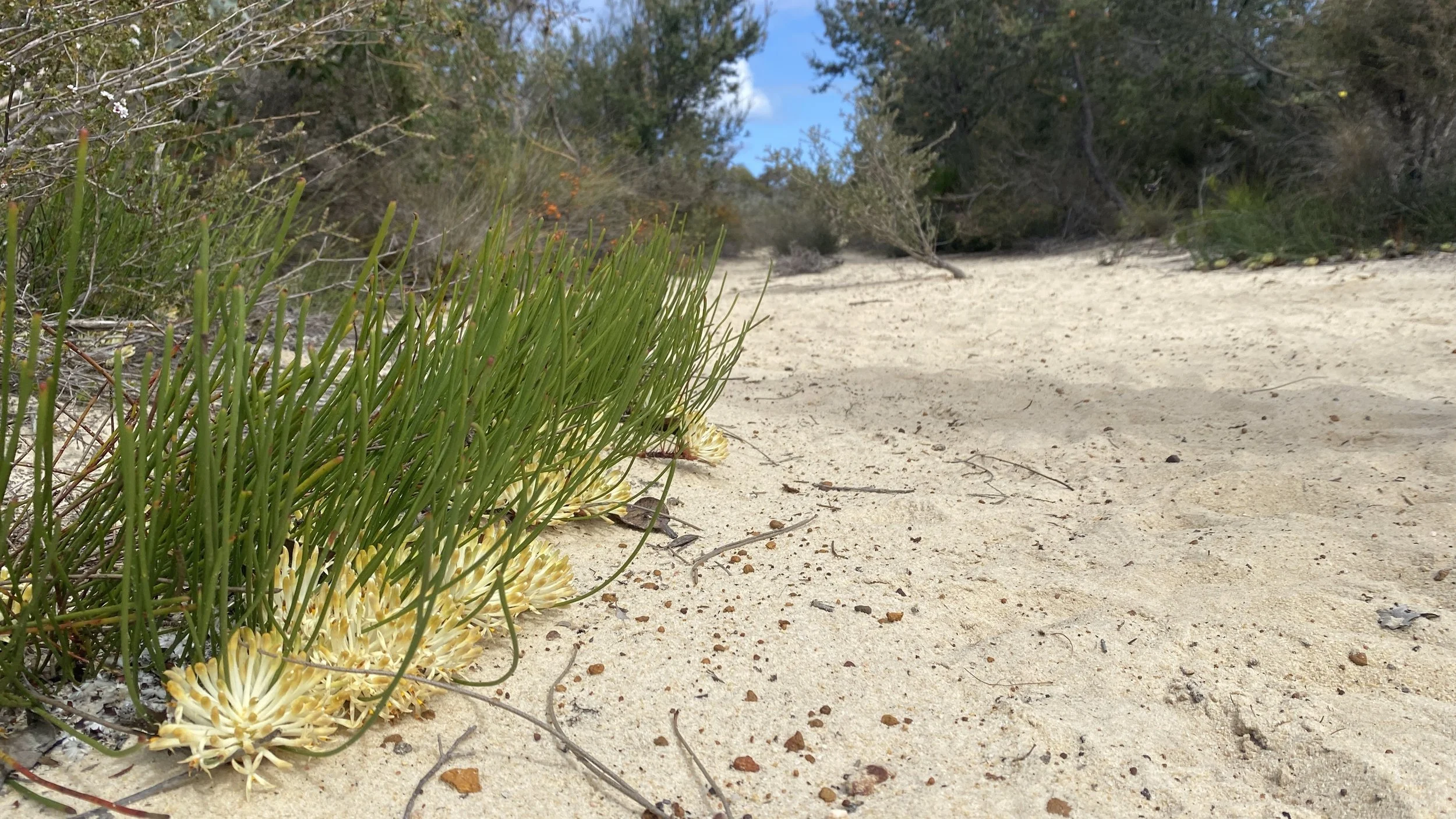
5. LONG-LEAVED CONE BUSH - Petrophile longifolia

Another genus of the Proteaceae family common to Australia’s southwest is the Petrophile - literally meaning lover of rocks.

The Long-Leaved Cone Bush is a priority 3 species meaning that while it is not yet threatened it is moving in that direction.
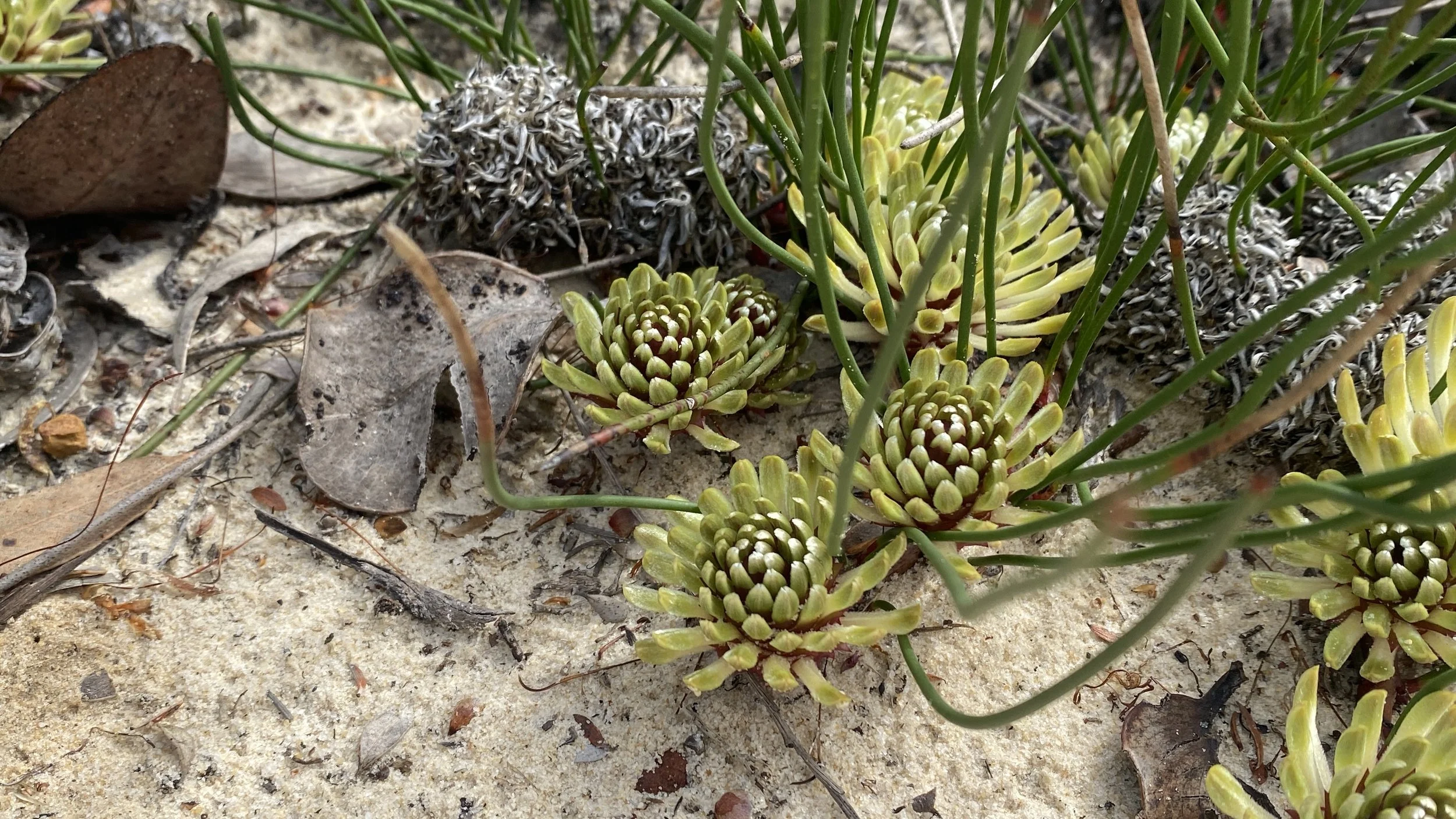
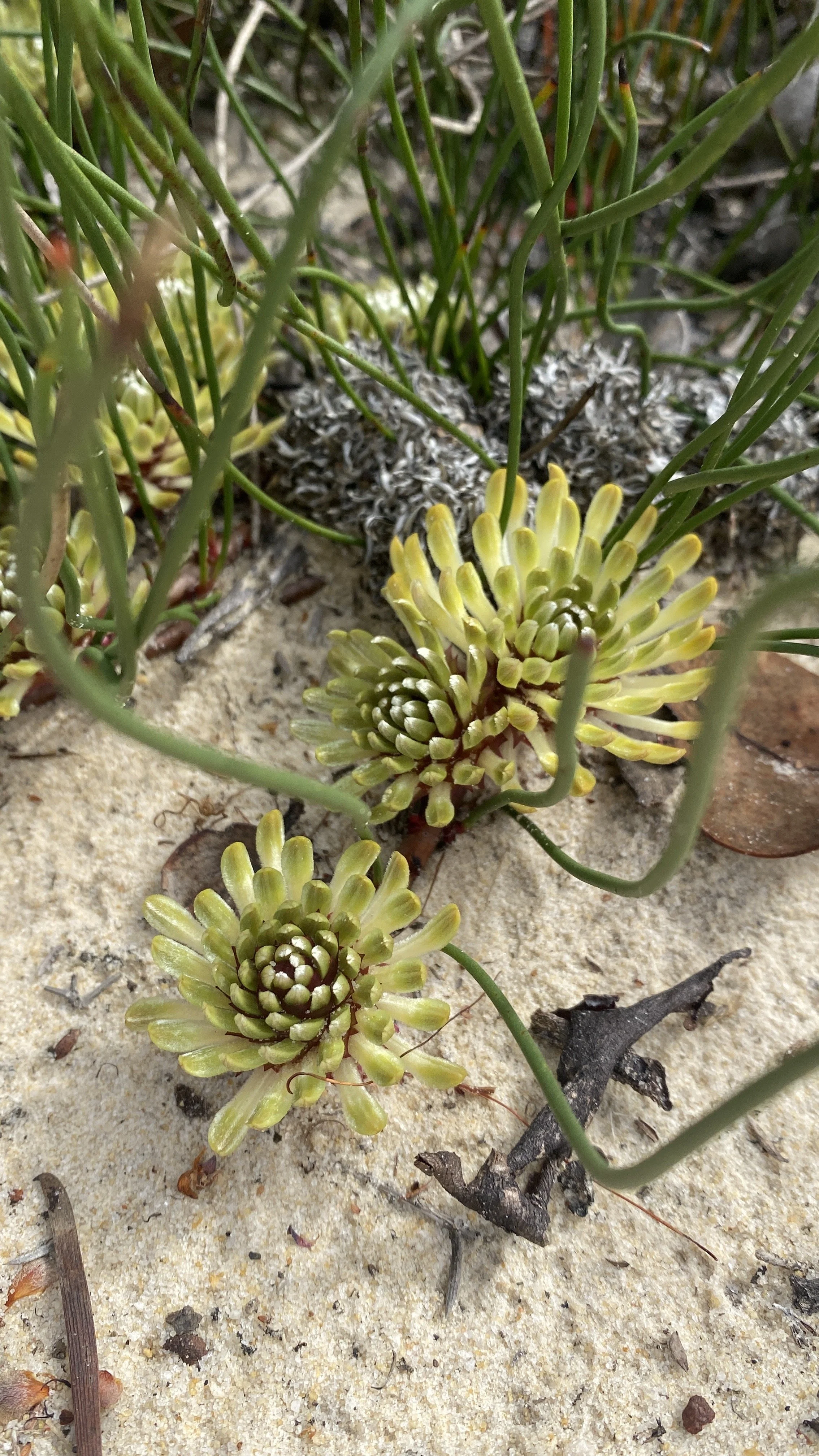
They are a great example of adaptation, unlike the other variations of the species, its flowers are displayed just above the ground.

Could it be that it diversified to optimise pollination by non-flying insects?

Like other proteaceae it also has a seed protected by a wood casing that is released during fire.

In January 2026, bushfires caused by lightning burnt approximately 170,000 hectares of the Fitzgerald River National Park. The National Park makes up the core of the UNESCO listed Biosphere Reserve: the Fitzgerald Biosphere (one of only four in Australia). It is considered of global significance because of its rich and unique endemic biodiversity.
The resilience that these plants display reflects adaptation over millions of years and shine beacons of hope for the survival of nature and our planets biodiversity.

Our Walk through the Altai Mountains - Tavan Bogd National Park 2025 - photo essay →
Back to Top
erika@edgewalkers.com.au

Fremantle - Western Australia 6160

+61 406 758 062
Adventure Tourism Trade Association Logo
Australia's southwest logo.jpg
Perth Airport Tourism Awards Finalist Ecotourism
tripadvisor_logo.jpg

At Edgewalkers we respectfully acknowledge all First Peoples of the land on which this business thrives. We pay our respect to traditional elders from the past, present, and future; we celebrate their culture, heritage, and identity and we aspire to promote and instill a sense of custodianship and responsibility for ‘country’ in all our activities and dealings.

Edgewalkers is a vegetarian company - one of the ways we are aspiring to reduce our carbon footprint.

Terms and Conditions


© Edgewalkers 2025. All rights reserved. Privacy Policy. ABN 59615095406

Edgewalkers Every Woman Expo discounts on our walks & retreats from 21-30 June