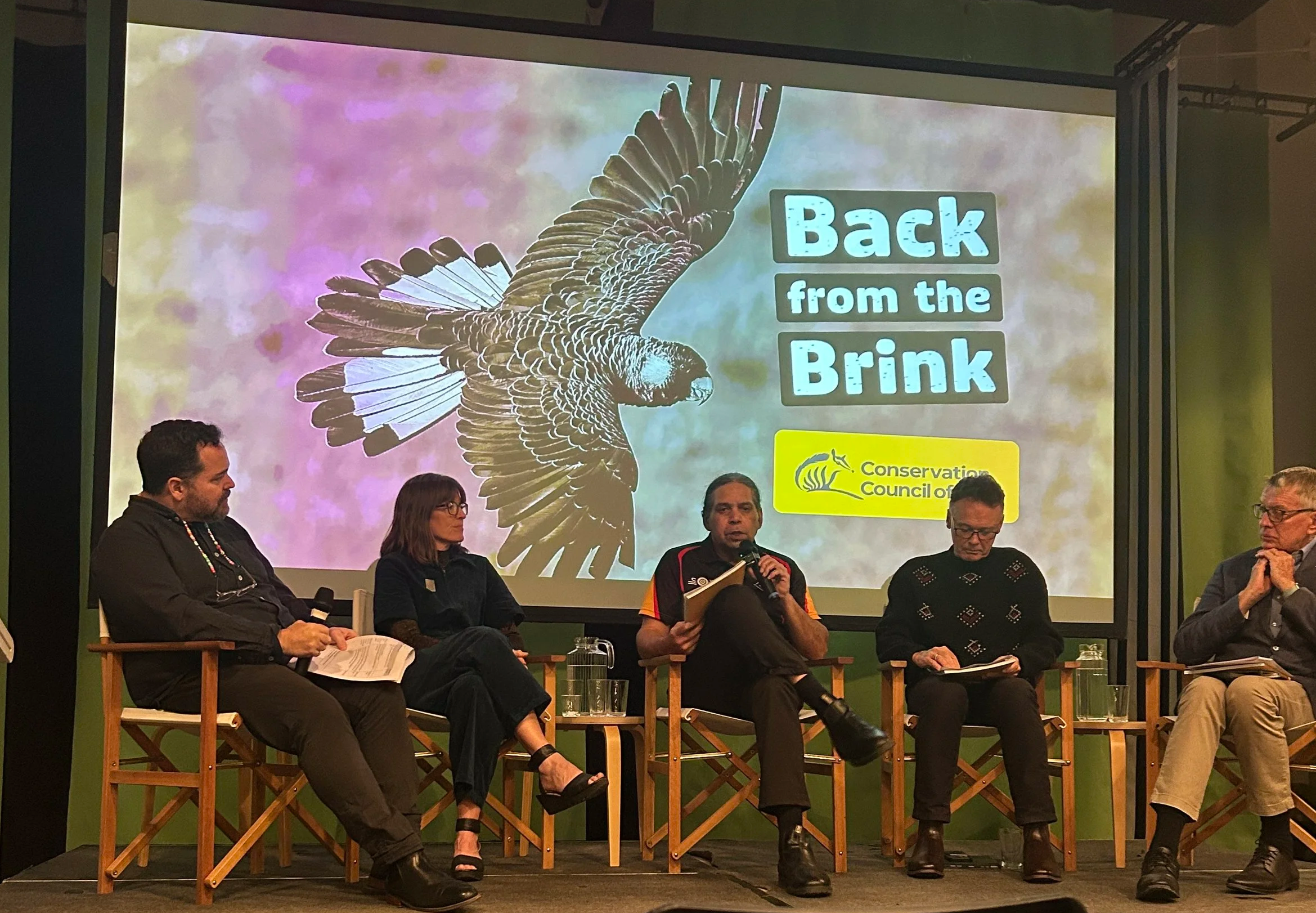
The Conservation Council of WA (CCWA), recently launched a report: Back from the Brink. Developed collaboratively it outlines a reform agenda for environmental regulation in Western Australia.
Drawing on contributions from conservation scientists, environmental lawyers, Aboriginal leaders, and community organisations, it sets out practical changes to policy and law across four areas:
🌱 strategic decision making
🌱 environmental law and processes
🌱 monitoring, compliance, and transparency
🌱 the independence of decision-making institutions.
It presents 15 case studies illustrating where current systems have failed and what’s being done to address the damage.
DOWNLOAD A COPY HERE
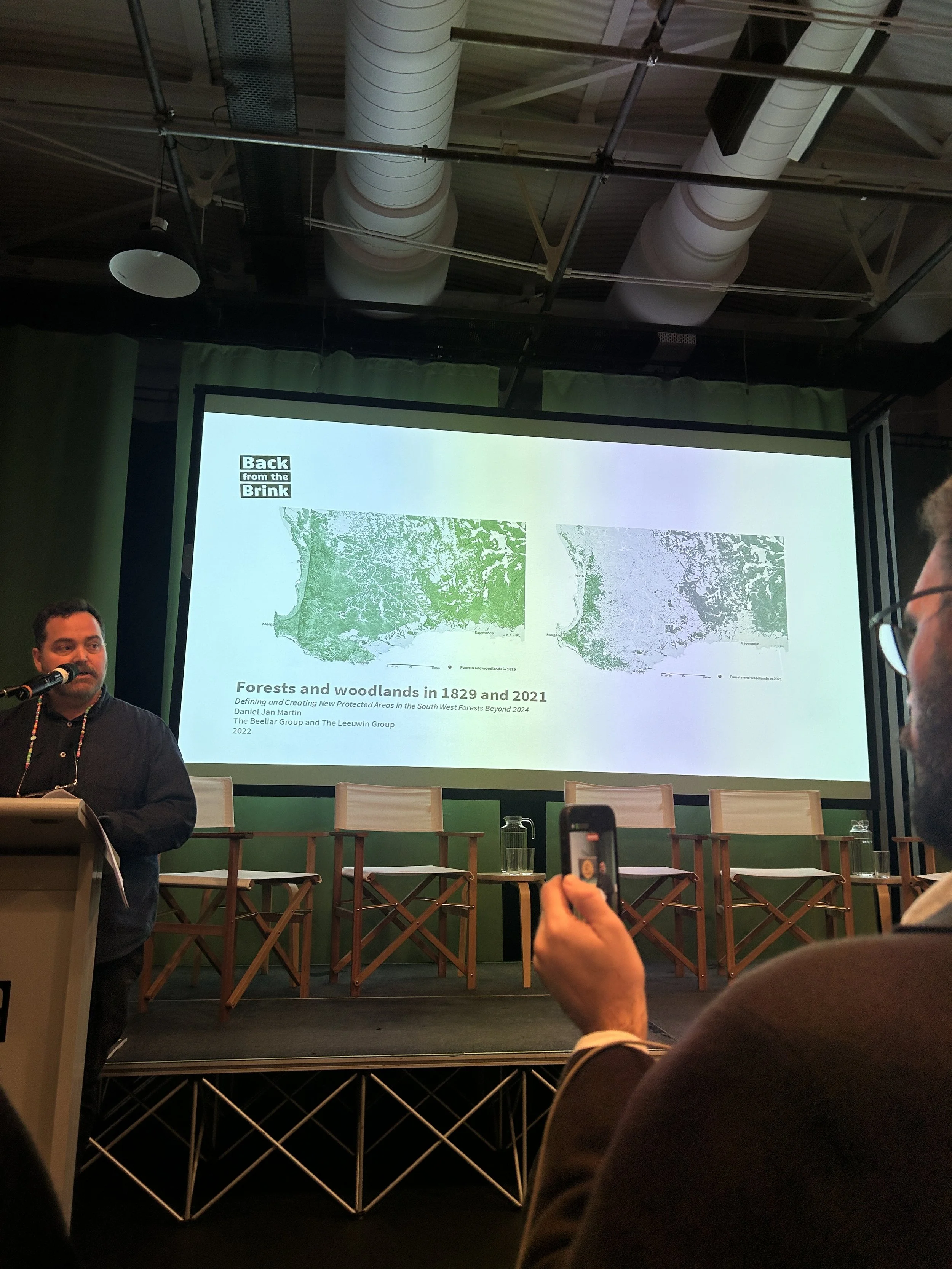
Matt Roberts at the launch of the report - behind him the scope of the ecological devastation.
The report documents the depth of ecological decline in WA since colonisation.
When the state's Southwest was declared a global biodiversity hotspot in 2000, 90% of its original vegetation cover had already been removed — rising to over 93% in the Avon Botanical District alone.
Today, 16 plant species and 23 animal species are formally recorded as extinct, with a further 700 species classified as threatened, and the report cautions that thousands more are likely at risk but remain unlisted.
The Northern Jarrah Forest — among the state's most species-rich ecosystems — has undergone two mass die-off events since 2011 and is now considered at risk of full collapse by the IPCC, yet industrial mining continues within its boundaries. On the Swan Coastal Plain, four-fifths of wetlands have been degraded or lost entirely.
WA also holds the worst record in Australia for federally-approved clearing of critical habitat, with over 34,700 hectares approved for clearance in the Pilbara alone in 2025.
“So many people across our state don’t have a clue about the state of our nature” Chris Tallentire - environmental consultant and former MP.
As a signatory to the Kunming-Montreal Global Biodiversity Framework (KMGBF), Australia is committed alongside nearly 200 nations to halt and reverse nature loss by 2030.
As one of only 17 megadiverse countries on Earth, and with WA holding eight of Australia's 15 biodiversity hotspots, the state is responsible.
The Intergovernmental Science-Policy Platform on Biodiversity and Ecosystem Services (IPBES) has warned of "a closing window of opportunity to halt and reverse biodiversity loss and to prevent triggering the potentially irreversible decline and the projected collapse of key ecosystem functions."
The report argues that meeting these obligations demands a reorientation of WA Government priorities, which currently favour short-term economic returns over long-term ecological wellbeing.
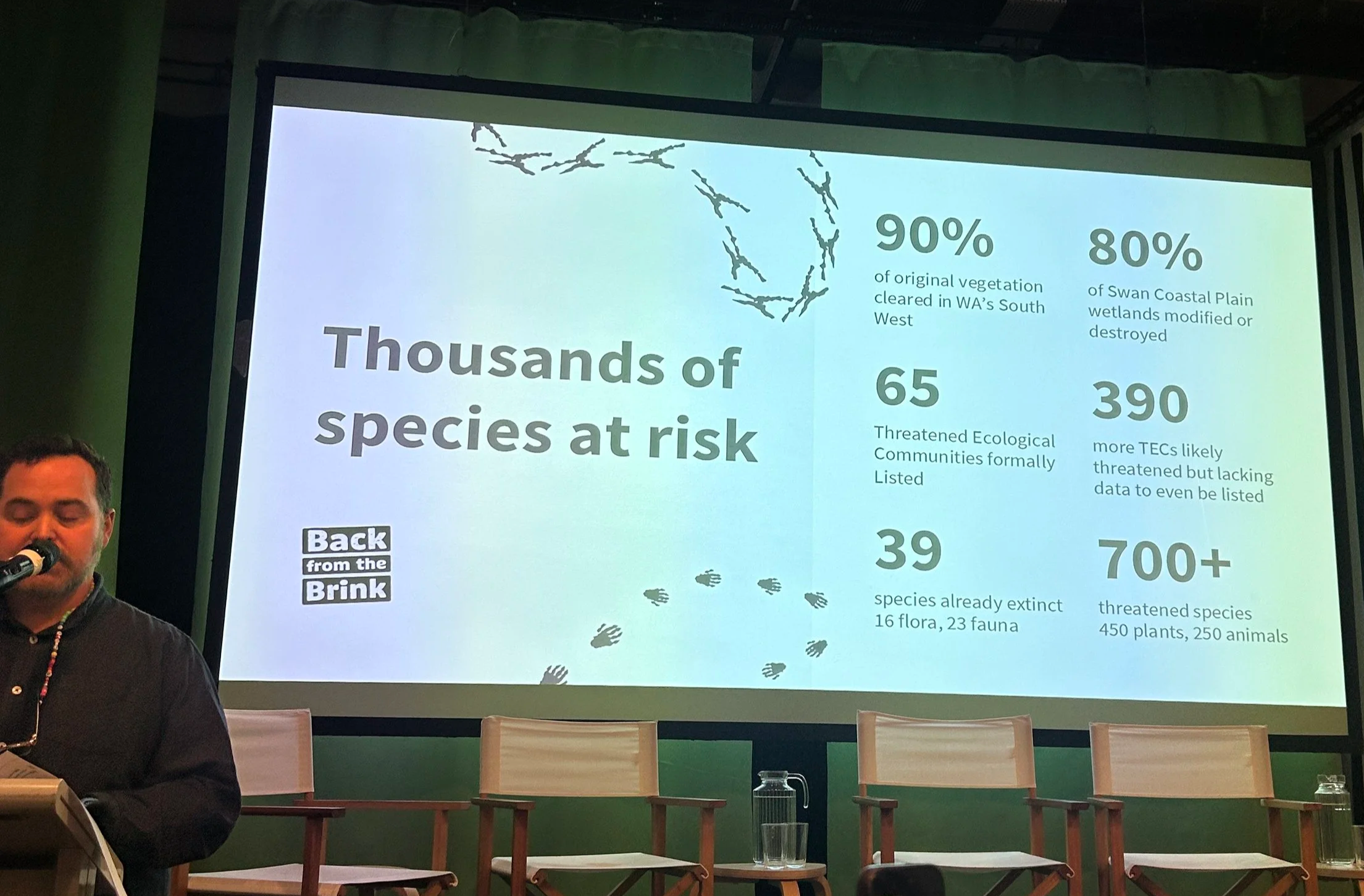
Thousands of species are at risk.
Part 1 Strategic Decision Making
“You almost don’t need any more science” Professor Rachel Standish
The report calls for WA to move decisively away from fragmented, project-by-project environmental decision making.
Key recommendations include:
- the development of a state biodiversity strategy with enforceable targets aligned to the KMGBF's 30% protection goal
- a comprehensive bioregional planning framework that identifies no-go zones based on ecological and cultural values
- and a major increase in conservation funding.
Currently, the WA Government allocates just over $100 million — or 0.2% of the state budget — to environmental protection, a level the report describes as chronically insufficient given statutory obligations.
The report also calls for the meaningful integration of Aboriginal ecological knowledge across all planning and assessment processes, the permanent funding of Aboriginal Ranger Programs across crown land, and legislative reform to allow sole vesting of conservation estate to Aboriginal Corporations.
“You are country” Daniel Garlett - Cultural and Community Leader
Part 2 — Environmental Law and Processes
WA's existing environmental laws are judged to be structurally inadequate.
The Biodiversity Conservation Act 2016 has never undergone its mandated five-year review, grants excessive ministerial discretion, and lacks mandatory bioregional planning or enforceable recovery targets.
The report calls for its overhaul along with reform to the Environmental Protection Act 1986, new water legislation, and the introduction of legally defined no-go zones for critical habitat.
Recovery Plans for threatened species are also criticised as too few, too infrequent in their review cycles, and insufficiently tied to measurable outcomes.
The report calls for full-funded, enforceable plans for every threatened species, updated at least every five years, with the explicit objective of zero new extinctions.
Environmental offsets, which currently allow destruction of habitat to be offset by compensation elsewhere, are identified as a mechanism that has repeatedly enabled ongoing harm rather than preventing it.
Part 3 — Monitoring, Compliance, and Transparency
The report identifies a deep accountability gap.
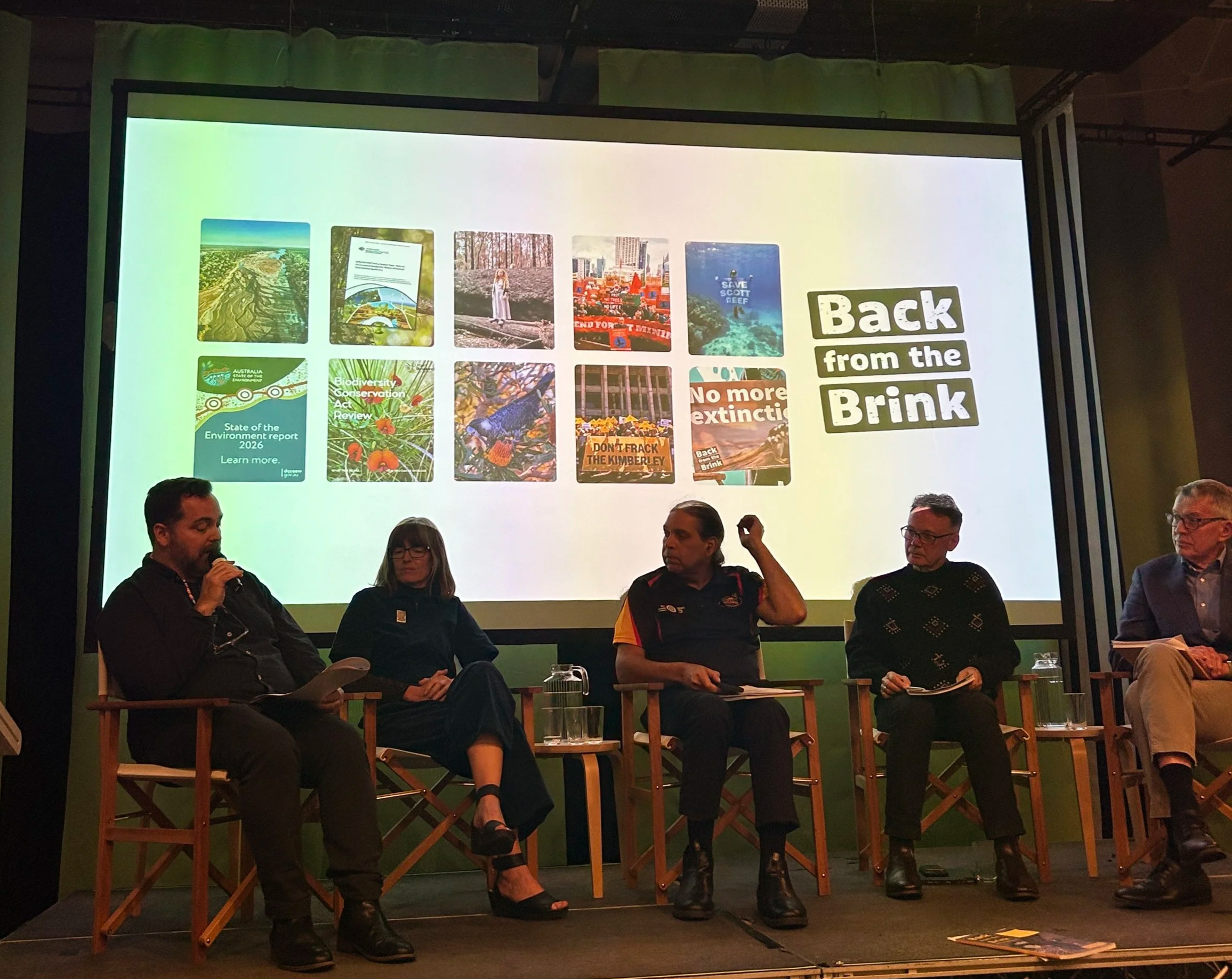
The upsurge of community support is unprecedented and CCWA reports an increase in people wanting to be involved.
“There has been no State of the Environment Report for almost 18 years” Matt Roberts - CCWA Executive Director
Likewise, no publicly available Biodiversity Audit has been released in a decade.
The Auditor General's 2024–25 review confirmed that under-resourcing is preventing agencies from meeting basic statutory requirements.
The report calls for proper investment in environmental monitoring, an end to reliance on industry self-reporting, and a legally guaranteed right for communities to receive reasons for decisions that materially affect the environment.
As the Executive Summary states: "laws are only equal to our ability to enforce them."
Part 4 — Independence and Public Participation
The right institutional conditions are needed for robust decision making.
The report recommends establishing an independent Environment Court to enable merits-based judicial review of environmental decisions, ensuring the operational independence of the EPA, strengthening the powers and funding of regulatory bodies, and creating genuine, rather than tokenistic, pathways for public participation.
“We have a war on nature and we need to rally” Professor Kingsley Dixon OAM - UWA - botanist and conservations expert.
Ministerial accountability must also be reinforced through legislation that prevents the approval of projects known to cause significant environmental harm.
The report concludes that the reforms it proposes, while ambitious, are both necessary and achievable. It frames them not as optional improvements but as essential to preventing further irreversible loss. It calls on the WA Government to match the strategic energy it applies to industry and jobs with an equally serious commitment to environmental protection — recognising that, in the long run, the two are inseparable.
Source: Conservation Council of WA — ccwa.org.au