• Mongolia Walking Adventure Tavan Bogd National Park
    • Peaks of the Balkans Hiking Adventure
    • Walking with Wildflowers - Fitzgerald Biosphere and Stirling Ranges
    • Walking with Wildflowers - Fitzgerald Biosphere
    • Bespoke
    • Mongolia Walking with Wildflowers Adventure Turgen Kharkhiraa National Park
    • Murchison Gorge Hiking Adventure - Kalbarri National Park
    • Cape to Cape End to End Walking Adventure
    • The Creativity Retreat with Dr Erika Jacobson
    • The Creativity Retreat - Botany - Creativity - Art
    • Cape to Cape Walking and Yoga Mini-Retreat
  • Blog
    • About Edgewalkers
    • Testimonials
    • Contact
    • Resources
    • Wildflowers Mindful Colouring
    • Interpreting Biodiversity Workshop
Menu

Edgewalkers | Walking Tours & Creativity Retreats

Walking you back to nature, creativity and adventure
  • Walking Adventures
    • Mongolia Walking Adventure Tavan Bogd National Park
    • Peaks of the Balkans Hiking Adventure
    • Walking with Wildflowers - Fitzgerald Biosphere and Stirling Ranges
    • Walking with Wildflowers - Fitzgerald Biosphere
    • Bespoke
    • Mongolia Walking with Wildflowers Adventure Turgen Kharkhiraa National Park
    • Murchison Gorge Hiking Adventure - Kalbarri National Park
    • Cape to Cape End to End Walking Adventure
  • Creativity Retreats
    • The Creativity Retreat with Dr Erika Jacobson
    • The Creativity Retreat - Botany - Creativity - Art
    • Cape to Cape Walking and Yoga Mini-Retreat
  • Blog
  • About
    • About Edgewalkers
    • Testimonials
    • Contact
  • The Biodiversity Project
    • Resources
    • Wildflowers Mindful Colouring
    • Interpreting Biodiversity Workshop
Blog Archive
  • 2016 13
  • 2017 8
  • 2018 16
  • 2019 12
  • 2020 11
  • 2021 6
  • 2022 6
  • 2023 7
  • 2024 3
  • 2025 4

Walking the edge

Short written and image essays on walking, nature and creativity.

With a special focus on women, wildflowers and biodiversity, the writing informs and reminds the reader of the many ways nature shapes cultures, sustains wellness and inspires creativity.

Featuring Western Australia's southwest, Mongolia and other Edgewalkers destinations.

Dr Erika Jacobson -


Instagram @edgewalkers_

View fullsize The Creativity Retreat in snapshots.

When was the last time you gave yourself time and space to just think about you? Time to explore your self-expression, your creative dreams?

The Creativity Retreat in Margaret River is 4 days away in nature in t
View fullsize
View fullsize 24 hours left on our Green Friday November SALE!

We’re committed to giving you opportunities to immerse yourself in nature, reconnect with its beauty and its power, reconnect with your creativity and with your sense of adventure - one of our s
View fullsize We’re having a 24 hour sale!
Friday 28 November.

If you sign up to our newsletter the sale starts Monday 👆🏽 (link in profile) to get the discount codes.

🔥20% off the Creativity Retreat with @dr.erika.jacobson 
🔥10% off the Cape to Cape Wa
View fullsize
View fullsize Have you been to the Fitzgerald River National Park?
If you love wildflowers and pristine coastal wilderness, it’s the place to visit!

#fitzgeraldrivernationalpark #edgewalkers #wildflowersofwesternaustralia #coastalwalks #nationalparksaustral
View fullsize
View fullsize
View fullsize

Subscribe

Sign up with your email address to receive news and updates.

We respect your privacy.

Thank you!

Article Categories

  • Biodiversity
  • Creativity
  • Margaret River
  • Mongolia
  • Retreats
  • Walking
  • Wildflowers

Article Tags

  • wildflowers
  • walking
  • mountains
  • biodiversity
  • creativity
  • rivers
  • habits
  • UNESCO
  • motivation
  • Cape to Cape
  • Retreats
  • Fitzgerald River National Park
  • National Parks
  • Margaret River

Boranup Forest - Leeuwin Naturaliste National Park - Western Australia

Women and fungi – allies in the survival of our planet

March 06, 2023

“The way forward isn’t a road we take; the way forward is a road women make.” 
Amanda Gorman

I started this blog wanting to write about the current biodiversity crisis, around the time of the UN Biodiversity Conference in Montreal last year. 

I read some of the latest and tragic statistics on the snowballing speed at which our activity is killing other species. 
 
Mammals, insects, turtles, fish, vertebrates, invertebrates, wetlands, coral, forests. 
All life on Earth is under threat.
 
I thought, woah, we don’t want to read more about that. 
I’ll have a mass-extinction of subscribers if I hit you with all that gloom.

I took a break from writing. 

I went back to reading Entangled Life a book about fungi, mycology and ground-breaking research on the remarkable properties of fungi. 

Maybe I'd take some notes, I'd love to write more about fungi. 

I could spend all day reading about them.
I did. The whole day, maybe two; no notes.

Did you know the largest organism on the planet is a fungus? Armillaria ostoyae – they call it the honey mushroom; 3.5 sq miles under a forest in Oregon. 

I pushed on with biodiversity. I made myself read a few paragraphs about the conference in Montreal. 
 
The nations of the world had agreed on a ‘landmark’ global biodiversity framework.
4 goals, 23 targets.
30 percent of the planet protected by 2030. 
 
Hope?
Déjà vu?
Blah blah blah,’ said Greta Thunberg.

I googled Greta to find out how old she was now.  She’s 20 and she’d released a book: The Climate Book.  I downloaded it, put in my earbuds and listened to it for the next 3 days. 

It’s impressive, urgent and angry, with contributions from 100 global leaders in their field; it is also authoritative. 
 
‘When it comes to the climate and ecological crisis, we have solid unequivocal scientific evidence of the need for change. 
The science is as solid as it gets.
 We need a new way of thinking,’ says Greta.

We sure do. 

I spent two days writing marketing copy instead.  
 
When I come back to this blog, it’s the middle of February, soon I’d have to write about International Women’s Day. 
 
I sigh, it’s time to pull my finger out.
I google different combinations of ‘women, fungi, biodiversity’. 
 
And there, on the world wide web, women, fungi and biodiversity, I found. 

HAPPY INTERNATIONAL WOMEN’S DAY!

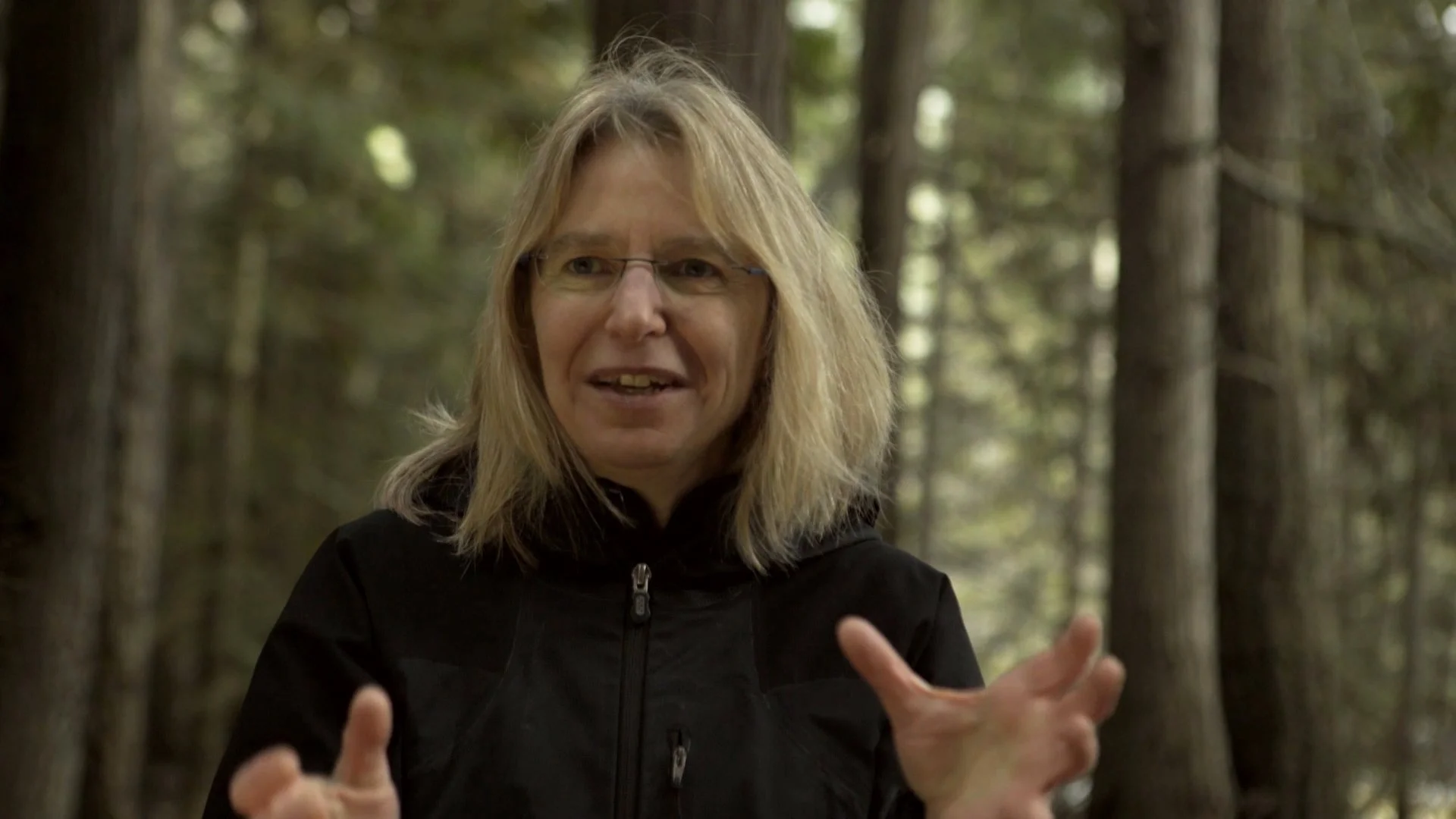
 Suzanne Simard, is a Canadian professor of forest ecology at the university of British Columbia.

She was the first to suggest the possibility that trees move carbon and other resources through fungal networks under the forest floor.

 Then she proved it.

 Unequivocally.

Her pioneering research into what she coined ‘the Wood Wide Web’ showed that forests are intelligent systems.

 They communicate.

They collaborate.

 These systems are sustained by a mutually beneficial relationship between trees and the mycorrhizal networks of mycelia (fungi).

They are also overseen and directed by ‘mother trees’ who ensure that carbon, sugar, hormones, nitrogen, water, and other resources are sent to the trees that need them the most.

 Darwinists, whose ‘survival of the fittest’, competitive paradigm has been turned on its head, were resistant.

 Simard struggled to find funding.

But science is science, and a PhD and more than 200 articles on the subject, could not be silenced.

 Simard is trying to influence logging practices, a principal contributor to biodiversity loss.  

 If logging continues to ignore the role Mother Trees play in the resilience of old growth forests, they will destroy any possibility of survival and renewal.

She makes an analogy to bolts being removed from an airplane.
You can take quite a few bolts and screws out without causing any great damage, but if you take out the bolts that hold the wings to the body of the plane, there is nothing to do but plummet.

Likewise, in a forest, certain trees hold the forest together.

In her book, Finding the Mother Tree, Simard shares this important understanding of forests and their innate wisdom.

She also leads The Mother Tree Project, a research project into old growth forests and all the ways in which biodiversity, regeneration and carbon storage can be protected.

Giuliana Furci - Fungi Foundation

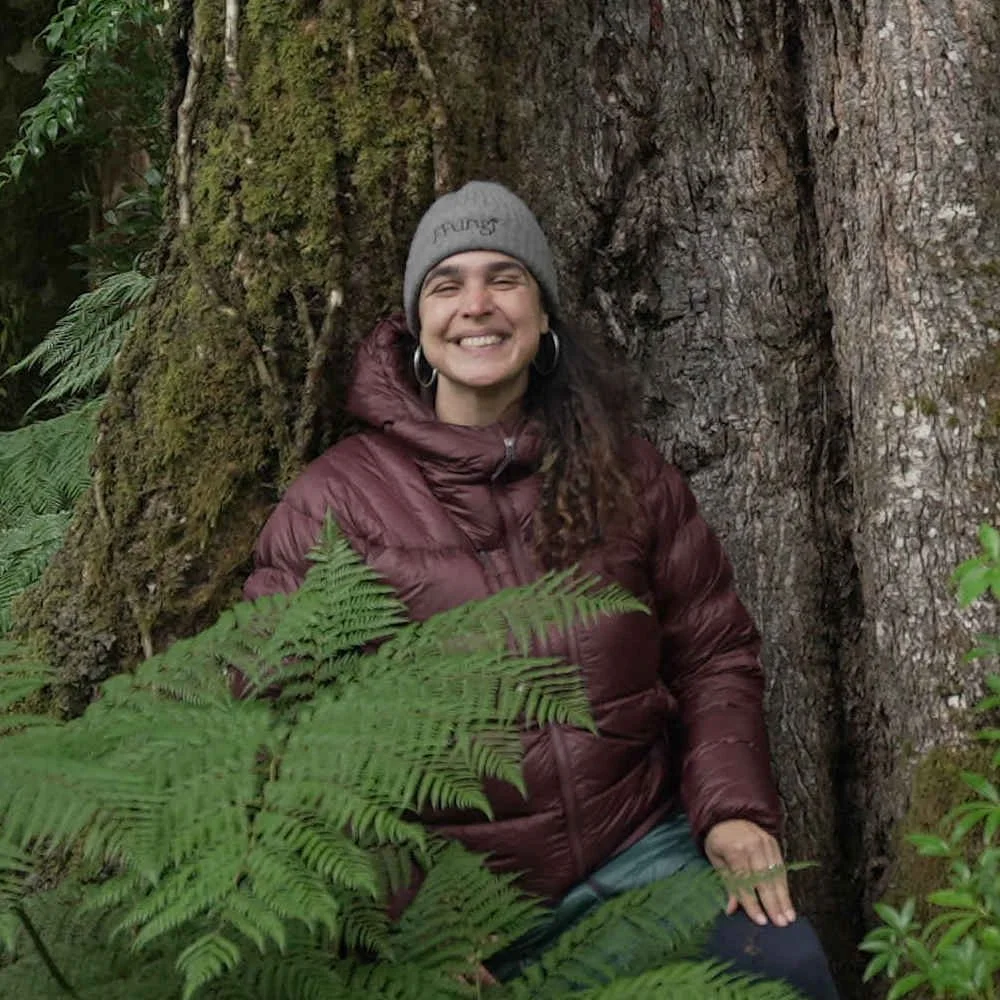
Giuliana Furci, is a Chilean mycologist who established and leads the Fungi Foundation, an international NGO completely dedicated to the study and protection of fungi.

Furci and her colleagues (in Chile and around the world) are passionate about their work to influence law, policy, and research to include and protect fungi.

In July 2021, the Chilean government became the first in the world to include fungi in their environmental law.

Their declaration called on world leaders and scientists to

“… create protections for fungi under international, regional and domestic law and policy, both to state the equal significance of fungi among the kingdoms of life and to help address the threats that jeopardize the ability of many fungal species to thrive and survive,”

 Furci was responsible for this important declaration and continues to lead this initiative.

They want ‘funga’ to recognised as the interconnectors of life on the planet and to be given the same protection, funding and importance as flora and fauna.

Why?

Because if we want to have an impact on climate change, we have to take into account the 450 quadrillion km of mycorrhizal networks underground that help sequester at least 5 billion tons of carbon dioxide every year.
(BTW quadrillion is 450 plus fifteen zeros - or one thousand trillions, i.e. a lot)

 Because there are between 2 and 4 million species of fungi, and we hardly know anything about them.

Because the biodiversity of the fungi is integral to the survival and resilience of all life on earth. Fungi were instrumental in the evolution of life on the planet.

 Because without fungi life would not be possible.

 In a recent article in Time Magazine she calls for fungal education to be included in school and academic curricula.

‘Accounts of the living world that do not include fungi are accounts of a world that doesn’t exist.’

Find out more about this important initiative here.

Guiliana Furci and Suzanne Simard are inspiring leaders in their fields; their work is ground breaking and important.

We celebrate and applaud them.

We celebrate women all around the world.

We celebrate our stories, our intelligence and creativity, our resilience and capacity for love and empathy; our adventurous spirits and intuition, our discipline and physical prowess, our humour and our courage.

But let’s also remember that women still make up a minority in the sciences, in research, in decision-making and in leadership.

Let’s remember that 70% of women live in poverty. And that at the coal face of the biodiversity crisis are women and girls who have to work harder to find wood for fuel, clean water and plants for food and medicine.

So, let’s celebrate.

But let’s also act in whatever way we can.

Imagine the world if all women had the freedom and agency to pursue their passions, reach their fullest potential and offer the world their unique contribution.

Let’s act because we too must be allies in the survival of our planet.

← 4 benefits of going vegan... according to science3 reasons why walking makes us more creative →
Back to Top
erika@edgewalkers.com.au

Fremantle - Western Australia 6160

+61 406 758 062
Adventure Tourism Trade Association Logo
Australia's southwest logo.jpg
Perth Airport Tourism Awards Finalist Ecotourism
tripadvisor_logo.jpg

At Edgewalkers we respectfully acknowledge all First Peoples of the land on which this business thrives. We pay our respect to traditional elders from the past, present, and future; we celebrate their culture, heritage, and identity and we aspire to promote and instill a sense of custodianship and responsibility for ‘country’ in all our activities and dealings.

Edgewalkers is a vegetarian company - one of the ways we are aspiring to reduce our carbon footprint.

Terms and Conditions


© Edgewalkers 2025. All rights reserved. Privacy Policy. ABN 59615095406

Edgewalkers Every Woman Expo discounts on our walks & retreats from 21-30 June